Who they are
A whole institute for one idea: aging is treatable
The Buck Institute for Research on Aging opened in 1999 as the world’s first independent institute devoted solely to understanding aging — and doing something about it. On a 488-acre hillside in Novato, California, in a landmark campus designed by architect I. M. Pei, roughly twenty laboratories pursue the science of geroscience: the idea that aging itself is the shared root of most chronic disease, and that slowing it could push back many diseases at once. The Buck runs one of the world’s largest public stem-cell banks and has spun its discoveries into companies working toward the clinic. Its mission, in six words: extend the healthy years of life.
The idea
Geroscience
Target the biology of aging itself — and you push back heart disease, cancer, Alzheimer’s and more, together, rather than one at a time.
The science
~20 labs, one roof
Senescence, mitochondria, the immune system, the aging brain and metabolism — studied side by side across ten focus areas.
The translation
Bench to therapy
A public stem-cell bank and spin-out companies carry the Buck’s findings out of the lab and toward real treatments.
In their words
“What the Buck is all about”
From our interview with Eric Verdin, in the Institute’s courtyard — when we asked him what the Buck is really for.
What is the Buck, at its heart — what’s it here to do?
What the Buck is known for is really revisiting the chronic diseases of aging — many forms of cancer, heart attacks and strokes, type-2 diabetes, osteoporosis, Alzheimer’s — all of them directly driven by the aging process. The real question is whether we can break the link between getting older and being sick. And what the experiments in the lab are showing us is: yes, you can.
You lead it now — what does that mean to you?
The final gift was being asked to take the leadership of the Buck — the icing on the cake. Not only to keep doing the research, which I still do here, but to lead an organization I hope will be instrumental in implementing everything we’re dreaming about in the aging space.
Basic science, or real-world results?
This is what I love about this place — we have both. When I came in we were mostly a basic-research organization. Now we have a Center for Healthspan translating discoveries from animals into humans, while our scientists keep pushing the envelope in the lab.
And testing what actually works?
That’s why we built the whole clinical center here at the Buck — taking supplements and interventions and subjecting them rigorously to every test. Is this really working? Is it safe? The field needs to embrace these clinical trials.
Why should people trust the Buck?
Our role, as a research organization that’s independent — we’re not owned by anybody — is to give people hope, and to help them understand what is real and what is not.
Who leads it
The leader of the Buck
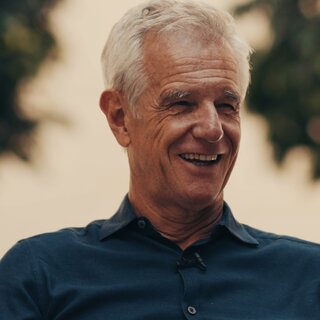
President & CEO, Buck Institute for Research on Aging
An MD and world authority on the biology of aging, Eric has led the Buck since 2016 — and sits on the Live Beyond Scientific Advisory Board. See his profile ↗︎
From our quest
People we met who work at the Buck
Several of the scientists we filmed for Live Beyond are part of the Buck — today or in its history. Each has a page of their own.

Immunologist at the Buck & Stanford — inflammation and the immune clock (iAge).
See his profile ↗︎
Brain-ageing neuroscientist — adjunct professor at the Buck (also Universidad Mayor, Santiago).
See his profile ↗︎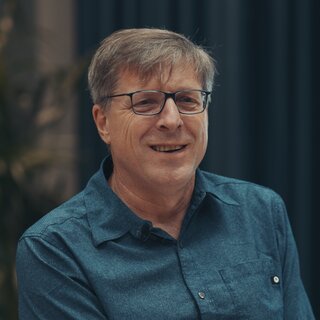
Longevity biologist, now at NUS Singapore — and a former President & CEO of the Buck.
See his profile ↗︎


