Sir Christopher Ball is an educationalist, and a co-founder of the Oxford Longevity Project — the only one of its founders who is not medically qualified, which he points out himself, cheerfully, in his first sentence. He read English at Oxford and taught it for some years, was Warden of Keble College and the first Chancellor of the University of Derby. Somewhere in the middle of that he stopped being a teacher of a subject and became a student of how human beings learn at all, and worked on that question in forty countries.
Which is exactly why he is in this film. His whole argument about longevity turns on the difference between knowing and doing. “The knowledge bit, the information is easy. Learning how to choose a healthy life is much more difficult.”
He has a rule that any complex subject can be reduced, at a high level of simplification, to three ideas, and he applies it to healthy longevity without apology. First and most important: a healthy mindset — a positive outlook, loving relationships. Second: regular exercise, and make it simple for people; walk a mile a day. Third: diet, and after advice from his granddaughters, a vegan-ish one. He follows the routine himself and preaches it whenever possible.
Then the other half, which is his real contribution: why so many people who know all of this do none of it. He calls the obstacles the three Hs. Habit — “but I’ve always smoked” — where the habit trumps the wisdom. Herd — we conform to the people we are surrounded by, and if the herd goes to the pub every Friday, information alone will not break that. And high — the next piece of chocolate, the next immediate pleasure, from childhood onwards.
His second argument is the one he knows people do not enjoy, and he makes it anyway: it starts with the responsibility of the individual. He tries to be the responsible patient, doing most of the work on his own health before calling in his doctor. Friends have told him he is not being very kind by putting it so frankly. His answer is that he would rather have friends who take responsibility for their own lives than friends who need sympathy for choices they made knowing better.
He is not squeamish about what is coming, either. Asked what old people are afraid of, he lists five without flinching — and he speaks from experience, having had a heart attack and a triple bypass and recovered from both: heart disease, cancer, dementia, falls, and the one he calls diabesity, diabetes and obesity together, which he says is almost entirely preventable. What he wants for the city he has spent his life in is to turn a little bit of Oxford into a new Blue Zone.
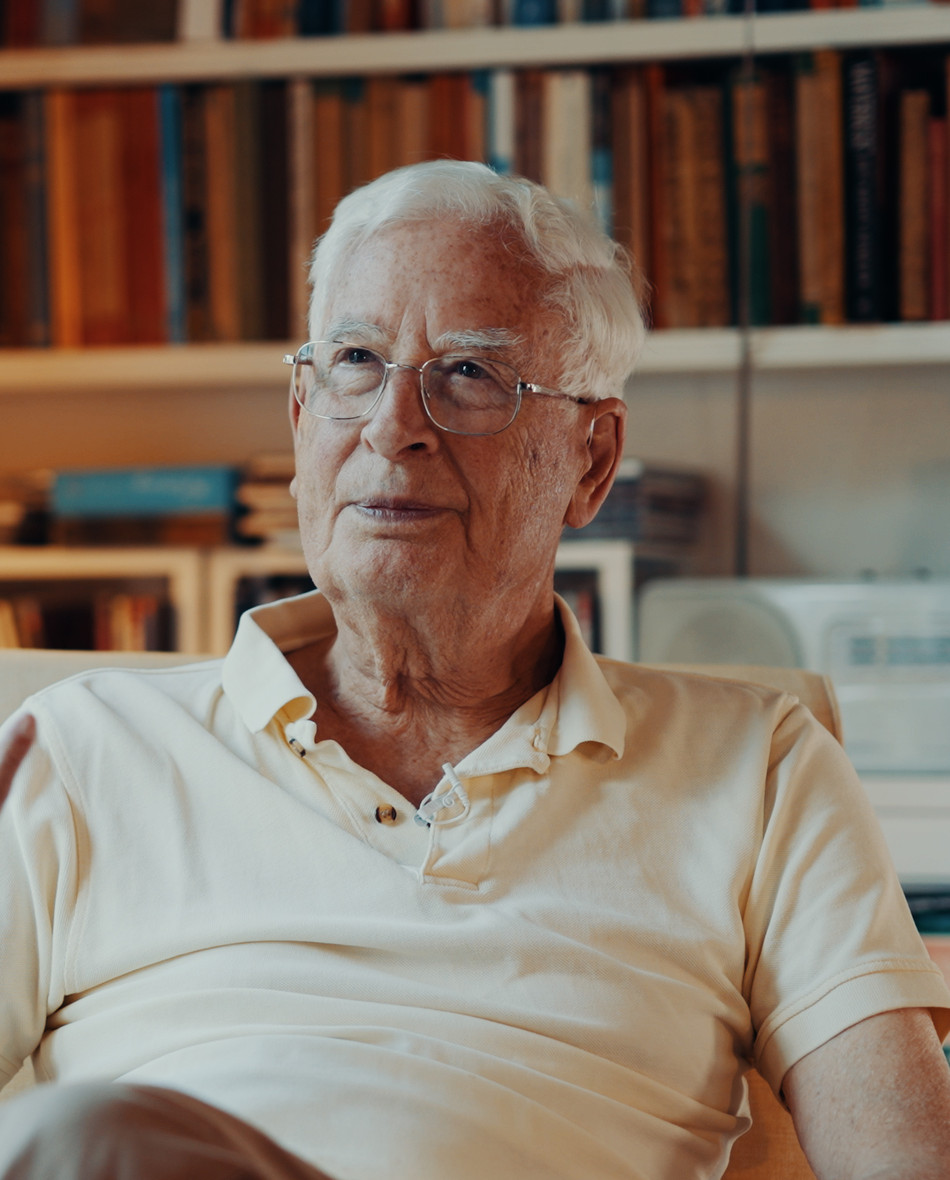
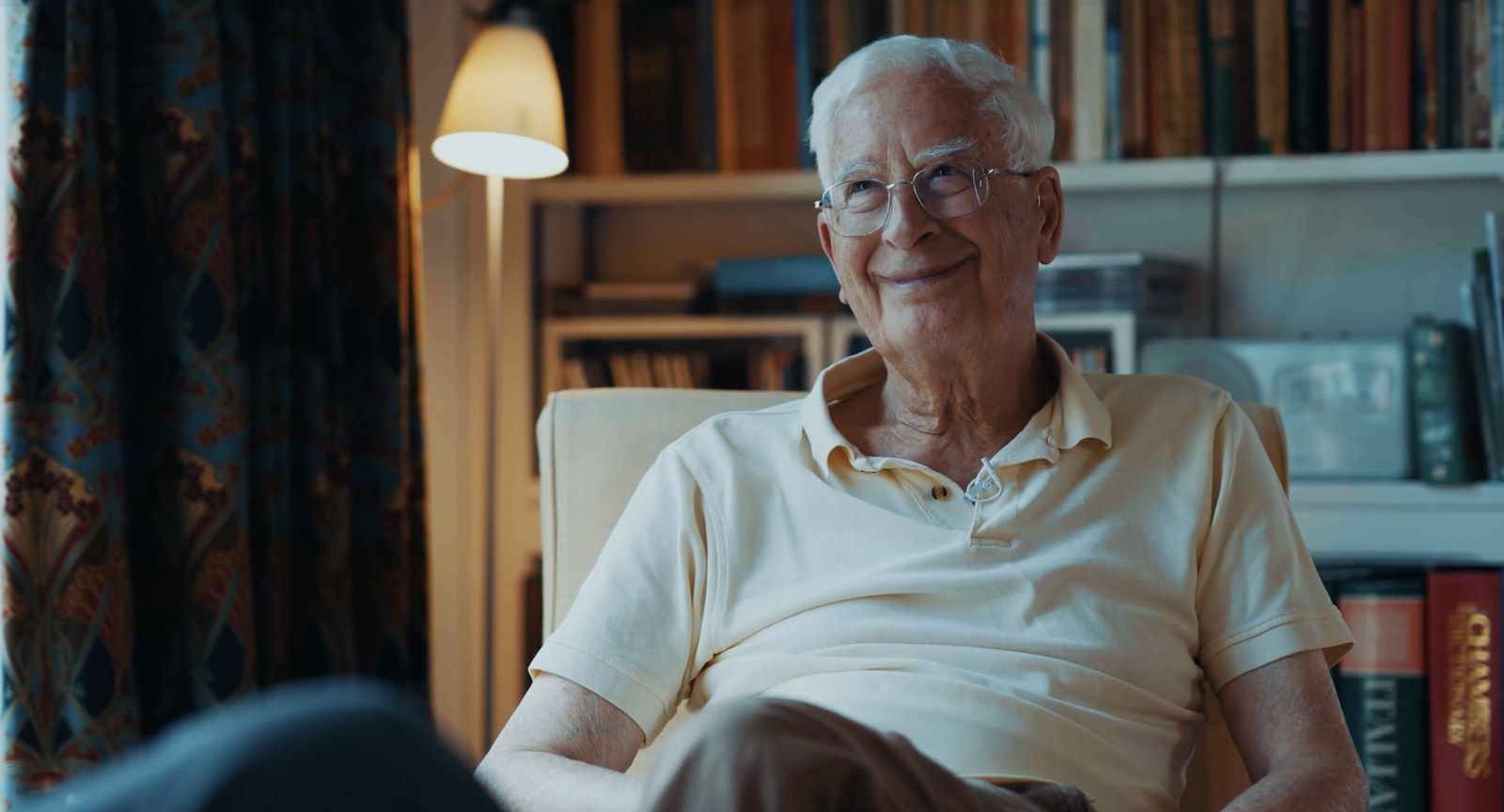
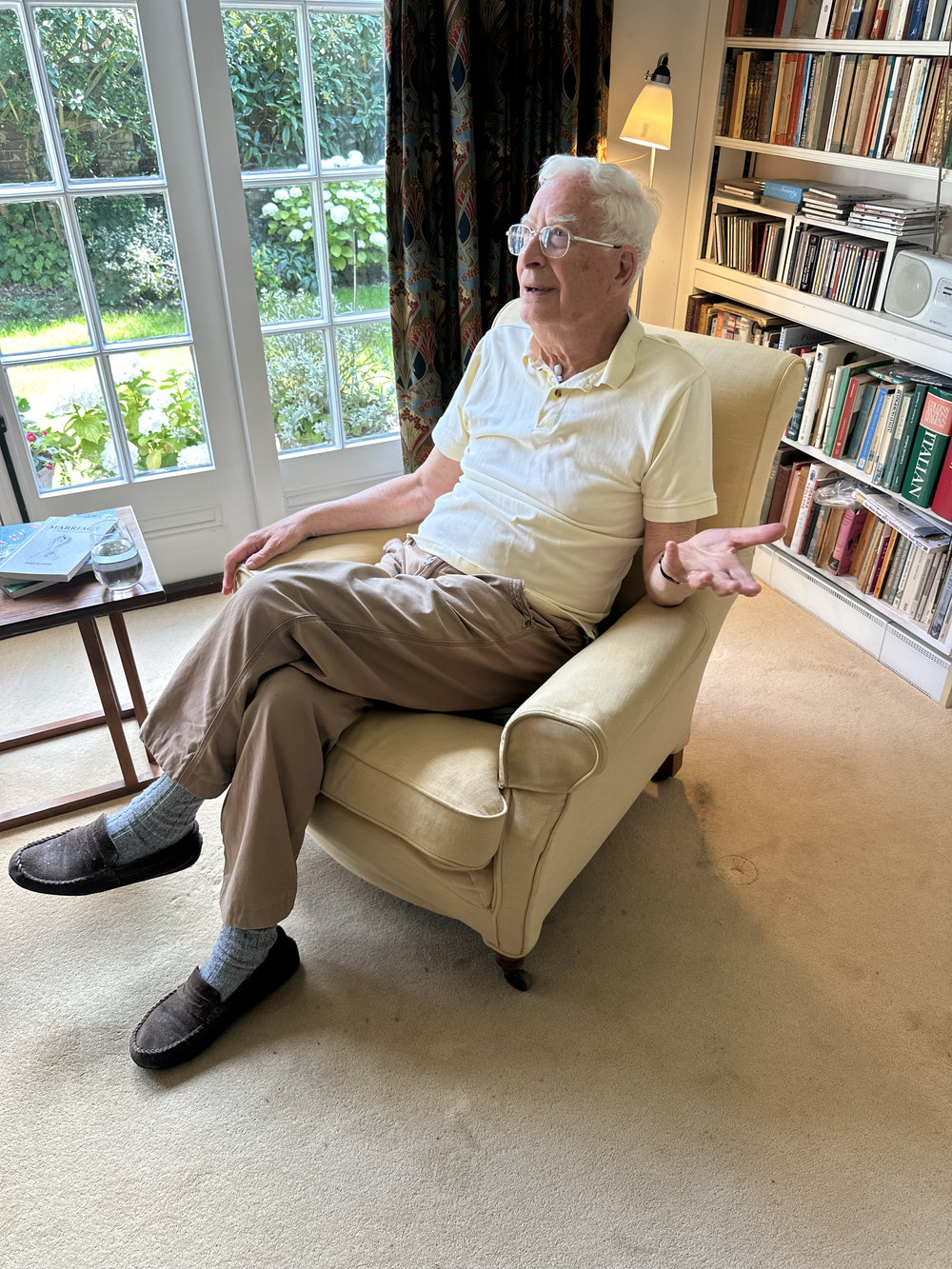
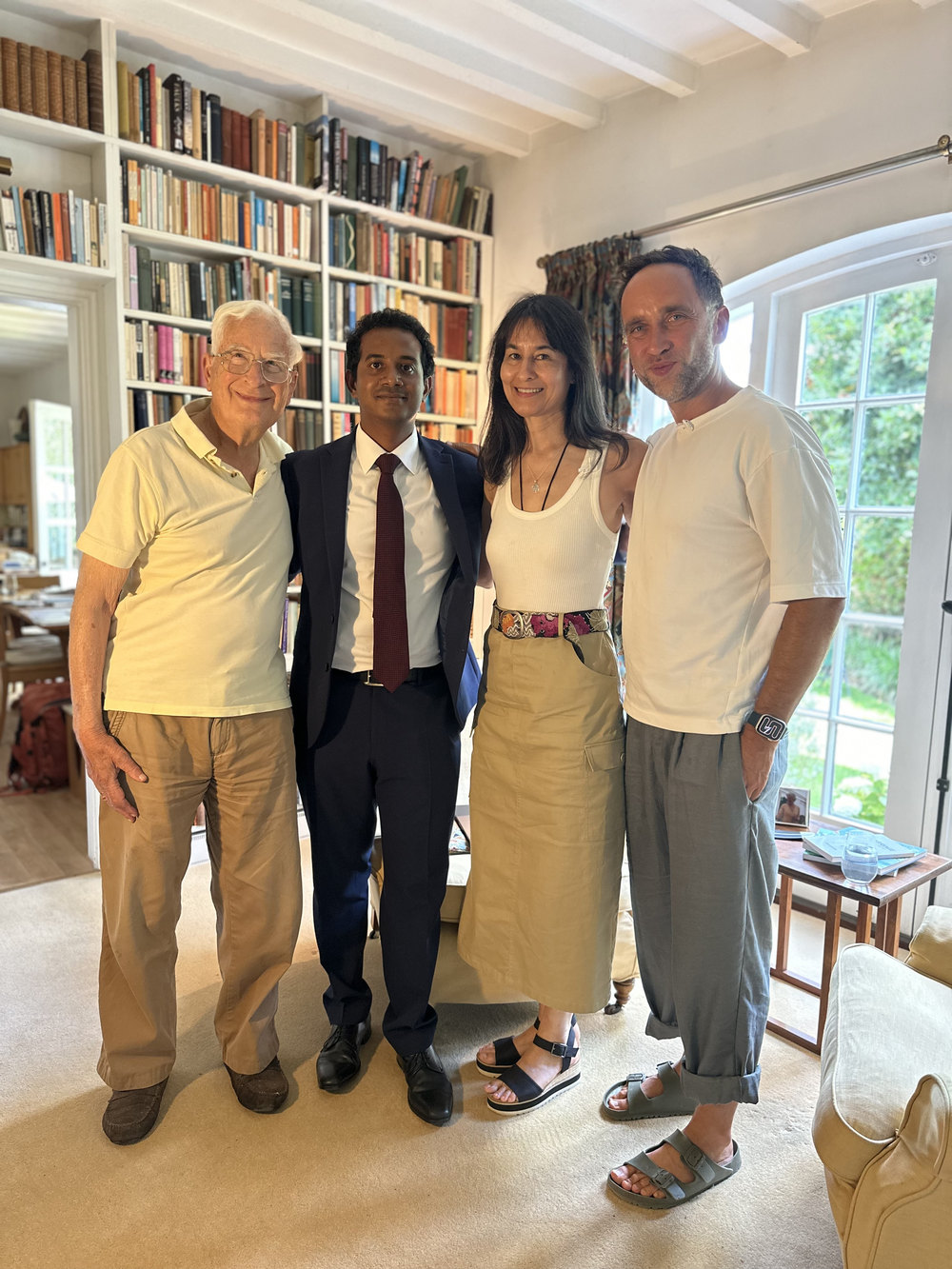
We filmed Sir Christopher at his own home in Oxford, in the room where he reads — shelves to the ceiling, the garden through the window, an armchair each. It came at the end of an afternoon with the Oxford Longevity Project, so the conversation picks up mid-thought from that. He does not want to be asked about what he has done. He says so directly: what would be healthy is to be asked how he plans to live the next twenty years.
“What would be healthy would be if you asked me how I plan to live for the next 20 years of my life, because my target is to live to the age of 111. Don’t laugh.”
— Sir Christopher Ball, Oxford
“The knowledge bit, the information is easy. Learning how to choose a healthy life is much more difficult.”
Sir Christopher Ball · OxfordProbably the first and most important is a healthy mindset, a positive outlook on life, loving relationships.
Sir Christopher BallWalk a mile a day, for example. Make it simple for them.
Sir Christopher BallNotice that the habit trumps the wisdom.
Sir Christopher BallWatch out for your herd, and choose people around you who will encourage you by their own behaviour to live in a responsible way.
Sir Christopher BallI want friends who take responsibility for their own lives, and who don’t need sympathy for having made bad choices when they knew better.
Sir Christopher BallWe want to make Oxford a little new Blue Zone.
Sir Christopher BallFrom our conversation at his home in Oxford — the three that matter, the three that get in the way, and what he would say to somebody with a whole life still in front of them.
Mindset first — a positive outlook and loving relationships. Then regular exercise, kept simple enough that people actually do it. Then diet, and his is vegan-ish, on his granddaughters’ advice.
“The secret of a healthy longevity are these 3 things.”
Oxford · July 2024Habit, herd and high. Why people who know exactly what to do carry on not doing it — and the only part of this where information alone is useless.
“Notice that the habit trumps the wisdom.”
Oxford · July 2024Start by deciding the age you would like to die at, then make a sensible plan for the decades in between — which almost nobody does, because they hand the question to God or to their genes.
“But the big thing is our lifestyle and mindset.”
Oxford · July 2024The video interview is coming. Recorded interviews go live after the launch of the film & series Live Beyond.
Selected passages from our conversation with Sir Christopher Ball — at his home in Oxford, July 2024. Cleaned of hesitation only; nothing inside a quotation has been reworded.
Sir Christopher Ball“It’s a group of people — and all the others apart from me are medically qualified, you’ll be pleased to hear — who’ve got interested, as I suppose most of us should be, in the idea of human longevity, living longer than we used to do, which is happening, and living healthier into old age. Healthy longevity is what we’re after. We’re trying to understand the factors that make this probable, certainly possible for most people, and then explain what we found out to people.”
Sir Christopher Ball“I have a rule in life that all complex subjects, like longevity, for example, in humans, can, at a high level of simplification, be rendered down to 3 key ideas… And the secret of a healthy longevity are these 3 things. Probably the first and most important is a healthy mindset, a positive outlook on life, loving relationships. So the mind and the positivity of the mind comes first for me. The second factor, and remember, I’ve only got 3 to talk about, the second factor will be regular exercise. Most people know that, and many people don’t take any notice of it, which is very interesting to me. Why not, I wonder? And how can we help them? Walk a mile a day, for example. Make it simple for them… And the third one is diet. And I’ve come to think, thanks to advice from my granddaughters to begin with, that a vegan-ish diet is the third most important factor for healthy aging.”
Sir Christopher Ball“For old people, and perhaps particularly for old people who’ve had a good life — I’ve had a good life, so I’m talking about people like me — the tendency is to dwell on the past. You invited me to introduce myself and talk about what I’d done, and I enjoyed doing just that, of course, because I’m proud of it and pleased with it. But that’s not healthy. What would be healthy would be if you asked me how I plan to live for the next 20 years of my life, because my target is to live to the age of 111. Don’t laugh.”
Sir Christopher Ball“It comes down to those pernicious influences on our life. There are 3 of them. They all begin with H. I call them the 3 Hs. The first is habit. ‘But I’ve always smoked. It’s my habit.’ People say that, although the evidence and the advice is absolutely clear. It’s a death sentence to smoke… but notice that the habit trumps the wisdom. So habit is the first H. The second is the word… which I love, herd. We all belong to herds, like animals. And we have a herd of friends and family, the people we normally associate with, our workmates and so on. You’ve got a herd. I’ve got a herd. And we consciously or unconsciously conform to the behaviour of the herd. If the herd goes to the pub on a Friday night and gets comfortably drunk every week, and that’s how we behave, then it needs more than just information to break that very dangerous habit… Watch out for your herd, and choose people around you who will encourage you by their own behaviour to live in a responsible way. And the third H is the word high. We are all addicted to the small or not so small pleasures. The next piece of chocolate. ‘Mummy, give me another ice cream.’ From childhood onwards, we’re looking for an immediate pleasure, and then we want more of it. It’s a feature of being human. And if you want healthy longevity, you better look hard at it and start disciplining yourself not to be immediately seduced by the next high.”
Sir Christopher Ball“I suspect, listening to you talking about it, you’re thinking that the research scientists and the experts are going to find more and clever ways, possibly with drugs and supplements and things that we ordinary folk don’t know about, that are going to make a difference. And that will be part of the answer, I have no doubt. I’m not going to say it’s wrong. But my contribution is to say, actually, it starts with the responsibility of the individual. The responsible patient is what I try to be, and I try to do most of the work on my health before calling in my doctor to give me help… Now that is quite a big shift for many people who throughout their lives have assumed that they will be healthy until something goes wrong, and then they go straight to the doctor and ask what they should do about it. For those of us who are aged, that no longer makes sense. We’ve got to take the first steps towards healthy aging by living a sensible life.”
Sir Christopher Ball“Heart disease probably comes first. And I should know because I’ve had a heart attack and a triple heart bypass, so I speak from experience there. But I’ve recovered from it… Heart disease first, then those 2 diseases that, in a way, are rather similar, cancer and dementia, because both are really a journey… Then falls. You need to be extra careful in old age… You need to think about your balance, and you need balance exercises to keep yourself fit. Because if you fall and break your hip, that, for many people in their old age, is a death sentence. And the fifth and probably the saddest one is the disease I call diabesity. Diabetes plus obesity, that dreadful combination, which sadly we see all around us. And at a very simple level, it’s entirely preventable.”
Sir Christopher Ball“That’s the awkward message for many people to receive. And I’ve got friends who say to me, ‘Chris, you’re not being very kind to us by telling us this so frankly and clearly, that in fact we are responsible. It was our choice that led to these disasters. We want a world where people are going to be sympathetic and say, poor you.’ And I say, well, I want friends who take responsibility for their own lives, and who don’t need sympathy for having made bad choices when they knew better.”
Sir Christopher Ball“I think teaching by example is one of the best, probably the best way of teaching people what they need to know. If your doctor drinks and smokes and tells you not to, you won’t be very impressed with the advice… And I think also we need to help people make new choices by getting them to understand why the choice is difficult for them. And I go back to my 3 Hs and get them to have a look at their herd, their habits, and their bad human tendency to look for the immediate pleasure or high in their life, and start schooling themselves to resist the effect of those 3 Hs.”
Sir Christopher Ball“I love the word resilience. It means getting up when you’ve fallen over. I like even better the American version of resilience, which is prosilience.”
Sir Christopher Ball“It is a fascinating feature of human life that things can make a beneficial difference to us when there’s no medical reason why they should… And the belief that something’s doing you good does you good. That’s a placebo effect… Most people know the word placebo. They don’t know its converse, which is nocebo — an attitude that gives you harm to adopt. And I’m interested in the medical profession’s tendency from time to time to give us diagnoses, after they’ve done their clever work and discovered what’s wrong with us, which are in fact nocebos. They’re bad news which actually does us more harm than good. I always argue that a diagnosis without treatment is not a kindness to a patient.”
Marek Piotrowski“At the end of an interview with our guests, we usually ask a question: what would you wish us, me and my son, on the rest of our quest for longevity around the world?”
Sir Christopher Ball“Well, I wish you very good fortune because you are among the saints of this modern world, it seems to me, by taking on this task. Thank God for your work, and the difference that you undoubtedly are making, though you’ll not always know precisely the good you’ve done. But good is what you’re doing. So I wish you long life and plenty more work.”
Sir Christopher Ball“We want to make Oxford a little new Blue Zone. And Blue Zones are those parts of the world where there is a culture of simple living, modest eating, growing your own vegetables, family values, and the old-fashioned world, where astonishingly, they live longer and healthier than anywhere else in the world. I want this little bit of Oxford to be one of those.”
More passages from the full interview will be published here.
Sir Christopher sits in Longevity Basics and on the Bridge of Prevention — the levels where, on his reading, the whole thing is actually decided. He was filmed the same afternoon as Sir Muir Gray.
Explore all 100+ experts