Bioethicist & longevity advocate On the ethics and urgency of living longer · Boston
The MovementCreating the MovementMaking the moral and civilizational case for longevity, convincing governments and the public that living longer, healthier, is worth doing.
Level 3 · RadicalRadical Life ExtensionShe argues we should target the biology of aging directly, and fund it as the serious science it is.
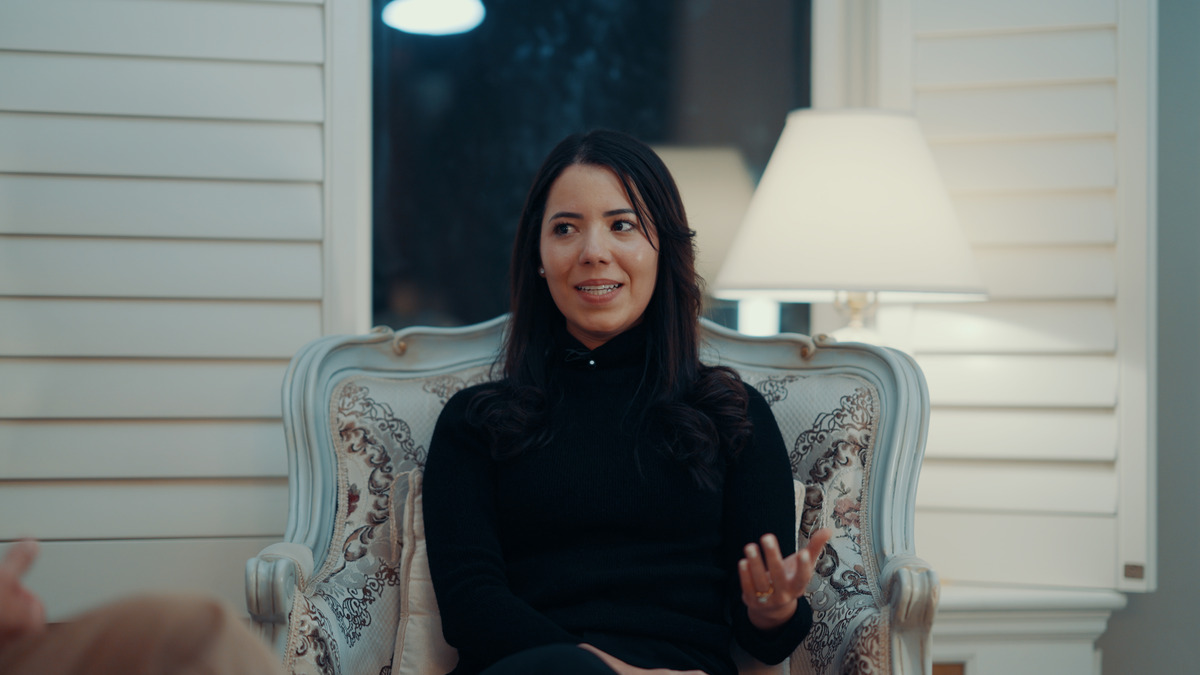
Raiany Romanni-Klein is a bioethicist who thinks about the biggest question a civilization can ask: what should we do, in which direction should we advance? Her answer is unambiguous. There is, she argues, no goal more important than the quest for life.
Extending life and diminishing suffering, she points out, has always been the goal of medicine, antibiotics and heart transplants already do it. In the twentieth century we doubled life expectancy; what we haven't yet done is add the matching healthy years. That, she says, is the direction to go.
She is impatient with the idea that aging is a mystical gift that gives life meaning. Biological aging is the direct source of most cancers, most heart disease, most dementiait is biology, not destiny, and biology can be targeted.
Her mission is less about new lab results than about will: she believes we already have enough science to act, and that what's missing is public and political conviction, and funding. In the US, she notes, only a fraction of a percent of the health-research budget goes to the biology of aging.
Bioethics & longevityThe case for life extensionAging is biology, not destinyBoston · Harvard
Boston · Massachusetts
Where we met
An evening in Boston
We met Raiany in Boston, a fireside conversation with Marek and Alek about the ethics and the urgency of longevity: why extending healthy life is the most natural goal there is, and why a civilization that says otherwise is telling itself a story.
Boston
Harvard
A conversation on bioethics, what a civilization should do, and where it should advance.
The argument
Aging is biology
Not a mystical gift, but the source of most cancers, heart disease and dementia.
The gap
Will & funding
We have enough science to act, what's missing is public conviction and money.
"Life is what underlies the possibility of everything else, everything we're able to stand for … So I would argue life extension is the single most important thing we should be working towards."
"It's not being healthy for an 80-year-old. It's being healthy, period. It's being biologically young."
Raiany Romanni-Klein · Boston
I would argue there is no question more important than what we should do, in which direction we should advance.
Raiany Romanni-Klein
You don't go to bed thinking, 'I'm gonna wake up tomorrow, and I'm gonna be alive, and then I'm gonna do X, Y, and Z,' but that is exactly the case. If you're dead, you don't get to do anything.
Raiany Romanni-Klein
We've shown that aging is malleable in animal models. … It's not like humans have some special spark that makes them untargetable.
Raiany Romanni-Klein
I'm convinced that we don't need any more technical results in longevity to take action as a civilization.
Raiany Romanni-Klein
In her own words
Straight from the interview
From our conversation with Raiany in Boston, how she frames the case for longevity, why the "death is good" story is dangerous, and where the field really falls short.
Her view: the most natural goal
Medicine has always extended life and eased suffering, she says, antibiotics and transplants already do it. The wish to survive is the most natural thing a living thing can do; treating it as unnatural is just a story we tell ourselves.
"Life extension is the single most important thing we should be working towards."
Boston · from the interview
The dangerous narrative
The idea that death is a good thing, she argues, is dangerous. We drape a mystical quality over aging that stops us seeing it clearly, but it is biology, the direct source of most cancers, heart disease and dementia.
"Progress happens not one funeral, but one hardworking living human at a time."
Boston · from the interview
Her mission: will & funding
She's convinced we already have enough evidence to act. The work now is persuasion, convincing governments and the public that healthy longevity is worth doing, and moving real money toward the biology of aging.
"In the US, only 0.54% of the NIH budget goes towards fundamental research on aging biology."
The video interview is coming. Recorded interviews go live after the launch of the film & series Live Beyond.
Selected passages from our conversation with Raiany Romanni-Klein, in Boston. Lightly edited for readability.
On the direction of a civilization
Raiany Romanni-Klein"I think there's no goal more important than the quest for life. There's hardly anything more natural than the wish to survive, and it's a feat of storytelling really that we as a storytelling ape manage to tell ourselves that it's unnatural to extend the human lifespan when for billions of years, literally, evolution has designed us to want to live, right? It's, I would argue, the most natural thing a living thing can do."
On the goal of medicine
Raiany Romanni-Klein"Health is only occasionally the goal of medicine, right? So we need to remind ourselves that medicine's goal is to extend life and diminish suffering when possible. But if you can't extend health span, you're still gonna aim for life extension. That's what antibiotics do. That's what heart transplants do. So it's not like it's new. It's not a new idea. It's not a new goal. But it's certainly a bold statement, right? We've grown up in a society that teaches us to tell ourselves that aging is this mystical thing as if it were designed by kind gods to furnish human life with meaning when we know that biological aging is very often a real source of suffering, right? It's the direct source of most cancers, most heart diseases, most dementias."
On the danger of the "death is good" story
Raiany Romanni-Klein"I think that the narrative that death is a good thing is a very dangerous narrative. I think progress happens not one funeral, but one hardworking living human at a time, and I think we need to remind ourselves as a civilization that there's nothing mystical about death. … So we assign this mystical quality to aging that prevents us from understanding it as biology, but it is biology."
On being biologically young
Raiany Romanni-Klein"It's really difficult for people to fully visualize the idea that what we're talking about isn't being healthy for your age. It's not being healthy for an 80-year-old. It's being healthy, period, right? It's being biologically young. It's a very novel concept, and I think in good part most people object to the idea of life extension because they can't quite picture it in their minds."
On will and funding
Raiany Romanni-Klein"I'm convinced that we don't need any more technical results in longevity to take action as a civilization. I think we have all the scientific results we need to convince people that this is a worthy cause area. So my goal is to convince folks in government, just the general public, that this is a desirable thing in the first place … For a field like Alzheimer's, we have perhaps fewer credible results. Alzheimer's has its own snake oil history, and yet we continue to invest about $4 billion a year in the US government alone. And I think we need to shift the focus towards research on the biology of aging."
Continue the quest
More minds on the quest
Raiany works at the Creating the Movement layer of the Longevity Map, the ethics and case for longevity. Here are others on the quest, and the full cast of 100+.