Professor, Harvard Medical School & MIT Geneticist & synthetic biologist · co-developer of CRISPR · Boston
Level 3 · RadicalRadical Life ExtensionGene and cell therapies that don't just treat disease but reset the biology of aging, the frontier George has spent his career building toward.
George Church is a geneticist and molecular engineer so central to the genomic age that he's often called the father of genetics. He is a professor at Harvard Medical School and MIT and a core faculty member of Harvard's Wyss Institute: and in 2017 Time named him one of the 100 most influential people in the world.
He helped write the toolkit of modern biology: an early architect of direct genome sequencing, a co-developer of CRISPR gene editing, and the founder of the Personal Genome Project: for which he volunteered as patient zero. Along the way he has co-founded dozens of biotech companies spanning gene therapy, age reversal, synthetic biology and DNA data storage.
His frontier now is radical life extension: treatments that don't just fight disease but reset the biology of aging itself. As he sees it, the line between gene therapy and epigenetic reprogramming is blurring: many gene therapies already work by acting as long-lived regulators that change how a cell behaves, giving the body a kind of durable, precise reset.
He is also a careful scientist about how that future arrives. He is wary of hype and of the wealthy self-experimenting; the responsible path, he argues, runs through rigorous, controlled clinical trials, and, he notes, the COVID vaccines proved we can already deliver genetic medicine safely at enormous scale.
Harvard Medical School · ProfessorMIT · Wyss InstituteCRISPR · Personal Genome Project50+ biotech ventures
Boston · Massachusetts
Where we met
A sprint up the stairs at Harvard
We chased George to a biomarkers conference in Boston, not at all sure he would show, the organisers couldn't even reach him. But he came. Moments after his lecture, while others crowded him for advisory boards and startups, he turned to us and said he had to go do an interview with Marek. Then, ignoring the elevator, he took two flights of stairs at a run, energy that defied every stereotype of age, and gave us ninety of the most inspiring minutes of the whole quest.
Boston
Biomarkers conference
We waited, unsure he would appear, then he walked straight past the recruiters and came toward us.
Two flights up
No elevator
He sprinted the stairs on the way to the interview, the opposite of everything we're taught to expect from aging.
90 minutes
The conversation
Gene therapy, radical life extension, regenerative medicine and the real future of human health.
Marek: “I used to tell my son that when he is in his 30s, we will look like brothers. Do you think that’s achievable…?”
“I can’t really address the political and market forces, but I can say the technology should be up to that task. And we still have things to learn about the biology of aging. … So I think we have more than enough information, but we’ll keep gaining it at an exponential rate.”
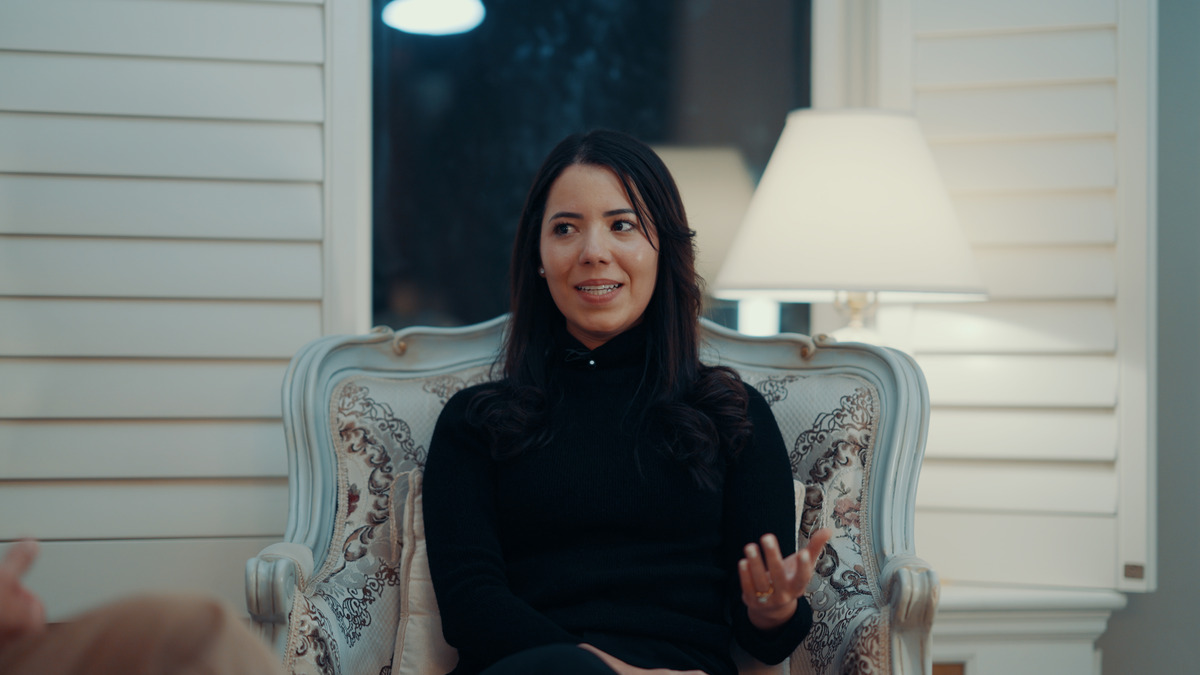
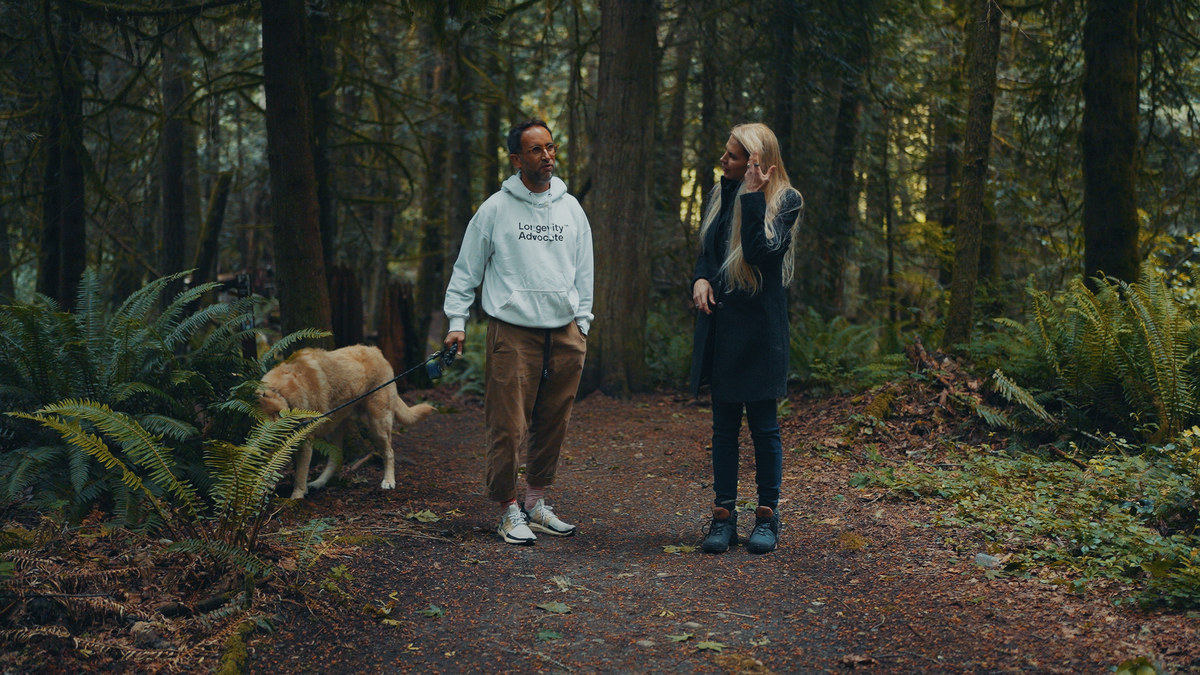
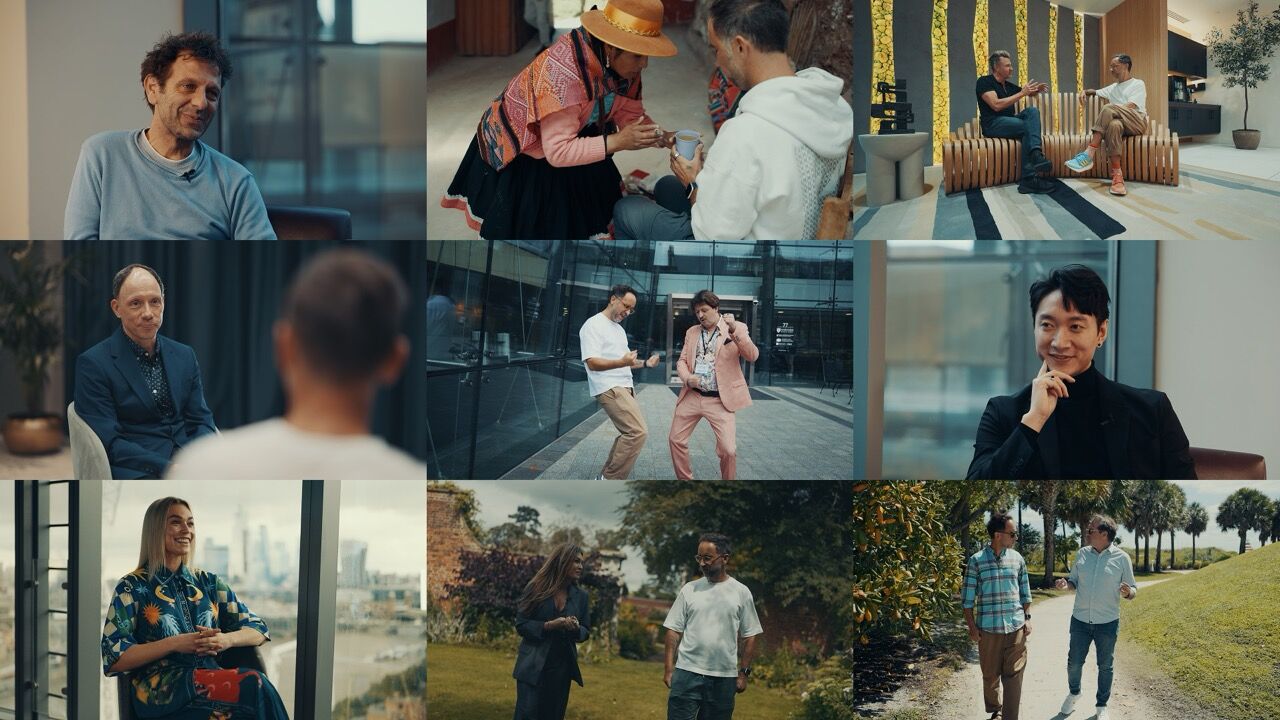
Through the hallsBoston, heading to the interviewThe introductionRight after his talkOn setBehind the scenes of the conversationOn stageBiomarkers of Aging · Harvard, 2024The roomA field big enough to fill a hallIn full flightThe conversation at Harvard, 2024
In his words
Aging is not a rare disease
“I don’t want to be in a field where only the rich people have access to this very powerful anti-aging medicine. … But I think we have the answer already. I think it’s staring us in the face.”
George Church · Boston
What motivates me in general is curiosity.
George Church
Aging is not a rare disease. It is the most common disease. It will kill ninety percent of us.
George Church
It’s likely to be a combination of technologies, and I’m investing most of my time in gene therapies, because they tend to be a little bit smarter.
George Church
If you’re happy and healthy and have family all around you and you wanna see how your great-grandchildren grow up, I think their dream of dying at 85 will be a passing fancy.
George Church
In his own words
Straight from the interview
From our Boston conversation with George, how he sees the science of aging, how that science should responsibly arrive, and the answer that became the heart of our quest.
His view on radical life extension
Gene therapy and epigenetic reprogramming, he argues, are converging. Many gene therapies already act as long-lived regulators that reshape how a cell behaves, giving the body a durable, precise reset rather than a temporary fix.
Almost all the ones we're pursuing are gene therapies that do epigenetic reprogramming. In other words, they're both.
Boston · from the interview
How the science gets there
He is wary of hype and of the wealthy self-experimenting. The responsible path, he says, runs through rigorous, controlled clinical trials, and the COVID vaccines already proved we can deliver genetic medicine safely, at enormous scale.
We plan for the worst and hope for the best rather than just, do I feel lucky and do Russian roulette?
Boston · from the interview
His answer to the son
Marek asked the question at the centre of the whole quest: "I used to tell my son that when he is in his 30s, we will look like brothers. Do you think that's achievable…?" George paused, smiled, and gave an answer we carry with us.
"I can't really address the political and market forces, but I can say the technology should be up to that task."
The video interview is coming. Recorded interviews go live after the launch of the film & series Live Beyond.
Selected passages from our conversation with George Church, Harvard, Boston, November 2024. Marek opens; Aleksander asks the closing questions. Lightly edited for readability.
On what drives him
George Church“What motivates me in general is curiosity.”
On which tools will actually deliver
Marek Piotrowski“Which of those radical life extension tools do you think are the most promising ones to give us an extra 50 years or more?”
George Church“It’s likely to be a combination of technologies, and I’m investing most of my time in gene therapies, because they tend to be a little bit smarter.”
On making it affordable: and the pandemic as proof
Marek Piotrowski“So now the costs are huge. Do you think we can bring them down so that these therapies are achievable for regular people without the state’s intervention?”
George Church“I asked the question myself as I entered the field decades ago. I said, ‘I don’t want to be in a field where only the rich people have access to this very powerful anti-aging medicine, or any gene therapy for that matter.’ … But I think we have the answer already. I think it’s staring us in the face, which is that the gene therapies are expensive and getting more expensive for rare diseases. … Aging is not a rare disease. It is the most common disease. It will kill 90% of us, possibly more if we reduce accidents and war and that sort of thing. … And we have a test bed for that already, which was the pandemic. So the COVID-19 pandemic was actually vaccinated with 2 categories of gene therapy. They were unquestionably gene therapy, even though they weren’t announced that way. … And it cost 20, 30 dollars and 6 billion people took it, so it’s safe and effective and cheap. And I think aging, age-related diseases should be exactly the same kind of market and effect.”
On looking like brothers
Marek Piotrowski“I used to tell my son that when he is in his 30s, we will look like brothers. Do you think that’s achievable that in, let’s say he’s 18, so in like 20 years, we’ll be able to rejuvenate ourselves so that our organs and our skin look much younger than they are clockwise?”
George Church“I can’t really address the political and market forces, but I can say the technology should be up to that task. And we still have things to learn about the biology of aging. … So I think we have more than enough information, but we’ll keep gaining it at an exponential rate.”
On wanting to stop at eighty-five
George Church“Some people think they want to die at a certain age. They wanna live exactly the longevity currently. But of course, that’s not natural. We used to die at age 30 or 40, right? And I predict that if they get to the current longevity age of 85 and they feel like a 35-year-old, it’s gonna be very hard to commit suicide. If you’re happy and healthy and have family all around you and you wanna see how your great-grandchildren grow up, I think their dream of dying at 85 will be a passing fancy.”
On population: and what comes after
George Church“There are 2 interesting things. One is that 2045 or 50, it may be the first year since the Black Plague, when a lot of people died, that the population is gonna go down rather than up. And it may keep going down because there are some trends that are causing that. … So that’s one thing: the population implosion could happen. And so extension of age, extension of youth into age would be a solution to that. The second thing is, as we just solve a lot of these vexing problems like neuropsychiatric disorders, age-related diseases, and diseases of poverty, we’re gonna have a very healthy population and all the economic consequences of that are that we might have some extra money. And at that point, we’ll wanna take care of existential risks like getting hit by an asteroid or some super volcano or solar flares.”
His wish for the quest: asked by Aleksander
Aleksander Piotrowski“There’s one more question that my father makes me ask at the end of each interview. But I believe it’s nice. I would like to know what you would wish us for the rest of our quest for longevity around the world?”
George Church“I hope you get a variety of opinions. I think if you just talk to the scientists, I’m gonna be a little different from my colleagues, but there’s gonna be a general consensus, and it’ll be nice to see that consensus, but it’ll also be nice to see people who don’t know anything about aging, what they have to say, or people who know a little bit about it and are fearful of it, of the reduction of aging, that they think we’ll have overpopulation or something. I think it’d be nice to have some voices other than scientists.”
George Church“But the main thing I wish for is, obviously, that you’ll be very successful and you’ll communicate and get the conversation going. Even if you don’t reach every kind of person, you will stimulate other documentaries maybe to reach a few more people.”
George Church“And I hope you have an impact. That’s the main thing is that you reach a lot of people and those people go home and they write their government and say, ‘Hey, this is really worthwhile. You’re not gonna lose money on this one.’”
Continue the quest
More minds on the quest
George works at the frontier of Radical Life Extension on the Longevity Map, here are others exploring the same edge, and the full cast of 100+.