Elizabeth "Liz" Parrish is the Founder and CEO of BioViva Sciences, a biotechnology company working to extend healthy human lifespan through gene therapy. A mother and humanitarian, she came to this field not to live forever, but because her son was diagnosed with a serious condition, and she realised the tools to do better already existed.
In 2015 she became known as "patient zero", the first person to undergo experimental gene therapy to target aging itself, choosing two genes: telomerase reverse transcriptase and follistatin. In 2020 she went further, adding klotho and PGC-1α. BioViva now works to combine these into a single, more precise delivery platform.
Liz is a leading advocate for democratizing access to longevity medicine and for treating aging as a modifiable medical condition. She is the originator of the Best Choice Medicine (BCM) framework, a proposed pathway to responsibly accelerate patient access to therapies for age-related disease.
An entrepreneur, author and global speaker, she has appeared at forums including WIRED and TEDx, and has spent years sharing her own experience to help people understand the science and potential of gene therapy.
BioViva Sciences · Founder & CEOPatient zero · 2015Best Choice Medicine frameworkSpeaker · WIRED · TEDx
Founder & CEO · BioViva Sciences
Where we met
From Dublin to a forest in Seattle
We first met Liz in Dublin, at the Longevity Summit, where she told us her story of becoming patient zero. Our paths crossed again in Shanghai, and later she welcomed us to her corner of Washington: a walk through the Grand Forest on Bainbridge Island talking gene therapies as her dog led the way, and a hike high into the Olympic Mountains with her husband and Aleksander. We've even skied together. Somewhere along the way, as she puts it, we became family.
Longevity Summit
Dublin, Ireland
Where we first met Liz, and where she first told us how she became the first human treated for aging.
Again in Shanghai
China
Our paths crossed on the other side of the world. The longevity community is smaller than you'd think.
The Grand Forest
Bainbridge Island, WA
A walk through her favourite forest, talking gene therapy, where she called us family.
"Now that we've met all over the world, we're like family."
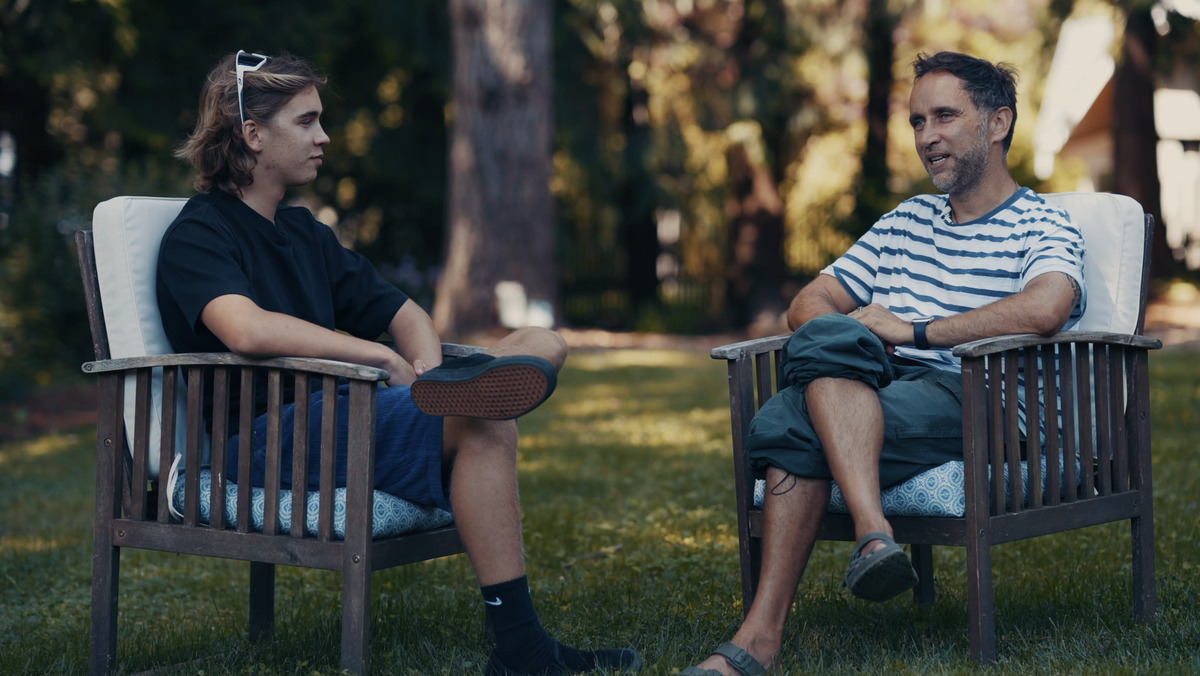
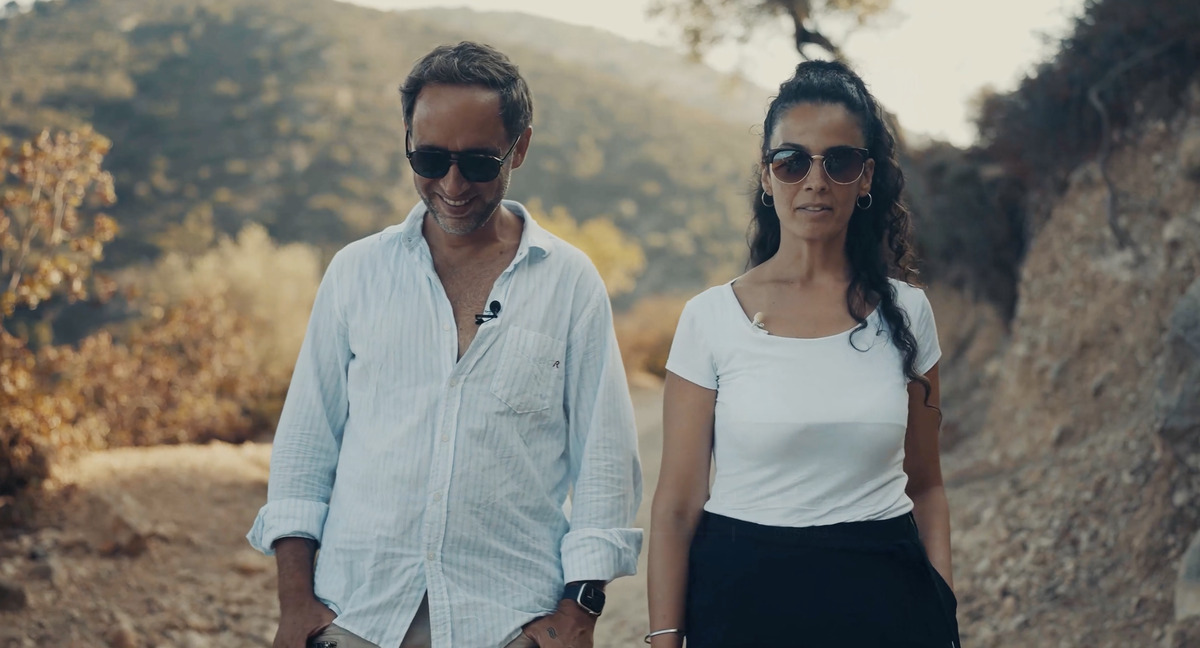
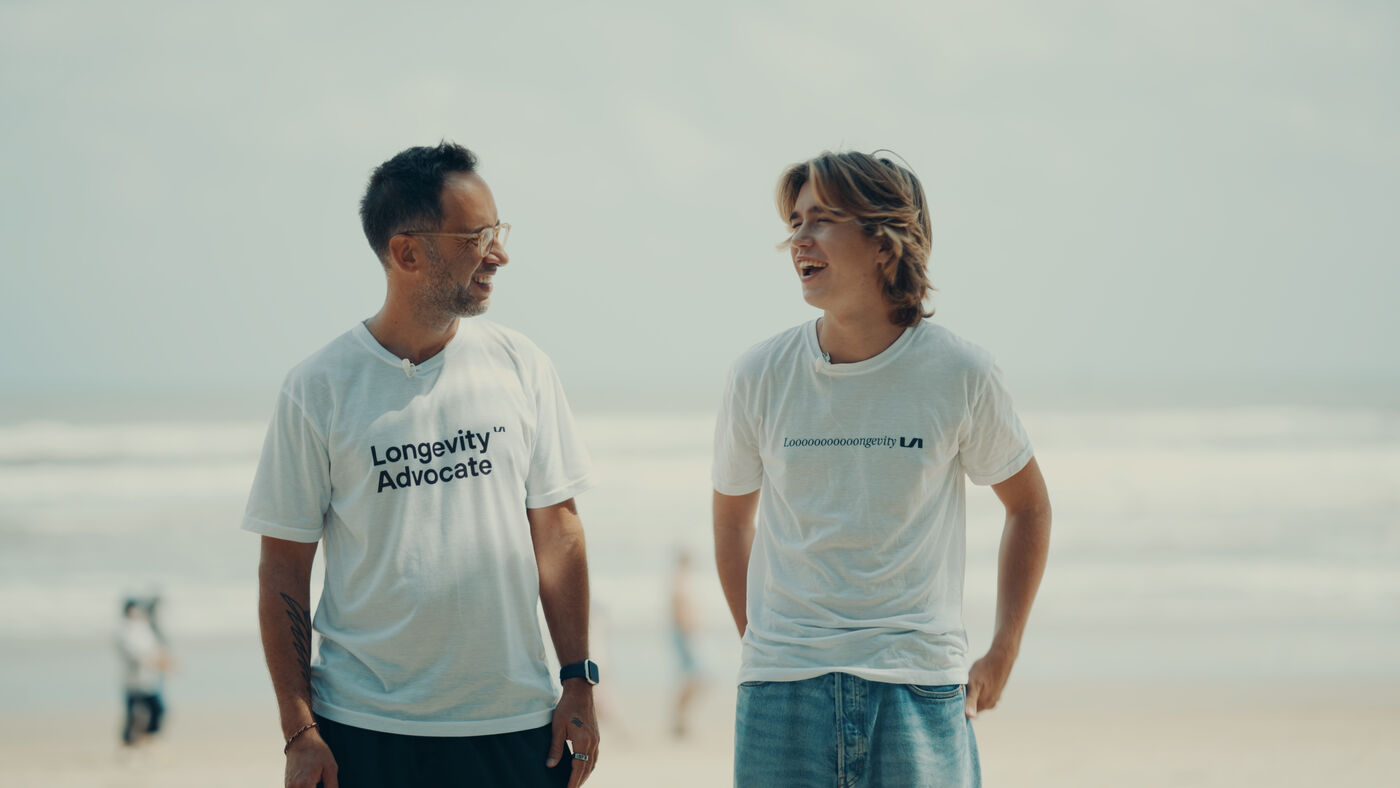
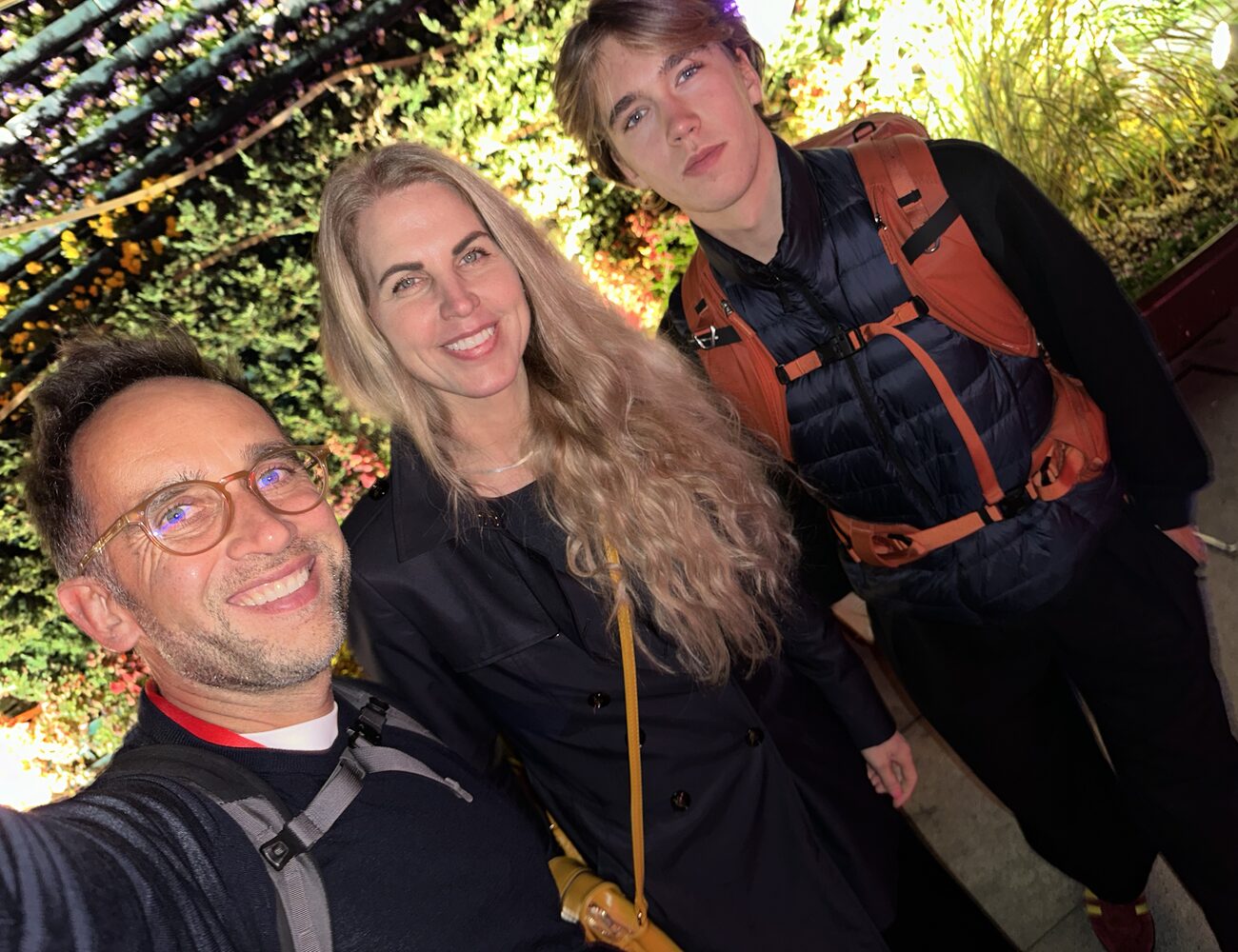
Liz Parrish, her husband and our familyOn a ridge in the Olympic Mountains, WashingtonA playful momentGrand Forest, Bainbridge IslandLike familyMarek, Liz & Alek, Shanghai, 2023On the trail togetherHiking the Olympic MountainsThe interviewTwo chairs, the book, the futureShanghai after darkLiz and Alek walking the empty streets, 2023
In her words
On longevity, lived
"I didn't come to live forever. I came to see if we could. … I'm a doer, and if I die doing that, that's my business, not theirs."
Liz Parrish · Longevity Summit Dublin
We send our children to war. We literally send 18-year-olds to war. It makes no sense when we as adults, consenting adults, could do something that is actually less risky with a better impact for the entire world as far as health.
Liz Parrish
Genetic therapies are actually the most natural therapies. … Your cell becomes the drug factory. You're not taking a drug anymore.
Liz Parrish
Youth isn't wasted on the young at all. It's just missed by the old.
Liz Parrish
I do believe that it will be the gene therapies that bust the bottleneck of the 120 years.
Liz Parrish
In her own words
Straight from the interview
Pulled from our two interviews with Liz, at the Longevity Summit in Dublin, and on a walk through her home forest.
Liz's view on longevity
Her mission isn't to live forever, it's to give everyone the tools to age better, and to treat aging as the medical condition it is.
"I did not come into this industry to live a long time. I came here because my son was diagnosed."
Longevity Summit Dublin · 2023
How Liz does longevity
She is her own first subject, patient zero. In 2015 she took telomerase and follistatin gene therapies; in 2020 she added klotho and PGC-1α.
"When we first did the first gene therapy that I took, I took two different genes. One was called telomerase reverse transcriptase … and the other one is called follistatin."
Patient zero · 2015 & 2020
Her wish for our journey
Like nearly every expert we met, Liz sent us off with a blessing for the quest.
"I hope that you have great success in this first journey because this is the first journey of many. And it's going to change the world."
The video interview is coming. Recorded interviews go live after the launch of the film & series Live Beyond.
Selected passages from our two conversations with Liz Parrish, at the Longevity Summit in Dublin (2023) and on a walk through the Grand Forest on Bainbridge Island (2024).
On why she became patient zero
Marek Piotrowski"When I was also talking to Aubrey or Andrea, who are like more cautious, they were like, 'It's promising, and we pay tribute to Liz for trying everything on herself. We need pioneers like that,' but we still wouldn't do it."
Liz Parrish"I came at this from a completely different angle. So people that are highly longevists, they want to live an immense amount of time, and that means the fewest amount of risks possible to get to the ultimate lifespan. I did not come into this industry to live a long time. I came here because my son was diagnosed. And I think that that's like a real difference. When you come to change the world regardless of the cost, I didn't come to live forever. I came to see if we could. … I'm here to see if we can actually get it done. I'm a doer, and if I die doing that, that's my business, not theirs."
On gene therapy as the most natural medicine
Liz Parrish"Now, when we look at gene therapy, instead of manufacturing some small molecule that maybe nature has never seen before, some synthetic, we're actually looking at what's happening around us all the time. We're going back to nature to do the most amazing thing that humans will see in modern medicine. That is taking a natural, already evolved vector, taking out its ability to deliver its genome. This would be a virus. We take viruses, we take out their ability to deliver their genetic material, and we put in healthy therapeutic genes, and then they deliver them, and this is happening in nature every day. … It's put into the cells, and it upregulates the protein that we want, and this is where the whole thing gets really exciting."
On breaking the 120-year limit
Liz Parrish"If you look at the lifespan of organisms, distinct species, they are all limited by the data or the genes that they were given at birth. … So when I say that we'll break the 120 bottleneck, I don't think that will be difficult to do with genes. It's the overall life extension in which people hypothesize. That means not being limited at all by your age. That means going on maybe as long as you want to. That will be a combinatorial therapy. So do I believe we can break the bottleneck of 120 with genes? Absolutely."
On why we shouldn't wait
Liz Parrish"You always have to realize what the importance is of a person by their job. So a researcher always thinks that we need to do more research, and would that be the safest thing to do for most of the population? Probably for some certain amount of years. But this year, 36 million people minimally will die of biological aging associated diseases. And so this is a case where we can take out new medicine, and we can say it's safe enough to use now. For these people, over 110,000 people today, we should be using these gene therapies. They don't transfer to other people, they don't transfer to your offspring."
On becoming a GMO: and unafraid
Liz Parrish"I think that there is a lot of education that we have to do globally. There has been so much negative feedback on GMO food, and that's why my book will be How I Became a GMO and Why You Will Too. … Genetic therapies are actually the most natural therapies. They're a process that viruses do to us all the time. It's probably why humans have higher cognitive thinking. There's a gene that's been traced back to a virus that we had many, many, many generations ago."
Her wish for the journey
Liz Parrish"So I wish you a wonderful journey around the world, and I actually hope that you do it millions of times. I hope that you celebrate longevity as you start to actually capture these types of therapies in your life. I hope that you have great success in this first journey because this is the first journey of many. And it's going to change the world … If you're healthy, what do you die of? And health is the absence of aches and pains and disease. And so if anything, that's what I wish for you, is absolute health, and then I hope then that that leads into your absolute longevity."
Continue the quest
More minds on the quest
Liz Parrish explores Radical Life Extension on the Longevity Map, here are others on the same frontier, and the full cast of 100+.