
The Live Beyond article series · 09
Either everything is natural or nothing is: what Raiany Romanni-Klein told my son and me
Who pays for a longer life? A Harvard bioethicist answered my son and me with numbers: we already pay trillions, for the years we spend sick.

“If I had a magic wand and if I could delete one bias from human civilization, it would be this idea that what is natural is morally superior to what is unnatural.”
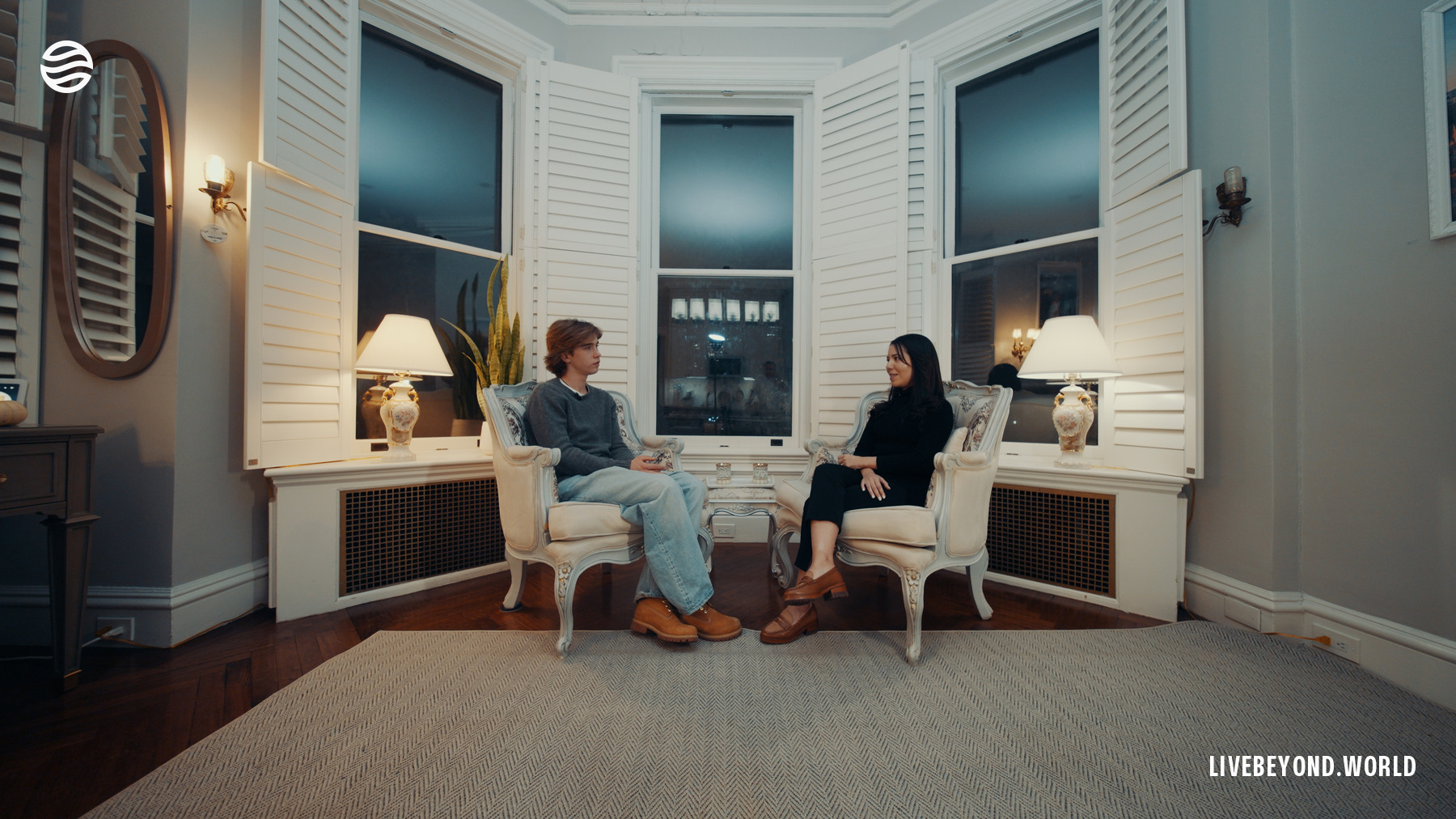
Raiany Romanni-Klein said that to my son Alek and me on a dark November evening in Boston, in her apartment, at the end of a long day of filming. Then she gave us an example I still repeat to everyone:
“It’s okay to play classical music when you’re pregnant so that your kid has some weird odd of growing up to be smarter. But it’s not okay to develop a perfectly safe gene therapy that might do the same, right?”
Raiany is a bioethicist. She thinks about what we should do as a civilization with the new biotechnologies. And her answer is clear: use them to live much longer, in good health.
That same morning, on a walk through a cemetery, Robert Waldinger had told us that people get happier as they get older, partly because they become more aware that life ends. (That was last week’s story.) I told Raiany I see it differently: life is too beautiful, too amazing, to just accept that we have to die at a certain age. She answered:
“If you’re dead, you don’t get to do anything. So I would argue life extension is the single most important thing we should be working towards.”
Be part of it from the very start
Your name and email, and that is the whole sign-up. Unsubscribe with one click, any time.
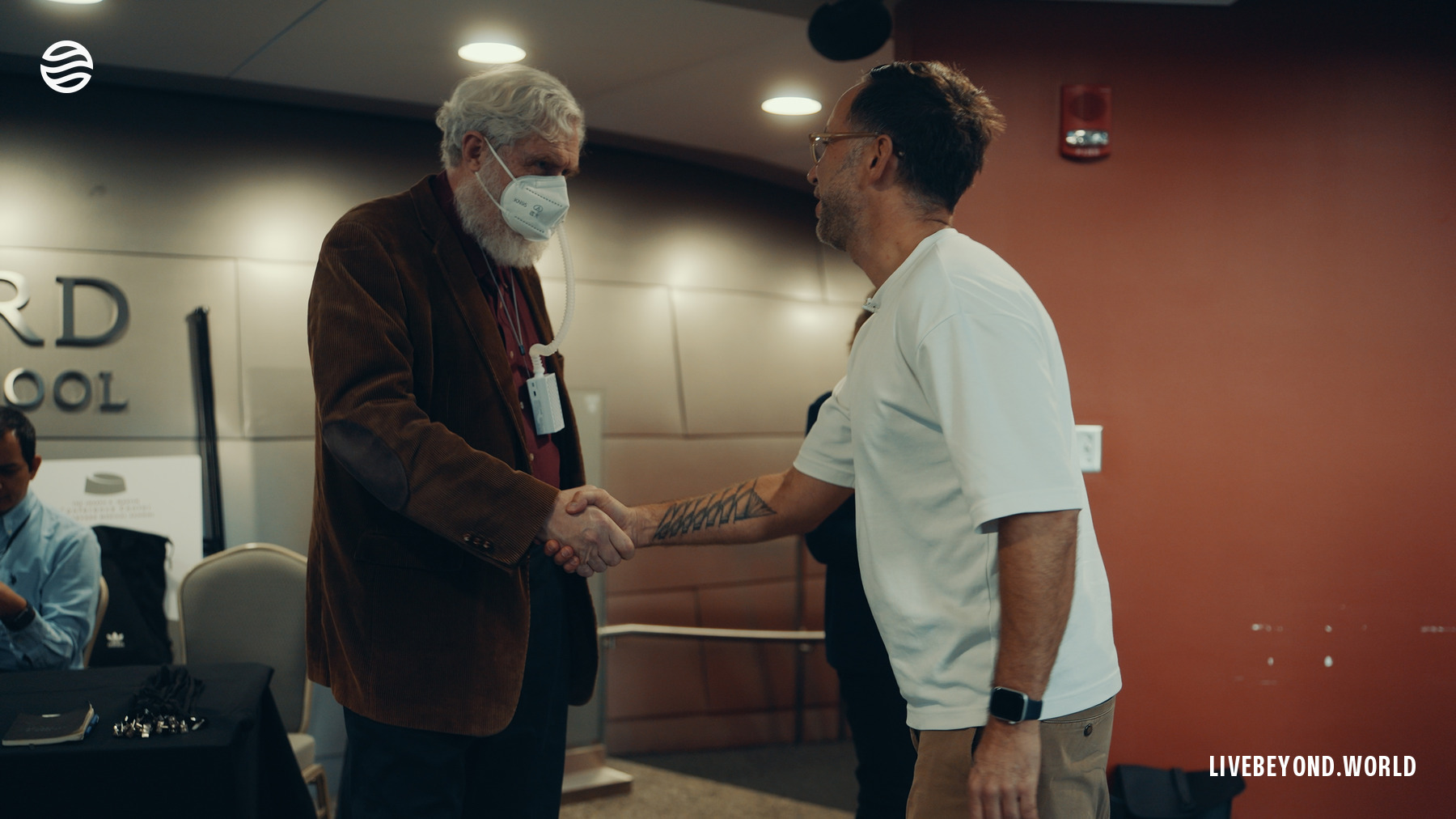
We had met her a few days earlier, at the Biomarkers of Aging conference at Harvard, and I knew she was working on the answers to questions I often hear from people. Where is society going if we live much longer? What about the economy? You’d think bioethics is philosophy. Then she gave us numbers, by heart:
The bill we are already paying
“By 2029, the US is gonna be spending $3 trillion every year, half its federal budget, on adults age 65 and older with Medicare and Social Security. It’s, I would argue, the biggest problem in human civilization … in this century.”
(Medicare is America’s health insurance for people over 65; Social Security is its state pension.)
These numbers answer a question I often hear when I say I want to live at least 500 years: who is going to pay for that? Raiany’s answer is that we are paying already, for the years we spend sick. So I asked her how she would convince a president to invest a hundred times more in research on aging. Her answer was about a deadline:
“In the US, for instance, Social Security is gonna become insolvent by 2034, but democratic governments do not have the incentives to go out and run a campaign on this fact, right?”
And yet almost all the money goes to treating the diseases of old age, and almost none to the aging that causes them:
“We act as if there were no solutions. We pretend that it’s not a problem because there seem to be no solutions at hand, but there are, right? We know that we can target the biology of aging, and we should.”
We spend trillions on the effects of aging, and almost nothing on its cause.
What one year is worth
This is the part I loved most. Raiany doesn’t only argue. With a team of economists she built a model that counts what slowing aging would be worth. When we met, it was still work in progress. Today anyone can play with it, in her interactive report Silver Linings (silverlinings.bio). She explained to Alek why the brain comes first:
“If we slow brain aging by even just one year, that would add billions of dollars to the US economy, trillions of dollars in the long run.”
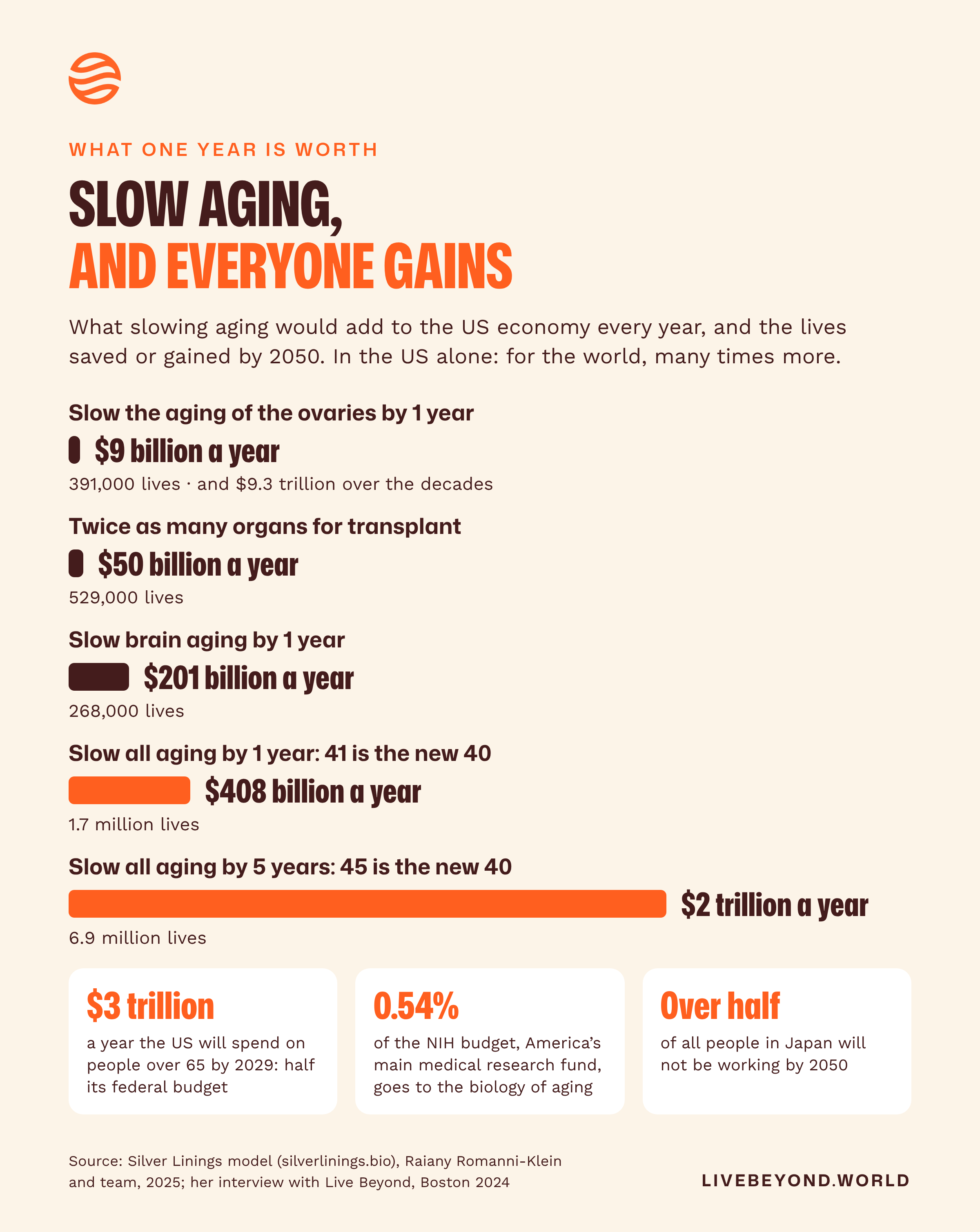
One thing to keep in mind: Raiany counts only one country, the US. For the whole world, every one of these numbers would be many times bigger.
The row that surprised me most is the ovaries. Over the decades, slowing their aging is worth even more than slowing the brain’s. Raiany told Alek why:
“If you create new humans, they in turn create new humans themselves.”
The same week at Harvard, Vittorio Sebastiano, who works on rejuvenating our cells, told us what the ovaries mean for a woman’s whole life:
“The sooner a woman enters menopause, the shorter the lifespan and the higher the mortality rate.”
Too few people who can work
Alek knows the world is getting older. But his friends worry about the opposite, overpopulation, once we all start living longer. So he asked her if it’s a real threat. Not for a long time, she said:
“I think in the very long run it could be. In the short run, what we have is a collapsing population problem, and as you pointed out, an aging population problem.”
Then we talked about Japan, where we had spent a month a year earlier. On Okinawa, our friend Tina Woods had told us that Japan asks employers to keep their workers healthy, because otherwise “they have no people to work”. Raiany put it in one sentence:
“By 2050, over half of all people in Japan will not be working, whether they’re retired or maybe they’re children.”
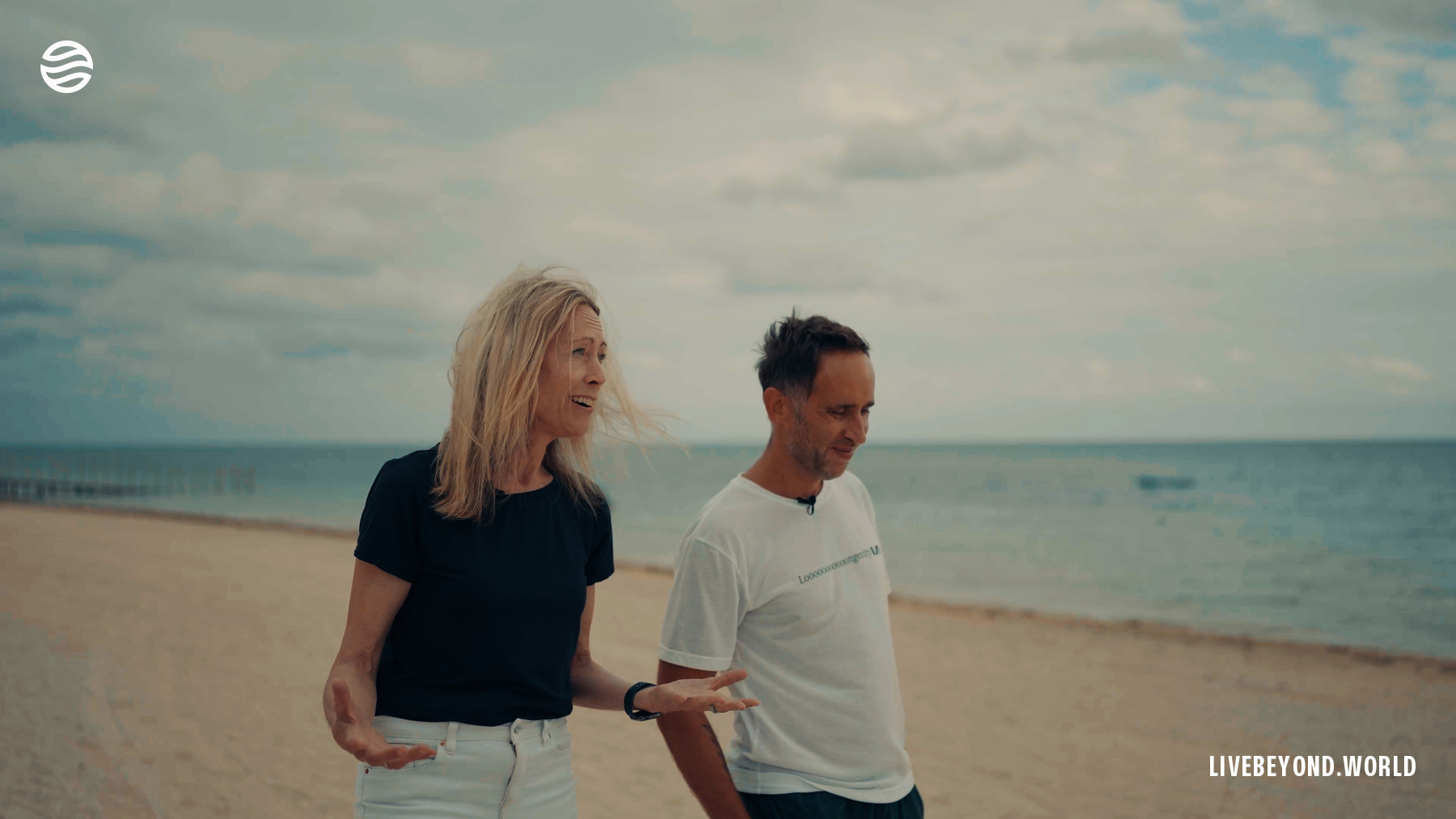
The problem isn’t too many people. It’s too few people who can work.
And an older country, she said, is not a problem in itself:
“If we had older adults who remain productive throughout their lifespan, I don’t see that as a problem at all.”
So we will have to redesign our lives. I always say: maybe we won’t retire at 65, but take a year off every ten years. At Stanford, Yochai Shavit and his colleagues at the Stanford Center on Longevity work on exactly that, a new map of life for a hundred years or more. I told him that life is a great game, and that it is “very important to be a player and not an NPC”, a non-player character who lets others decide. He took it further:
“It’s also about having the internal and external strength and sense of security to say, ‘I’m changing the rules. I’m changing the board.’”
Natural is a story we tell ourselves
Then I challenged her. A professor in the US once told me privately that everybody should have their genes sequenced, because we can learn so much about the illnesses that are coming to us. And he went further. Sequencing is now so cheap that a government could offer it to its whole country and prevent so many premature deaths and diseases. A government that doesn’t, he said, is in effect committing a genocide. He wouldn’t say it to the camera. Before I could even finish, Raiany laughed: “I know who told you that, yes.” Then I asked her what she thought.
She didn’t defend him and she didn’t attack him. She went straight to the word that frightens people whenever someone talks about improving our genes:
“The word eugenics comes from good birth, and I would argue every parent out there is doing everything they can to ensure that their child is born healthy.”
And then she reached for her magic wand, the one this story began with: the bias that what is natural is better than what is not. What we call a disease, she told us, changes with the times. In the late 1800s, enslaved Black people in America were documented to suffer from a “disease” whose main symptom was the urge to flee the plantations. So who decides what needs treating?
“The question of whether or not aging is a disease and whether or not we should treat it is really a moral decision. It’s not a scientific one.”
I told her that if we can extend our lives, we should all do it, and that I hope our film will inspire people in governments to invest in it, not only money but time. She said we are doing it already, we just don’t call it that:
“I don’t see anyone protesting antibiotics or heart transplants or cancer therapies, no matter how inaccessible they are. If you can extend somebody’s life, you’re gonna do it with whatever means you have. The thing is we don’t have that many means yet, but we could. We could if we worked towards it.”
I said that all the medicine we are working on is based on natural biology. Even when we make new miracles with it. She answered with the line I have repeated ever since:
“In my view, either everything is natural or nothing is. So anything the human brain can produce is natural, I would argue. … If we can think it up, we can make it happen.”
I think about it the same way. Most of what science does is learn how nature already works, and copy it to make our lives better. Penicillin came from a mold. Gene therapies use the tools viruses invented long before us. Raiany reminded us how “natural” life used to be: “This idea that we get to live to 80, it used to be 30 a couple thousand years ago.”
So if we can use nature’s own powers to create therapies, to heal people and help them live much longer, I think it is our obligation to do it. Not to keep arguing whether it is natural. At the same conference at Harvard, Allison Duettmann, who runs the Foresight Institute, put it even more strongly:
“We should just liberate people to be out there and actually reclaim this number one, I think, human right, which is the right to live.”
For everyone, not only the rich
Another question I often hear: won’t all this be only for the rich? George Church, one of the advisors on Raiany’s doctorate and my favorite scientist of the whole quest, asked himself the same thing decades ago:
“I don’t want to be in a field where only the rich people have access to this very powerful … anti-aging medicine, or any gene therapy for that matter.”
And he thinks the answer is already staring us in the face. Gene therapies for rare diseases are expensive, and getting more expensive, because each one is made for a few patients. Aging is the opposite:
“Aging is not a rare disease. It is the most common disease. It will kill 90% of us.”
A medicine that almost everyone needs doesn’t have to stay a luxury for the few. Made for billions of people, it can become cheap. And it pays back many times over:
“So really, it’s the best use of our time and money because it will affect almost every disease.”
More humans, more solutions
People also ask me: if we all live to 200, won’t the world get stuck, full of old people with old ideas? Raiany thinks the opposite:
“I think human potential may be unprecedentedly unlocked if we get to live to 200. I think we could make such incredible discoveries. I mean, can you imagine if someone like Einstein got to be alive for another 100 years?”
And then she said the most human thing of the evening:
“I personally, I’m 30 years old. I would love to raise a family, and to be a wonderful wife and to have kids, but that’s impossible with my current career choices. So if I could have both, that would be incredible. That’s essentially what I think life extension would give me on a personal level.”
I understand her completely. I’d love to have twins one day, a little brother and sister for Alek and Ryan. One life is too short for everything we want to do.
“I think humans are a net good. I think we need more of us around. I think more humans create more solutions … not more problems.”
What she wished the young
Alek asked her what she would tell his generation. Her answer was short:
“There are solutions out there. So I hope this film shows people, young and old, that there are solutions to this problem.”
She guided Alek through the whole interview with a lot of warmth. From the first minute I knew she was dedicated and mission-driven, very firm in her answers, sure of where she is going. A scientist who is not just a dreamer, but hands-on.
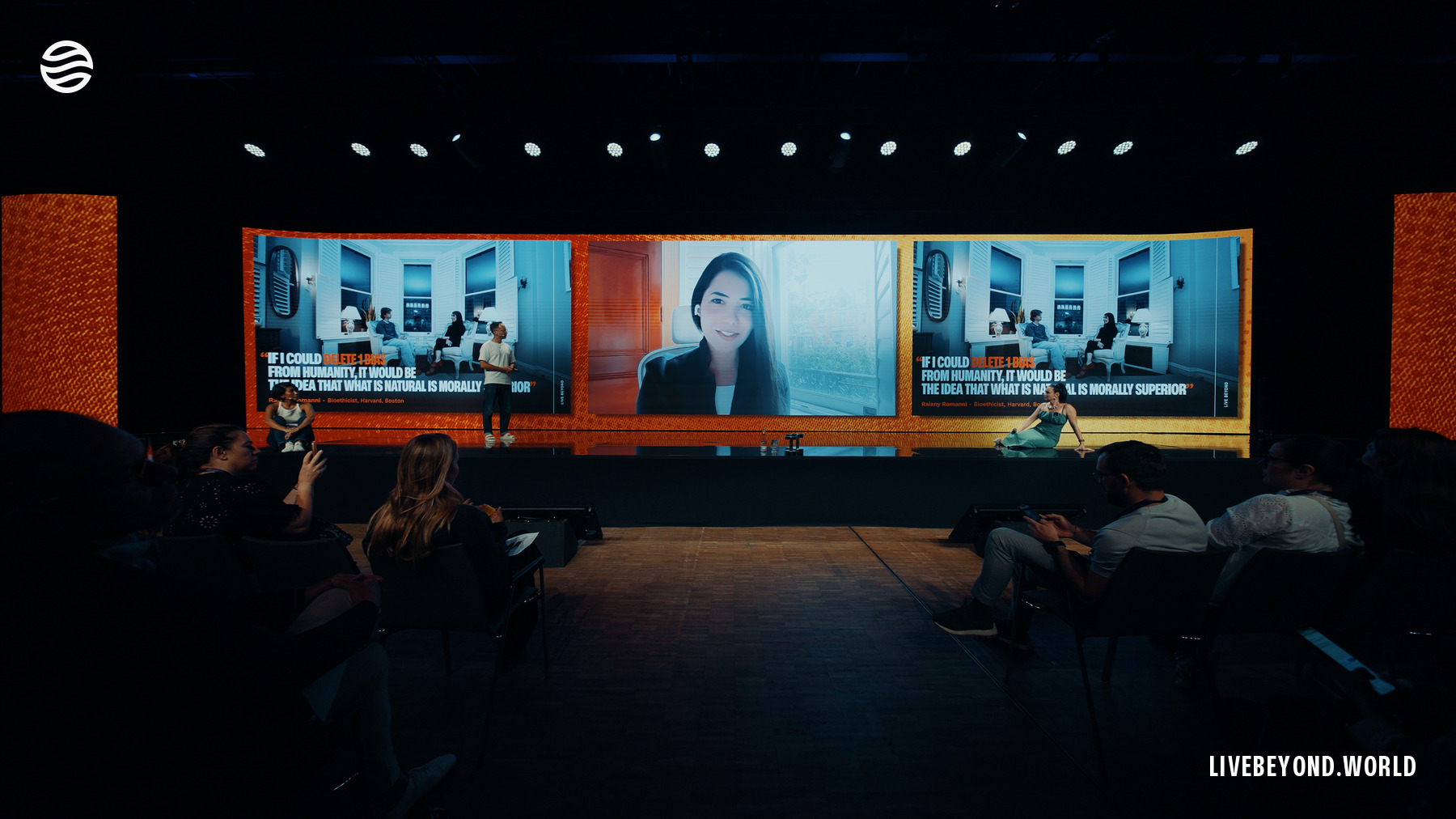
In May this year, at Life Summit in Berlin, she joined our show live from Boston on the big screen. I wanted her there because a movement can’t only inspire people. It also has to convince governments, businesses and institutions. That is exactly what Raiany does. Her book, The Good Lifespan, is coming out with Harvard University Press.
We interviewed Raiany for Live Beyond: the film, the series and the book my son and I are creating from our year-long quest. The film, “Live Beyond. Father and Son on a Quest for Longevity”, is coming next year. You can watch the production teaser, and read about the book.
The most natural thing a living thing can do
Right at the start of the interview, before a single number, Raiany had said something I keep coming back to:
“There’s hardly anything more natural than the wish to survive, and it’s a feat of storytelling really that we as a storytelling ape manage to tell ourselves that it’s unnatural to extend the human lifespan when for billions of years, literally, evolution has designed us to want to live, right? It’s, I would argue, the most natural thing a living thing can do.”
I am so grateful for that evening with Raiany. Conversations like this one are what we need to inspire everyone about longevity, and also governments and institutions, so that the field grows much faster. Because the radical life extension tools are already just around the corner: gene therapies, and partial epigenetic reprogramming (resetting our cells to a younger state). They could add to our lives not another 10 or 20 healthy years, but 50, or 100, or even more. Not a longer old age. A longer healthy life, so that we can feel young at the age of 100. Who wouldn’t want that?
And if we can really give it to people, to ourselves, more time with the people we love, shouldn’t we do it?
In my opinion, longevity is the most important field you can join today. And the more of us join, the faster it will grow. So if you work in any other field, think about it. As a scientist or a doctor, yes. But also as an engineer, an AI expert, a manager, a CEO, a CFO or a CTO. We need to build the whole village. We need cities, even countries, dedicated to longevity science, to its growth, to education and empowerment.
Isn’t it time to join the longevity revolution?
What’s your take on that? If your government declared it would spend ten times more on slowing aging, would you vote for it? Let me know.
Send me your answer on Instagram or LinkedIn.
And if you’d like to join and co-create this movement with us, join our Founding Circle. Let’s challenge the limits together, and start co-creating a new culture with longevity, health and joy built into it.
Thank you, Raiany, for being an important part of our quest.
More from the quest
Answers on this topic
Earlier stories
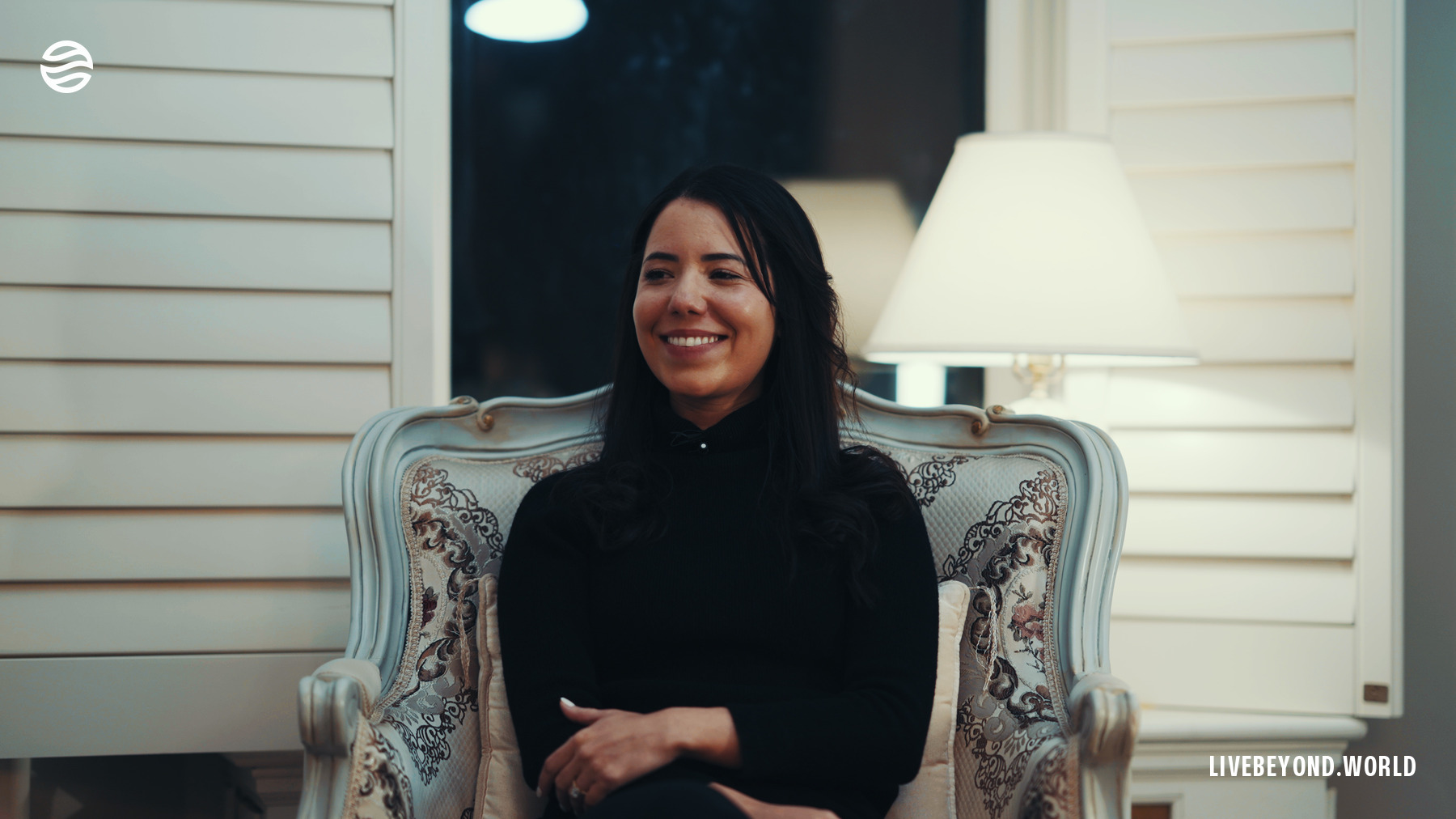
Raiany Romanni-Klein in her home in Boston, November 2024. · Live Beyond
Where each quotation comes from. Raiany Romanni-Klein, Boston, November 2024. Vittorio Sebastiano, Harvard, November 2024. Tina Woods, Okinawa, October 2023. Yochai Shavit, Stanford, May 2024. Allison Duettmann, Harvard, November 2024. George Church, Harvard, November 2024. Silver Linings, silverlinings.bio.