NAD+, NMN and NR: what they do, and why we’re careful
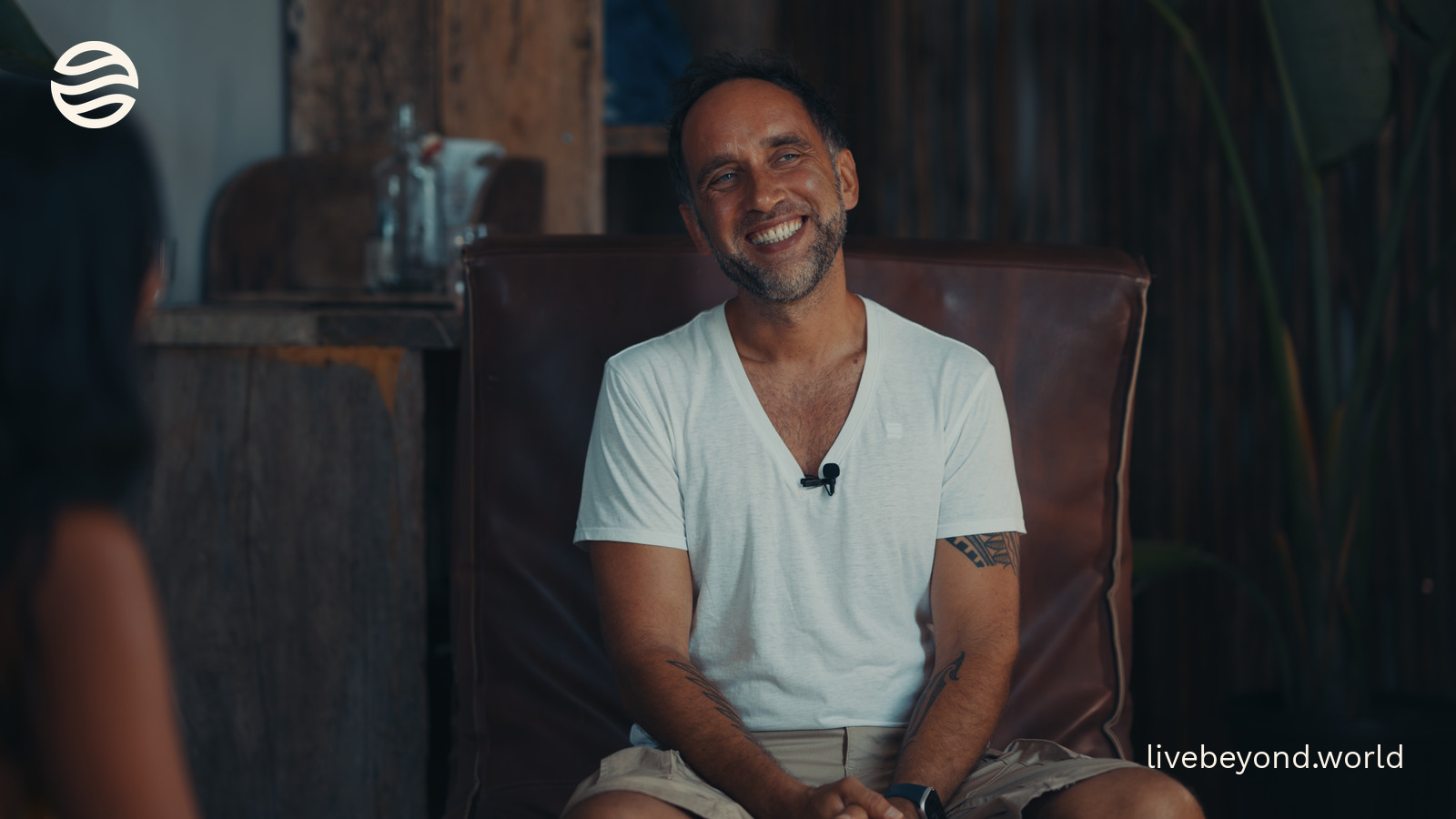
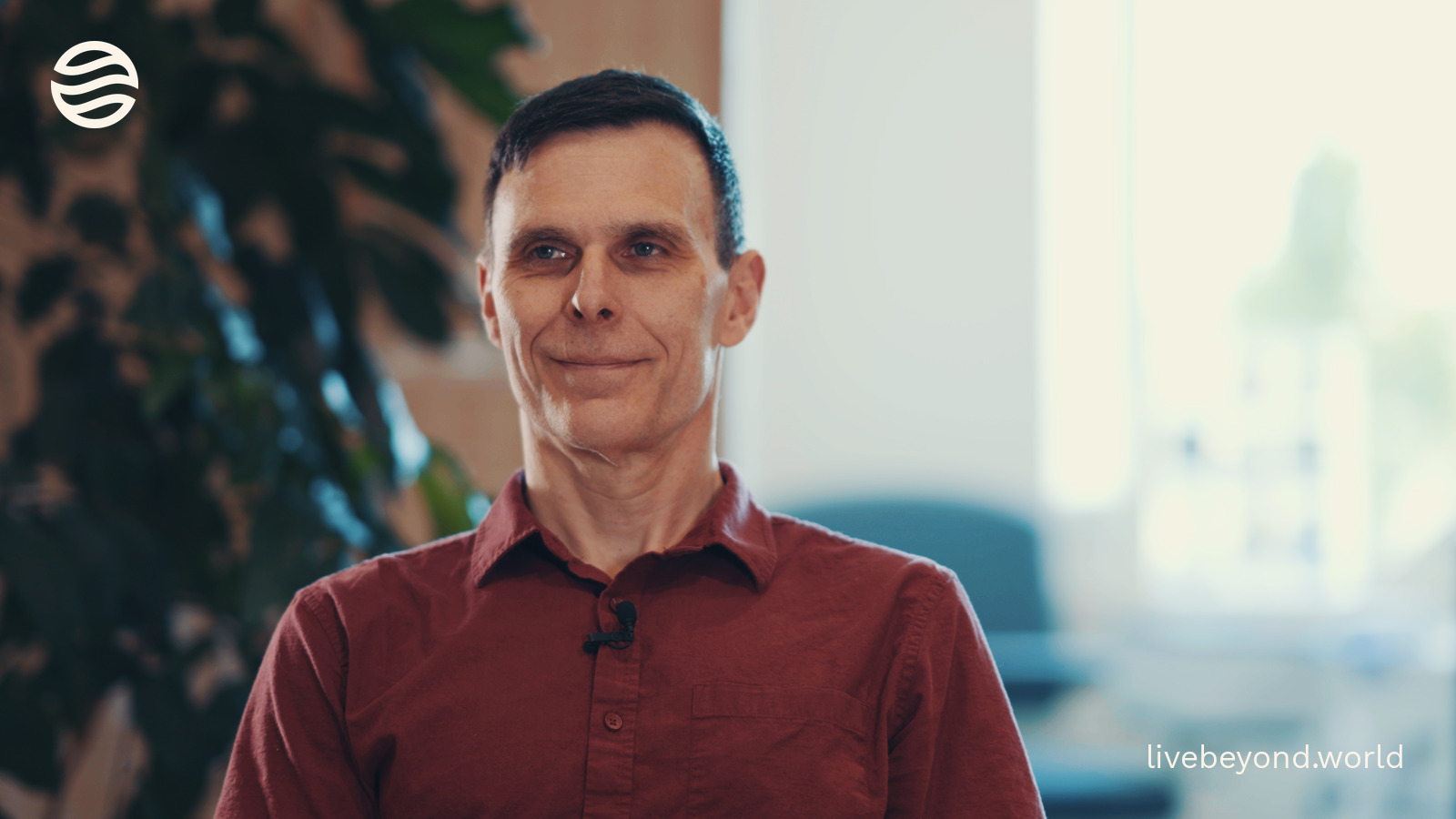
Marek Piotrowski and Vincenzo Sorrentino in Singapore, October 2023 — a Live Beyond interview on NAD+ and its boosters.
On our quest, my son Alek and I met more than a hundred longevity experts in 39 countries and states, and NAD+ came up again and again: in labs, in clinics, and in the drips I tried myself. In Singapore, Vincenzo Sorrentino told us about a new NAD+ booster his team had found, months before it was published. This page explains what NAD+ is, what NMN and NR are, what the animal studies and the human trials have shown so far, and why we’re cautious about NAD+ IV drips — with thanks to the scientists who explained it all to us.
A molecule at the heart of your energy, and the science of topping it up is still young. NAD+ helps every cell turn food into energy and repair itself, and it falls in many tissues as we age. In mice and worms, raising it helped the liver, the muscles and the brain stay healthier. In people, NMN and NR pills reliably raise NAD+ and look safe in short trials, but the health benefits so far are small and still unclear. The good news: the energy that lasts is already in your hands — moving, sleeping, eating well and being with the people you love — while the scientists keep testing. NAD+ drips are a different story, and we explain why. [1][2][3][4][5]
Longevity, as we mean it: more healthy, joyful years. What we mean →
60%more NAD+ in the blood cells of healthy middle-aged and older adults after six weeks of NR, in a small pilot trial. Whether that makes people healthier is still being tested.[6]
12 weeksof NR against a placebo in 40 men with obesity: it was safe, but their insulin sensitivity did not improve.[7]
2 hoursinto a six-hour NAD+ drip, NAD+ in the blood still had not risen, in a small study of 11 men. The body took it up or broke it down as fast as it came in.[8]
Before you change anything
This page shares what research and the experts we met say. It is not medical advice, and it does not recommend any medicine, supplement or treatment. It knows nothing about you. Before you start, stop or change anything — especially if you are pregnant, live with a health condition or take any medication — please talk to your doctor. In an emergency, call your local emergency number.
What NAD+ is, and why it falls
Vincenzo Sorrentino at the National University of Singapore, October 2023 — a Live Beyond interview with Marek Piotrowski on what NAD+ is.
NAD+ (short for nicotinamide adenine dinucleotide) is a helper molecule inside every cell. Your cells need it to turn food into energy in the mitochondria, their tiny power plants, and to run enzymes that help repair them. In October 2023, Alek and I sat down with Vincenzo Sorrentino at the National University of Singapore, in the longevity research program Brian Kennedy created there. I asked him what NAD boosters are:
“NAD boosters are essentially molecules that can be natural or synthetic […] By being boosters essentially means that they can increase NAD levels. So NAD is a coenzyme that is critical to most of our cellular processes in our bodies. […] When you have certain metabolic conditions or age-associated diseases and in some tissues during normal aging, it can sort of start to decline to some extent. So what has emerged is that if we are able to maintain the NAD levels in these particular conditions where the NAD may be needed, then you are able to sort of delay or ameliorate the onset or the progression of these conditions.”
In plain words: NAD+ is a helper every cell needs. In some parts of the body it drops as we age or get sick. Boosters are molecules the body turns into NAD+, and in the lab, keeping NAD+ up can delay some of the problems that come with age.
It falls as we age
Studies in rodents and in people find less NAD+ in several tissues with age. Lower NAD+ is linked to problems that come with age, such as muscle loss, metabolic disease and slower thinking. That is why scientists want to know whether topping it up can help.
Then I asked him the question I really wanted answered: are NAD boosters energy pills?
“I would say to some extent. […] Their effect is still pretty pleiotropic. Pleiotropic meaning they have very broad effects […] In order for your engine to function properly and, let's say, produce the energy to move your car, you need essentially the petrol, which would be burnt to generate energy, and then you have the oil that keeps the engine running smoothly. So in that sense, if you want, NAD precursors, for me, would be more comparable to that.”
In plain words: Not the fuel, more like the oil: NAD+ helps the engine of your cells run smoothly. It touches many processes at once, which is exciting, and also why its effects are hard to predict.
NMN, NR and a new one from plants
Marek Piotrowski, Jan Gruber, Brian Kennedy, Vincenzo Sorrentino and Alek Piotrowski in the laboratory at the National University of Singapore, October 2023 — Live Beyond.
Your body builds NAD+ from smaller pieces, most of them forms of vitamin B3. The ones sold as NAD+ boosters are mainly NMN (nicotinamide mononucleotide) and NR (nicotinamide riboside). Two older relatives are nicotinamide and niacin. All of them are precursors: the body has to turn them into NAD+ inside the cells.
That same October in Singapore, Brian Kennedy, whose program Vincenzo had joined, told us why a new kind of booster matters:
“One of the challenges with NR and NMN […] is that it's used very rapidly. So it gets in the body, and it gets involved in a lot of enzymatic interaction reactions and it goes away. […] And that may also limit the efficacy of the molecules, whereas this molecule is much more stable and so it may have a longer term ability to produce NAD in the body.”
In plain words: NMN and NR are used up fast: they get into the body and are gone again. That may be one reason the results in people are small. A booster that stays longer might work better, and that is what Vincenzo’s team is studying.
Vincenzo told us what his team had found, months before it was published:
“The NAD biology and metabolism is very complex. […] We found that in our body, there is a new type of NAD precursor […] It's mostly produced in plants and that basically it works differently from NMN and NR because basically it doesn't use the so-called NAD salvage pathway, but it uses the Preiss-Handler pathway, which is the same one as nicotinic acid or niacin, which is the very established vitamin B3 and NAD precursor.”
In plain words: A new NAD+ building block, made mostly by plants, that the body handles the way it handles vitamin B3, not the way it handles NMN and NR. Vincenzo told us that people who drink coffee or eat a vegetarian diet have more of it.
Trigonelline: the new one, published five months later
In March 2024, the molecule Vincenzo described to us was published in Nature Metabolism: trigonelline, and Vincenzo is one of the study’s senior authors. People with sarcopenia, the muscle loss that can come with age, had less of it in their blood. In tiny worms it raised NAD+, helped their muscles and lengthened their lives; in older male mice it made muscles stronger and less tired. It has not yet been tested as a treatment in people.
Based on: Study in worms, mice and human muscle cells [9]
What the animal studies showed
Dr Tamsin Lewis and Marek Piotrowski by the sea in Formentera, August 2024 — a Live Beyond conversation that touched on NAD+.
Much of what we know about NAD+ comes from mice and from tiny worms. Some of the best-known work was done in Johan Auwerx’s lab in Lausanne, Switzerland, where Vincenzo worked earlier in his career.
Fatty liver in mice
Mice fed a high-fat, high-sugar diet lost NAD+ in their livers and developed fatty liver. NR, an NAD+ booster, both prevented it and reversed it.
Vincenzo’s own work in that lab looked at amyloid, the sticky protein clumps known from Alzheimer’s disease:
“My previous work has shown that, for instance, even during muscle aging, in otherwise healthy people or healthy animals, you actually can detect muscle proteins that are starting to aggregate in form of amyloids. […] So what we have discovered is that actually you can use NAD boosters or modulate mitochondria function in order to get rid of this. And this was true for Alzheimer and it was true for muscle aging.”
In plain words: With age, some proteins start to clump, even in healthy muscle. In worms and mice, NAD+ boosters helped clear those clumps. This hasn’t been shown in people yet.
Amyloid in worms, mice and muscle
Vincenzo was the first author of a study in which NR reduced amyloid plaques in worms and in mice with an Alzheimer’s-like disease, and the mice’s memory tests went back to normal. A later study from the same team found amyloid building up in aging muscle, and NAD+ boosting late in life reduced it.
Based on: Studies in worms, cells and mice [4][10]
The big lifespan test
A large mouse lifespan program run by the US National Institute on Aging tested NR. It did not make mice of either sex live longer at the dose tested.
Dr Tamsin Lewis, who hosted us on Formentera, reminded us how big the step from mice to people is:
“I think many things are tested in mice and may create an impact in mice that have no human experience and also without acknowledging the difference in between humans and mice and then the multiple inputs that we often have, and people taking high doses of NMN, for example, or NAD, and they're pushing all these multiple levers at once. And as I say, the system is often overwhelmed.”
In plain words: A result in mice is a start, not an answer. And taking a lot of something, together with many other things at once, can be too much for the body.
What the human trials found
Felipe Salech at the University of Chile in Santiago, April 2024 — a Live Beyond interview with Marek Piotrowski on his NAD+ trial.
Here is the honest part. NAD+ boosters have now been tested in many small human trials. They raise NAD+ in the blood. Whether they make people healthier is still an open question. These are four of the trials, compared:
NR · healthy adults
Six weeks, a small pilot trial in middle-aged and older adults. NAD+ in their blood cells rose by about 60%, and it was well tolerated. There were hints of better blood pressure that the authors said need a bigger trial.
Ten weeks against a placebo, 25 women after menopause. Insulin worked better in their muscles. Their blood sugar, blood pressure, blood fats, liver fat and inflammation did not change.
Two months, 80 people aged 40 to 65, three doses against a placebo. NAD+ in the blood rose and people walked farther in six minutes; insulin resistance did not change. The paper says it was paid for by the companies that make the NMN.
A 2023 review of the human studies found that NR and NMN are safe and well tolerated in the short trials so far, and that they raise NAD+ in the blood and in some tissues. Whether raising NAD+ improves how the body works is still unclear: most trials are small and short, and they use very different amounts for very different lengths of time.
Scientists we met are running the trials that will tell us more. In Santiago, Felipe Salech told us about his:
“One of the things that we now know well in basic science is that inflammaging and the decrease of NAD+ level in the cells are negative for the aging phenotype. […] And we are, for example, running a clinical trial when we put older people into an exercise program with nicotinamide supplementation or with placebo. And we are assessing is that if those under nicotinamide supplementation have a faster increase in their physical capacity under the training program than those in placebo. […] Because as I told you, exercise is very important for the health of all the people.”
In plain words: His trial asks a careful question: not whether a pill can replace exercise, but whether it can help exercise work a little faster. Exercise comes first.
And Vincenzo told us what the whole field needs now:
“We need to be able to say that some of our preclinical findings are actually able to start to bring a longevity benefit in humans, right? And not just in small pilot studies, but in large clinical trials.”
In plain words: Mice are a beginning. What counts is proof in many people, over a long time.
Words worth knowing
Three words behind the boosters
From our glossary. Tap a card to turn it over: the science on the back, and the people we met who explained it to us.
No. 56 / 66Inside the body
NAD+
A molecule every cell needs to make energy and to repair its DNA. Levels tend to fall with age.
Zone 2 endurance work builds new ones; high-intensity intervals improve the ones you have. Doing both beats doing either. Supplement evidence here is modest next to the training effect.
Much of the last decade of longevity supplements has been an attempt to top up that fuel.
What helps
NAD+ precursors reliably raise NAD+ in blood; what they have not yet shown is that this makes healthy people live longer or better. Exercise and sleep remain the unglamorous route. Read more →
Marek Piotrowski in Formentera, August 2024 — Live Beyond.
I’ll be honest with you: I’m reluctant about NMN and NAD+. I tried NMN, and yes, it gave me energy — for a few hours. Not for months, not for years. If longevity just meant more energy for an afternoon, fine. But that’s not what longevity is.
I also tried NAD+ drips a few times. I felt terrible, like a heavy weight on my chest.
So I don’t take them, and I wouldn’t recommend them. But I’m not closed. The scientists we met are running the trials right now, and if they show real, lasting benefits, I’ll be glad to tell you about it here.
NAD+ IV drips: what we know
Eric Verdin with Marek Piotrowski and Alek Piotrowski at the Buck Institute, California, May 2024 — a Live Beyond interview on NAD+ drips.
NAD+ drips are sold in wellness centers and some clinics as a boost for energy or a younger body. Eric Verdin, president of the Buck Institute for Research on Aging, whose own research includes NAD+, told us in California what he thinks of NAD+ injections:
“We can talk about NAD injection, for example. You are sometimes taking a chance, almost always taking something that's completely unproven, either beneficial or toxic.”
In plain words: An NAD+ drip is a gamble: nobody has shown it helps, and nobody can promise it’s harmless.
Then he explained why a drip may not even get where it’s meant to go:
“I was told that you can get an infusion of NAD for $700. And we know what happens to NAD when you inject it intravenously. Within five to 10 minutes, it's all degraded in your liver into something called nicotinamide. […] There's almost zero data on intravenous NAD injections. […] NAD is not a factor that circulates in the blood. It's a factor that's built into cells.”
In plain words: Your cells make their own NAD+ inside. NAD+ dripped into the blood is mostly broken down into smaller pieces before cells can use it, and there is almost no research on what the drips do for health.
What one small study saw
In a 2019 pilot study, 11 healthy men received either a six-hour NAD+ drip or salt water. NAD+ in the blood didn’t rise for the first two hours, the authors think, because the body took it up or broke it down into smaller pieces, such as nicotinamide, as fast as it came in. No side effects were reported. The study was paid for in part by NAD+ Research Inc. and run at a wellness center that offers NAD+ drips.
In November 2024, the US Food and Drug Administration warned that some NAD+ for injection had been made from food-grade powder, which is not meant for sterile drugs. It had received reports of severe chills, shaking, vomiting and fatigue after NAD+ injections, reactions that fit contamination with bacterial toxins.
Based on: FDA alert to compounding pharmacies [14]
An IV is a medical procedure
Whatever is in the bag, a drip means a needle in a vein, a sterile product, the right speed, and someone trained to act if something goes wrong. It belongs with a licensed medical team. And for NAD+ drips, there is still almost no research showing what they do for health.
Before you try anything
Matt Kaeberlein in Seattle, June 2024 — a Live Beyond interview with Marek Piotrowski on what to ask before trying NAD+ boosters.
If you’re thinking about NAD+ boosters, here is what the scientists we trust told us. Matt Kaeberlein, in Seattle:
“The way I think about it is our bodies are extremely complicated machines, probably the most complicated machines you can imagine. And if you think about any machine, and you just go in and start randomly changing things, the likelihood you're gonna make it better is much less than the likelihood you're gonna make it worse. So you probably wanna be pretty darn sure that whatever you're doing to your body with the goal of improving health span is likely to work.”
In plain words: Every change to a healthy body is a bet. Make sure the odds are good before you place it.
Eric Verdin starts with one question for anyone reaching for an unproven treatment:
“Quite often these are the people that I will ask them, "Have you optimized everything else?"”
In plain words: Check the basics first: moving, sleeping, real food, people. They are proven, and they are where most of the energy is.
What was shown in people? Not only in mice. Ask how many people, for how long, and what changed in their health, not only in a blood test.
Who paid for the study? Some trials are paid for by the companies that sell the product. That doesn’t make them wrong, but it’s worth knowing.
What else are you taking? Tamsin Lewis warned us about pushing many levers at once. Your doctor should know everything you take.
For a drip: who is giving it? A licensed medical professional, a sterile pharmacy product and a clear medical reason. If one of the three is missing, walk away.
Not medical advice, and not a recommendation for or against any supplement or treatment. We describe what the studies say and what the scientists told us.
Where the joy is
Jan Gruber and Vincenzo Sorrentino at the Supertrees in Singapore, October 2023 — the Live Beyond walk where we heard about a new NAD+ booster.
What gives me real energy, the kind that lasts? Moving every day, sleeping well, real food and the people I love. That’s my longevity game. Even Felipe Salech’s trial in Santiago starts from exercise, and asks whether a booster can help it work a little faster.
And there is joy in the science, too. Sitting with Vincenzo in Singapore, Alek and I heard about a new molecule months before the rest of the world did. Watching scientists like Vincenzo, Brian and Eric test their ideas step by step is what will make me trust the answer when it comes. I’m grateful to every one of them for explaining it all to us.
Every number on this page, by the number in square brackets. Quotations come from Live Beyond’s own recorded interviews, cleaned only of “um” and “uh”. Not medical advice. Talk to your doctor before you change anything.
Covarrubias AJ, Perrone R, Grozio A, Verdin E. NAD+ metabolism and its roles in cellular processes during ageing. Nat Rev Mol Cell Biol. 2021;22(2):119-141. doi:10.1038/s41580-020-00313-x
Gariani K, Menzies KJ, Ryu D, et al., Auwerx J. Eliciting the mitochondrial unfolded protein response by nicotinamide adenine dinucleotide repletion reverses fatty liver disease in mice. Hepatology. 2016;63(4):1190-1204. doi:10.1002/hep.28245
Zhang H, Ryu D, Wu Y, et al., Auwerx J. NAD+ repletion improves mitochondrial and stem cell function and enhances life span in mice. Science. 2016;352(6292):1436-1443. doi:10.1126/science.aaf2693
Sorrentino V, Romani M, Mouchiroud L, et al., Auwerx J. Enhancing mitochondrial proteostasis reduces amyloid-β proteotoxicity. Nature. 2017;552(7684):187-193. doi:10.1038/nature25143
Freeberg KA, Udovich CC, Martens CR, Seals DR, Craighead DH. Dietary supplementation with NAD+-boosting compounds in humans: current knowledge and future directions. J Gerontol A Biol Sci Med Sci. 2023;78(12):2435-2448. doi:10.1093/gerona/glad106
Martens CR, Denman BA, Mazzo MR, Armstrong ML, Reisdorph N, McQueen MB, Chonchol M, Seals DR. Chronic nicotinamide riboside supplementation is well-tolerated and elevates NAD+ in healthy middle-aged and older adults. Nat Commun. 2018;9(1):1286. doi:10.1038/s41467-018-03421-7
Dollerup OL, Christensen B, Svart M, et al., Jessen N. A randomized placebo-controlled clinical trial of nicotinamide riboside in obese men: safety, insulin-sensitivity, and lipid-mobilizing effects. Am J Clin Nutr. 2018;108(2):343-353. doi:10.1093/ajcn/nqy132
Grant R, Berg J, Mestayer R, Braidy N, Bennett J, Broom S, Watson J. A pilot study investigating changes in the human plasma and urine NAD+ metabolome during a 6 hour intravenous infusion of NAD+. Front Aging Neurosci. 2019;11:257. doi:10.3389/fnagi.2019.00257 (Funded in part by NAD+ Research Inc.)
Membrez M, Migliavacca E, Christen S, et al., Sorrentino V, Feige JN. Trigonelline is an NAD+ precursor that improves muscle function during ageing and is reduced in human sarcopenia. Nat Metab. 2024;6(3):433-447. doi:10.1038/s42255-024-00997-x
Romani M, Sorrentino V, Oh CM, Li H, de Lima TI, Zhang H, Shong M, Auwerx J. NAD+ boosting reduces age-associated amyloidosis and restores mitochondrial homeostasis in muscle. Cell Rep. 2021;34(3):108660. doi:10.1016/j.celrep.2020.108660
Harrison DE, Strong R, Reifsnyder P, et al., Miller RA. 17-a-estradiol late in life extends lifespan in aging UM-HET3 male mice; nicotinamide riboside and three other drugs do not affect lifespan in either sex. Aging Cell. 2021;20(5):e13328. doi:10.1111/acel.13328
Yoshino M, Yoshino J, Kayser BD, et al., Imai S, Klein S. Nicotinamide mononucleotide increases muscle insulin sensitivity in prediabetic women. Science. 2021;372(6547):1224-1229. doi:10.1126/science.abe9985
Yi L, Maier AB, Tao R, et al. The efficacy and safety of β-nicotinamide mononucleotide (NMN) supplementation in healthy middle-aged adults: a randomized, multicenter, double-blind, placebo-controlled, parallel-group, dose-dependent clinical trial. GeroScience. 2023;45(1):29-43. doi:10.1007/s11357-022-00705-1 (Funded by Aba Chemicals and Abinopharm, as stated in the paper.)
U.S. Food and Drug Administration, CDER. FDA reminds compounders to use ingredients suitable for sterile compounding. CDER alert, 1 November 2024.