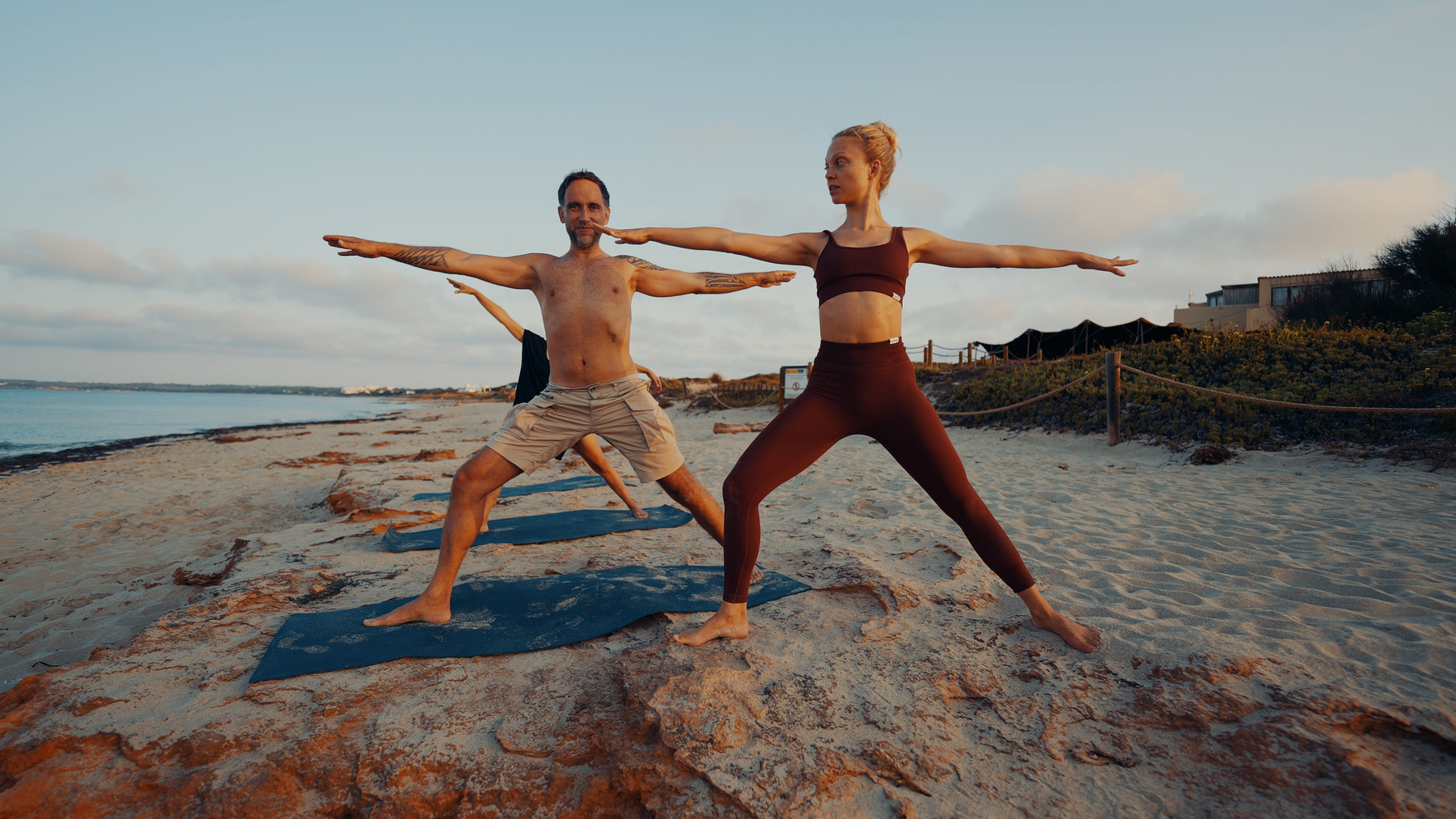
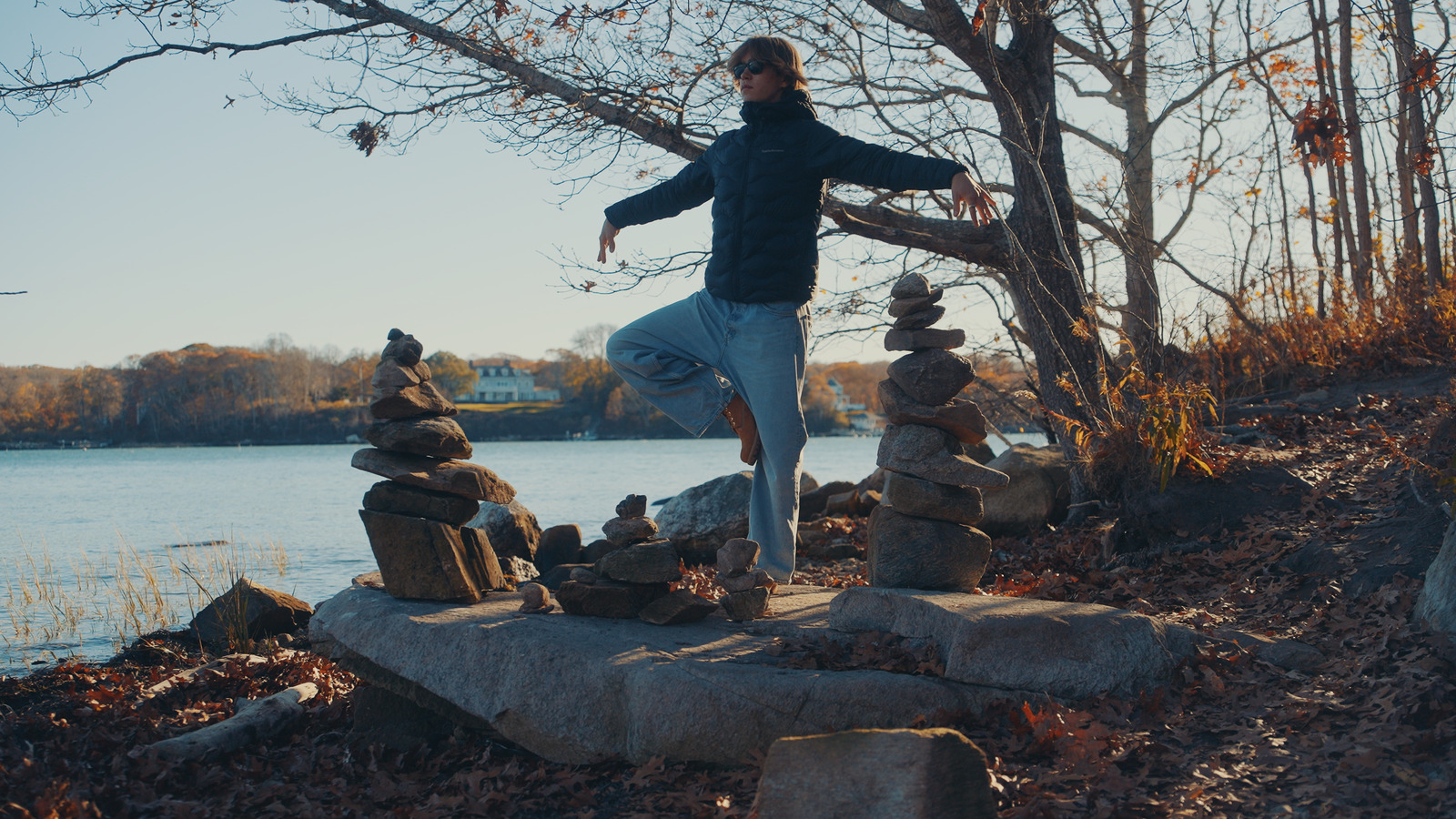
Marek and Veronica doing yoga on the beach, Formentera.
On our quest, my son Alek and I met yoga in many forms. On Long Island, a professor explained it to us as a philosophy. In Hong Kong, a scientist told us about his five-minute daily routine. On a beach in New York, a teacher led us through a class. And on a stage in Berlin, a doctor gave the simplest advice about breathing. This page explains, in plain words, what science shows about yoga and breathwork — and what it does not show yet. Every number has its source.
This page shares what research and the experts we met say. It is not medical advice, and it does not recommend any medicine, supplement or treatment. It knows nothing about you. Before you start, stop or change anything — especially if you are pregnant, live with a health condition or take any medication — please talk to your doctor. In an emergency, call your local emergency number.
In short
Yoga helps you keep moving well for longer. In older people it improves balance, walking speed and leg strength; it lowers blood pressure a little and eases long-lasting back pain. It calms the mind, too. Balance, strength, calm and a body that keeps moving — that is what longevity is made of. Pair it with something that gets you out of breath, and you have a beautiful mix. [1][2][3][4]
Longevity, as we mean it: more healthy, joyful years. What we mean →
5/4points lower blood pressure on average with yoga (the top and bottom numbers of a reading) — up to 11/6 points in people with high blood pressure, when breathing and relaxation were part of it.[3]
33studies in older people: yoga helped them walk faster and made their legs stronger, compared with doing nothing.[2]
400people in the biggest fair test of breathwork: a special slow breathing did no better than ordinary calm breathing.[5]
What yoga does for you
Yoga is not just one thing. Most classes mix four: poses you hold or move through, which need strength and balance; stretching; slow, calm breathing; and paying attention to the moment — the meditation part. That is why scientists have studied yoga for balance, blood pressure, back pain and stress.
Standing poses train balance and leg strength — exactly what keeps older people steady on their feet. Slow breathing and relaxation seem to be what helps blood pressure most. And because yoga is usually gentle, many people keep doing it for decades.
What studies in people show
Most of what follows comes from fair tests: people are picked at random to do yoga or not, so we can see what yoga itself does.
Better balance after 60
In people aged 60 and over, yoga improved balance a little and everyday movement a bit more. Whether that means fewer falls has not been tested yet.
Based on: Many fair tests combined · shows cause [1]
Faster walking, stronger legs
In 33 studies of older people, yoga helped them walk faster and gave them stronger legs compared with doing nothing. Compared with other exercise, such as tai chi, it did about the same.
Based on: Many fair tests reviewed · fairly sure [2]
Slightly lower blood pressure
Yoga lowered blood pressure by about 5 points on the top number and 4 on the bottom. Yoga with breathing and relaxation did better: up to about 11 and 6 points in people with high blood pressure.
Yoga eases pain a little and makes moving a little easier compared with no exercise. Other back exercises work about as well.
Based on: Many fair tests combined (Cochrane review) · not fully sure yet [4]
Breathwork
Alek doing yoga by the water in Japan.
Breath runs through all of yoga, and it has become a practice of its own: breathwork, which simply means breathing in a chosen way, on purpose. There is box breathing — in, hold, out, hold, each for the same count — long, slow out-breaths, and slow, even breathing. The science here is younger, and the results are mixed.
A little less stress
In 12 fair tests, breathwork lowered stress a little to moderately, as people described it themselves. It helped with worry and low mood in a similar way.
Taking the time may matter more than the technique
In the biggest test so far — 400 people, four weeks — one group learned a special slow breathing, and the other simply breathed calmly at a set, ordinary pace. Both groups felt better, and by about the same amount. So much of the benefit seems to come from stopping to breathe at all.
Based on: One fair test against a look-alike practice · shows cause [5]
Five minutes of long out-breaths
Five minutes a day of cyclic sighing — breathing out slowly, for longer than you breathe in — lifted mood a little more than meditation did over a month. Box breathing was tested too. It was a small, early study.
“I’m talking just day to day, breathe through your nose, close your mouth, make sure you don’t have sleep apnea, and take nice deep breaths where your diaphragm is actually moving and your rib cage is actually mobilizing […] If you can’t get how you’re breathing properly on a second to second, minute to minute basis, don’t be chasing the fun stuff. Get your basics right.”
In plain words: Start with the everyday basics before anything fancy: breathe through your nose, keep your mouth closed, let your belly and ribs move with each breath, and, as she says, make sure you don’t have sleep apnea — when breathing stops again and again during sleep.
Olivia is not against breathwork. In the same talk she said that techniques such as box breathing can be very helpful. Her point is the order: the basics first.
What we don’t know yet
No study has shown that yoga or breathwork makes people live longer. Most tests are short and small. And people always know whether they are doing yoga, which makes a fair test harder. The scientists themselves are asking for longer, better tests.
Fewer falls? Yoga improves balance in older people. Whether that means fewer falls has not been tested.
Better than other exercise? Usually not. Compared with tai chi or back exercises, yoga does about the same.
Which breathing technique? In the biggest test, the technique mattered less than simply taking time to breathe slowly.
What our experts told us
We are grateful to every one of the more than a hundred experts who shared their time with us. Two of them put yoga into words we keep coming back to.
“So I have a routine based on yoga and body weight training that I optimized for almost a decade for now, and I do that every day, even if I have just five minutes, and I always have five minutes.”
In plain words: You don’t need an hour on a mat. A few minutes every day counts — and everybody has five minutes.
“In the West, yoga is simply a set of physical postures where you tie yourself up in knots, and you become flexible, and it helps the body. That is a part of yoga. But yoga is actually a philosophy which has a very long and deep history. […] So I do yoga because it keeps you physically fit. But I also remember that the reason yoga came into being is that philosophy, and that is what has the most meaning for me.”
Where the joy is
Yoga at sunset with Aryana Apanaska, New York.
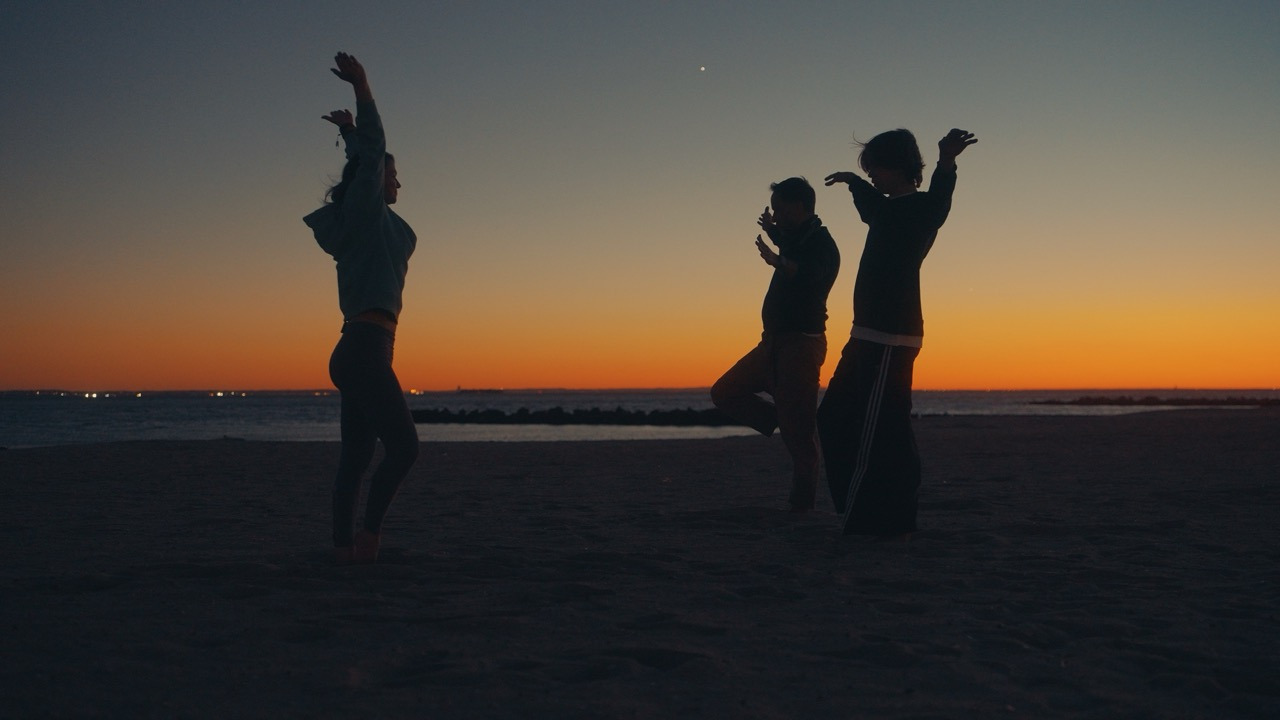
In the Live Beyond family we have one rule for everything we share: if it brings no joy, nobody keeps doing it. Yoga may be the easiest practice to love. There is the room: a teacher you trust, the same friendly faces every week, the quiet at the end of a class. There is the breath: the one tool you always carry with you, and the calm it brings. And there is what Srikumar Rao reminded us of: a meaning bigger than fitness. On a beach in New York, a teacher led the two of us through a class of yoga and breathing.
Because yoga works about as well as other exercise, the best style for you is simply the one you look forward to — a class with friends, a gentle session at home, or five minutes of slow breathing by an open window.
How much is enough
There is no official amount of yoga. But yoga can help you reach the amounts that official guidelines set for everyone — their numbers, not ours. Talk to your doctor before you start if you have a health condition.
Every adult
150–300 minutes a week of exercise that makes you breathe faster, plus strength training on two or more days. Gentle yoga rarely makes you breathe hard, so add walking, cycling or swimming as well.
Official guideline (World Health Organization) [9]
Over 65
Mix in balance and strength on three or more days a week to help prevent falls. Yoga with standing poses is one good way to train balance.
Yoga is about as safe as other exercise. In tests it caused no more problems than other exercise or usual care, though back pain sometimes flares up a little.
If you have weak bones (osteoporosis), glaucoma (high pressure in the eye), blood pressure that is not under control, have had recent surgery, or are pregnant: change or skip deep forward bends, upside-down poses such as headstand, and hot yoga. And tell your teacher.
Very fast breathing, long breath-holds and long sessions of fast, deep breathing (holotropic breathwork) are not for people with epilepsy, heart disease, uncontrolled blood pressure, pregnancy or serious mental-health problems — unless a doctor says yes. Gentle, slow breathing is fine for almost everyone.
These groups were left out of the tests · doctors’ usual caution [7]
Never hold your breath in water
Never do fast breathing or breath-holding exercises in or near water, or while driving. You can black out without warning. People have drowned this way. [11]
We wrote this page from Live Beyond’s own recorded interviews and the published studies listed below, with gratitude to everyone who taught us.
Sources
Every number on this page, by the number in square brackets. Quotations come from Live Beyond’s own recorded interviews, cleaned only of “um” and “uh”. Not medical advice. Talk to your doctor before you change anything.
Youkhana S, Dean CM, Wolff M, Sherrington C, Tiedemann A. Yoga-based exercise improves balance and mobility in people aged 60 and over: a systematic review and meta-analysis. Age Ageing. 2016;45(1):21-29. doi:10.1093/ageing/afv175
Loewenthal J, Innes KE, Mitzner M, Mita C, Orkaby AR. Effect of yoga on frailty in older adults: a systematic review. Ann Intern Med. 2023;176(4):524-535. doi:10.7326/M22-2553
Wu Y, Johnson BT, Acabchuk RL, et al. Yoga as antihypertensive lifestyle therapy: a systematic review and meta-analysis. Mayo Clin Proc. 2019;94(3):432-446. doi:10.1016/j.mayocp.2018.09.023
Wieland LS, Skoetz N, Pilkington K, Harbin S, Vempati R, Berman BM. Yoga for chronic non-specific low back pain. Cochrane Database Syst Rev. 2022;11:CD010671. doi:10.1002/14651858.CD010671.pub3
Fincham GW, Strauss C, Cavanagh K. Effect of coherent breathing on mental health and wellbeing: a randomised placebo-controlled trial. Sci Rep. 2023;13:22141. doi:10.1038/s41598-023-49279-8
Chu P, Gotink RA, Yeh GY, Goldie SJ, Hunink MGM. The effectiveness of yoga in modifying risk factors for cardiovascular disease and metabolic syndrome: a systematic review and meta-analysis of randomized controlled trials. Eur J Prev Cardiol. 2016;23(3):291-307. doi:10.1177/2047487314562741
Fincham GW, Strauss C, Montero-Marin J, Cavanagh K. Effect of breathwork on stress and mental health: a meta-analysis of randomised-controlled trials. Sci Rep. 2023;13:432. doi:10.1038/s41598-022-27247-y
Balban MY, Neri E, Kogon MM, et al. Brief structured respiration practices enhance mood and reduce physiological arousal. Cell Rep Med. 2023;4(1):100895. doi:10.1016/j.xcrm.2022.100895
Bull FC, Al-Ansari SS, Biddle S, et al. World Health Organization 2020 guidelines on physical activity and sedentary behaviour. Br J Sports Med. 2020;54(24):1451-1462. doi:10.1136/bjsports-2020-102955
Cramer H, Ward L, Saper R, Fishbein D, Dobos G, Lauche R. The safety of yoga: a systematic review and meta-analysis of randomized controlled trials. Am J Epidemiol. 2015;182(4):281-293. doi:10.1093/aje/kwv071
Boyd C, Levy A, McProud T, et al. Fatal and nonfatal drowning outcomes related to dangerous underwater breath-holding behaviors — New York State, 1988–2011. MMWR Morb Mortal Wkly Rep. 2015;64(19):518-521.