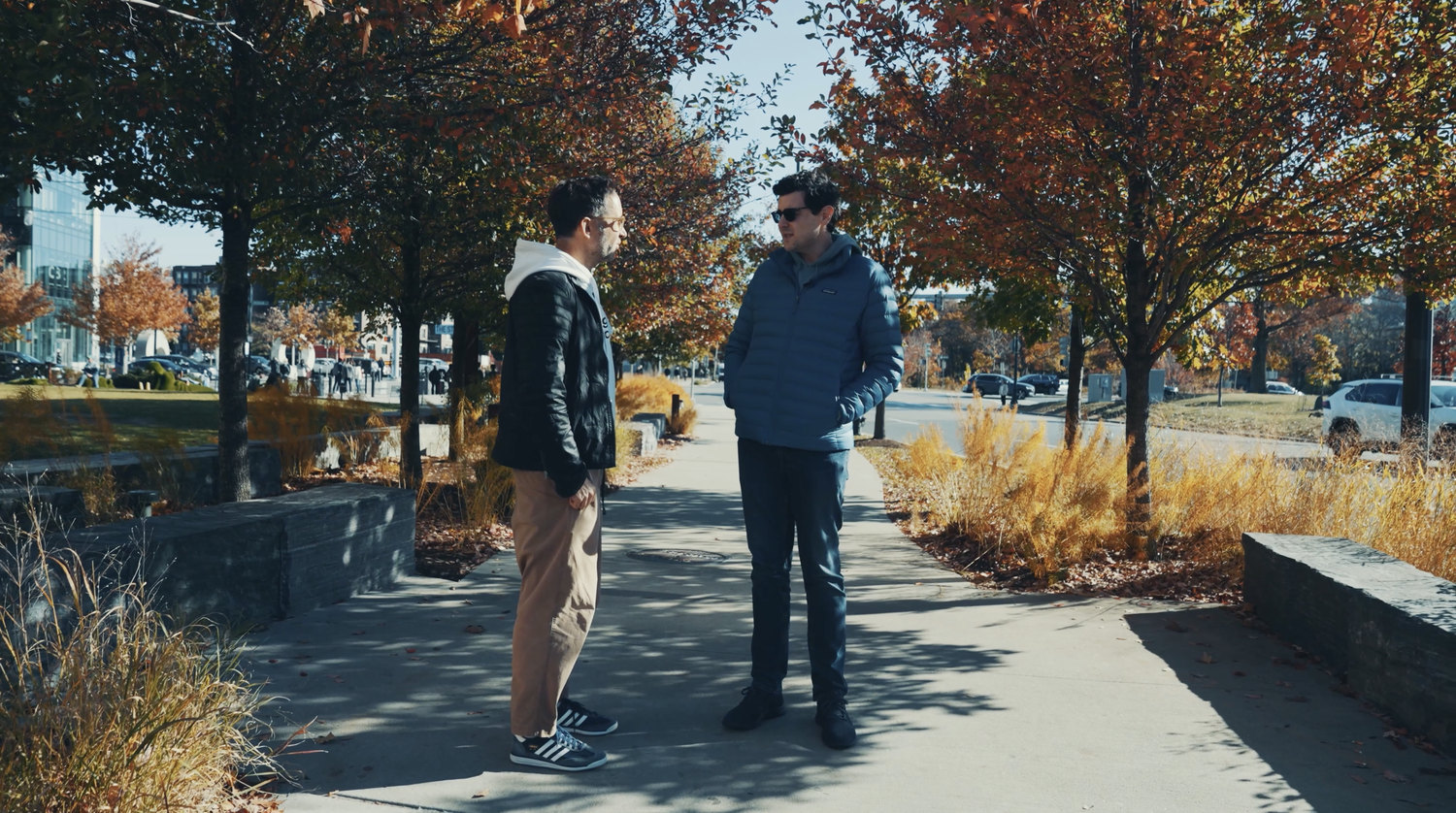
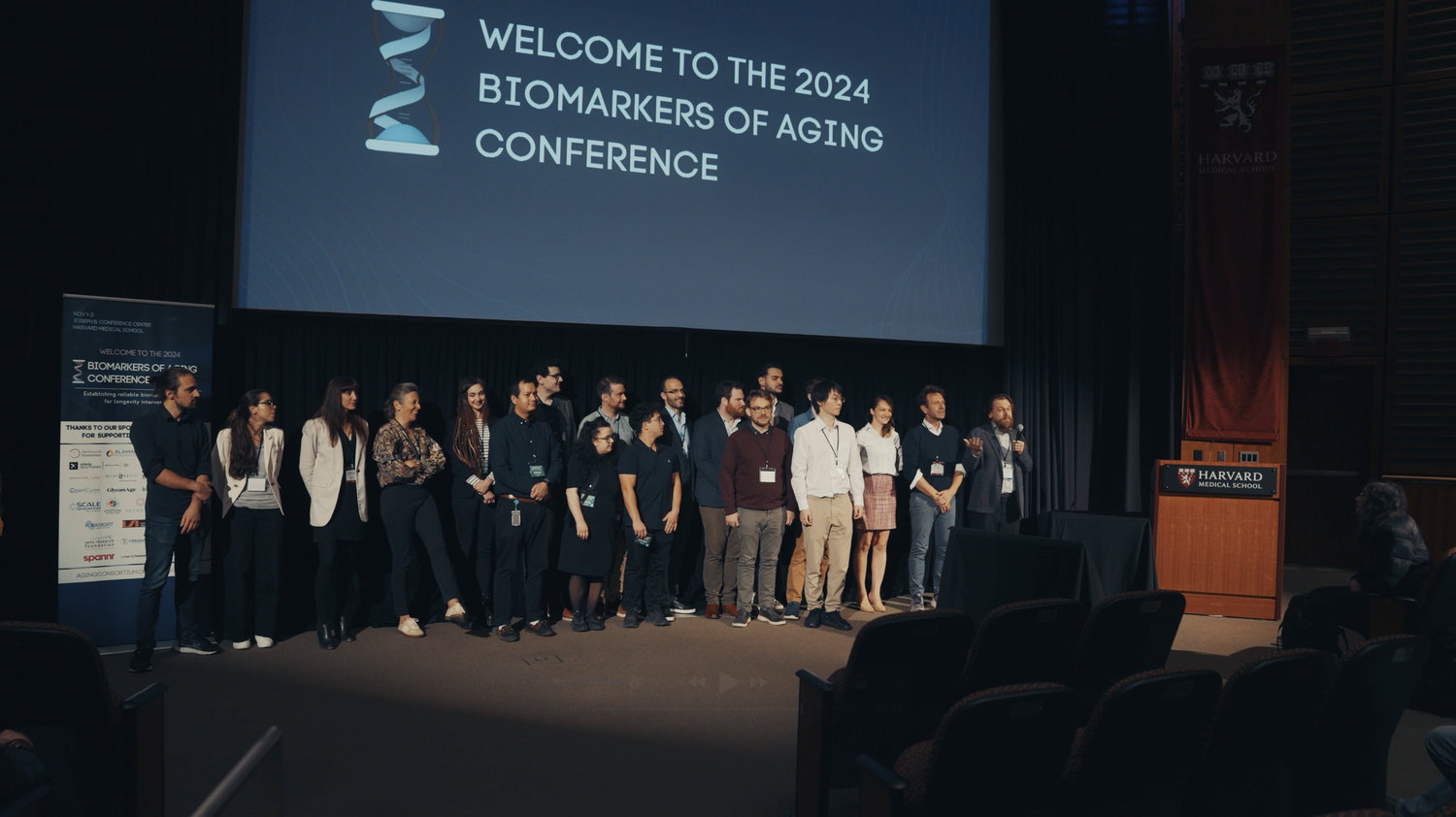
Jesse Poganik runs the Poganik Lab at Brigham and Women’s Hospital and Harvard Medical School, working on the biology of ageing, on biomarkers, and on how fast biological age can actually move. When we filmed him in Boston he was in Vadim Gladyshev’s lab, and he is one of the organisers of the Biomarkers of Aging Conference.
He did not set out to work on ageing at all. His PhD was in redox signalling — how free radicals carry signals inside cells — and that field has run alongside ageing research for historical reasons, because of the free radical theory of ageing, “which is not that highly regarded now, but has been in the past”. He met Gladyshev through redox, before Gladyshev moved heavily into ageing. At the end of his PhD he wanted to do something different, and, in his own phrase, ageing seemed like the type of thing to take a chance on.
What he wants out of it is unusually specific, and it is not more years at any cost. He is careful to say that ageing brings things worth having: experience, wisdom, time to do the things you cannot do when time is short. The win, as he sees it, is to keep all of that and lose the part at the end where health goes.
The goal he calls the holy grail is to use these tools while a person is still healthy — to see a future decline coming and intervene before it arrives. He is equally clear that the field is not there. The tools have not advanced that far. What biomarkers already do is more practical and no less important: they tell you who would benefit most from an intervention, and whether an intervention is working — without waiting the decades a conventional trial would take. “The biomarkers give you almost a shortcut.”
And when we asked what he is most afraid of, he did not say ageing. He said failure — of the whole field. The trajectory is strong, the community is growing, the science is good, “but at some point we need something to show for it.” That is a scientist worrying, out loud, that his subject will spend its credibility before it delivers.
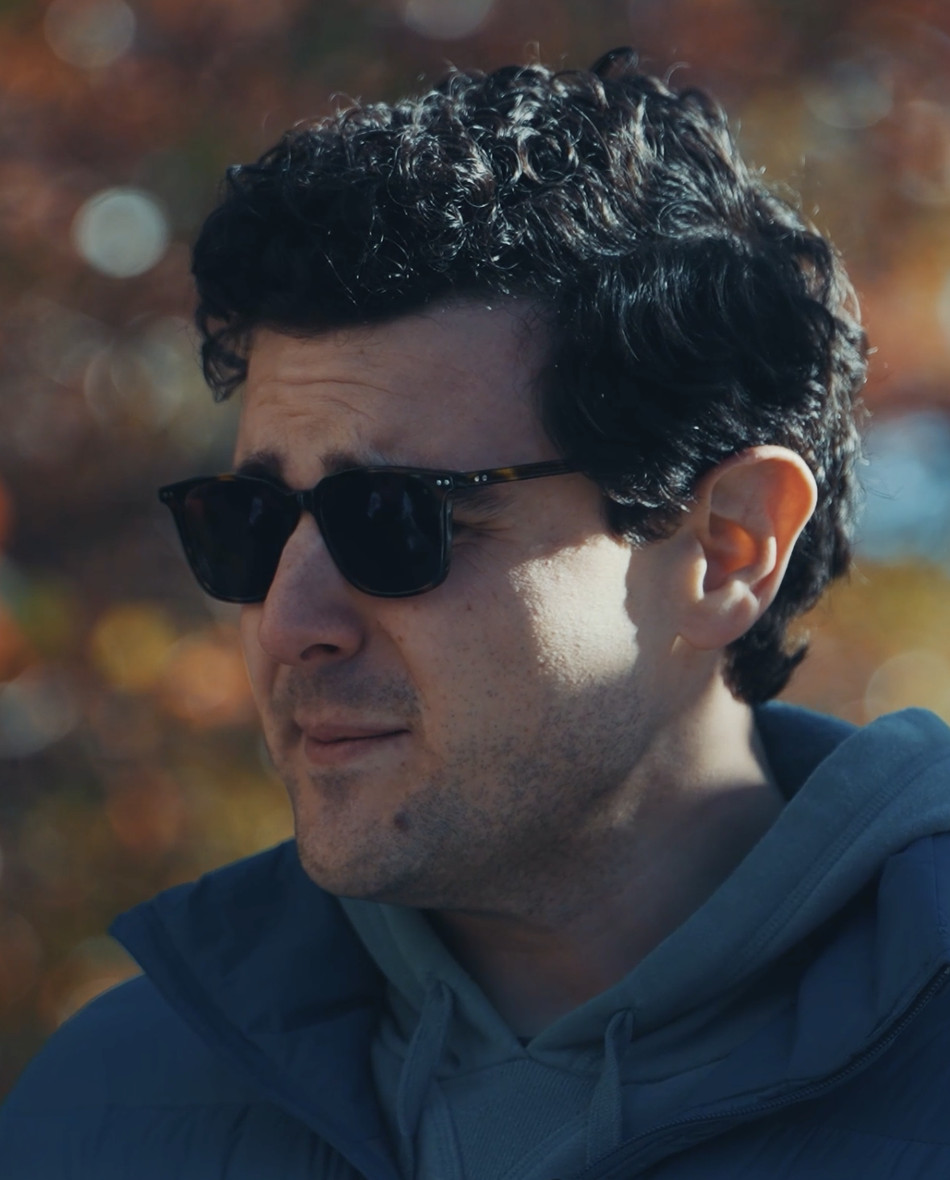
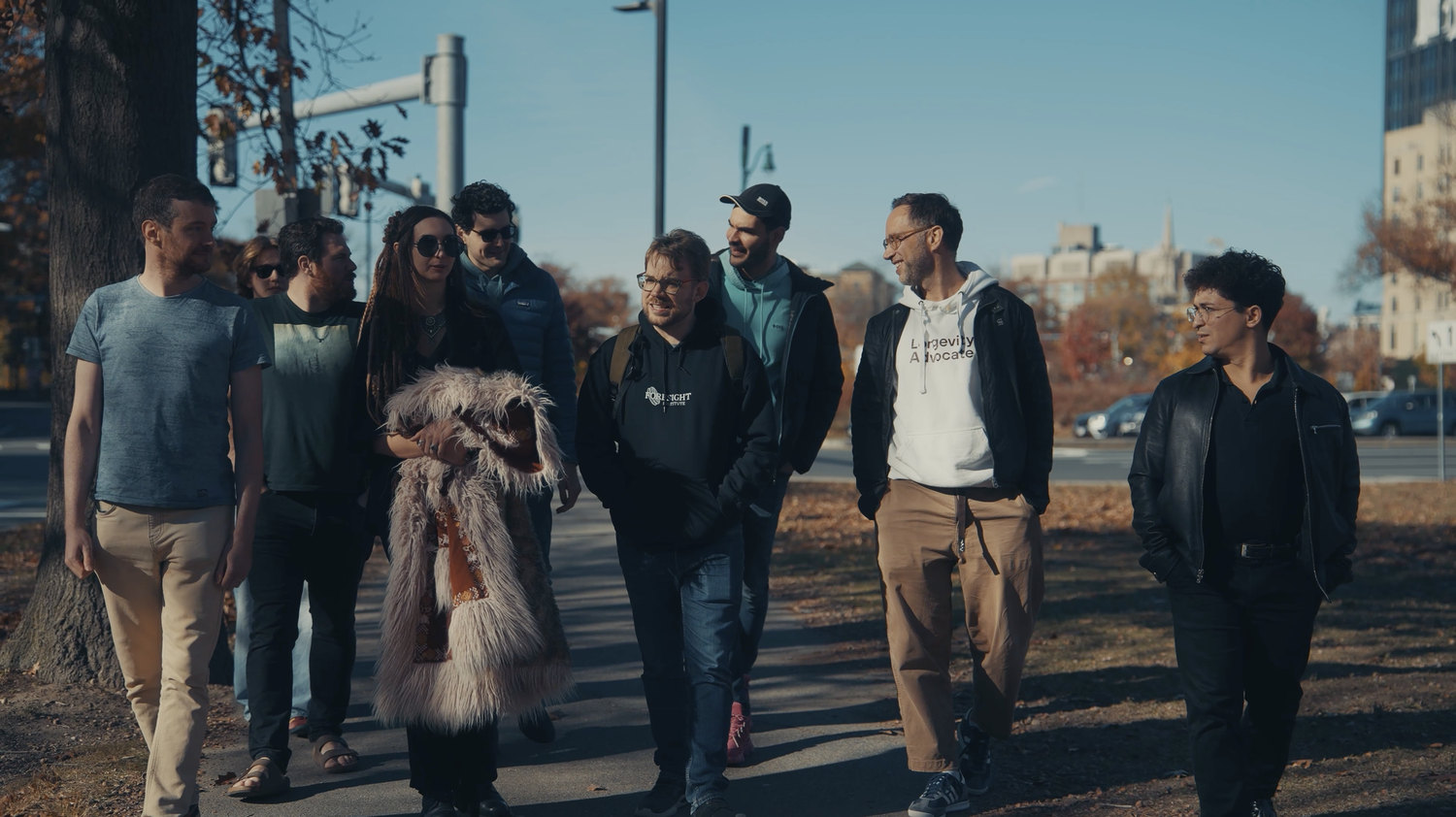
We met Jesse in Boston in November 2024, at the Biomarkers of Aging Conference at Harvard Medical School — one of the conferences he helps organise. It is the one stop on the quest where we were not chasing a single scientist across a country: four of the people who make this field run were in the same park on the same afternoon, and we filmed them one after another, walking. Mahdi Moqri, Jesse Poganik, Andrea Cipriano and Chiara Herzog, with Dane Gobel of the Methuselah Foundation. In the same few days we also sat down with George Church, Vadim Gladyshev, Vittorio Sebastiano, Andrea Maier, Nathan Cheng and Allison Duettmann.
“That we don’t succeed — because that would be really terrible for the field. We’re on this really strong upward trajectory… but at some point, we need something to show for it.”
— Jesse Poganik, asked what he fears, Boston
“There are some benefits that come with aging. There’s experience, there’s wisdom, there’s time to do other things in life that you can’t do when time is limited.”
Jesse Poganik · BostonAging seemed like the type of thing to take a chance on.
Jesse Poganik · on leaving redox chemistryThe holy grail of the field is that we use these tools when people are healthy, to predict when they’re gonna have a future adverse health outcome, so that we intervene before they get to the point where they’re actually experiencing the negative effects.
Jesse PoganikThe biomarkers give you almost a shortcut, if you will, to be able to say whether an intervention that you give that’s targeting aging is effective or not.
Jesse PoganikThe community that we’ve built, and how big it’s grown since just our first year last year to this year, doubling the size to almost 500 people, was just absolutely incredible to me.
Jesse Poganik · on the conferenceTo be clear, we’re not there yet, because the tools have just not advanced that much.
Jesse PoganikFrom our conversation in Boston — how a redox chemist ended up here, what he wants the tools for, and the thing he is actually afraid of.
A PhD on how free radicals signal inside cells, a supervisor who studied redox before he studied ageing, and a decision at the end of it to do something riskier.
“That’s actually how I met Vadim Gladyshev, who was my postdoc advisor, because he was studying redox before he got heavily into aging.”
Boston · November 2024Not a number to put on a certificate. A way to know who a longevity intervention would help most, and whether it worked — without waiting out a trial that takes decades.
“If you try to do that in the context of a traditional clinical trial, that’s gonna take decades and decades and cost tons and tons of money.”
Boston · November 2024Not ageing. The field failing to deliver, after everything it has promised — and he says it with the conference he helped build going on around him.
“We’re on this really strong upward trajectory, and I think that’s amazing. But at some point, we need something to show for it. So I’m hoping that’s gonna come soon.”
Boston · November 2024The video interview is coming. Recorded interviews go live after the launch of the film & series Live Beyond.
Selected passages from our conversation with Jesse Poganik — Boston, November 2024, in a park between the sessions. Cleaned of hesitation only; nothing inside a quotation has been reworded.
Jesse Poganik“I would say I’m generally interested in understanding the biology of aging, of course with a very strong focus on biomarkers of aging and omic studies. But we really try to understand the biology of the process.”
Jesse Poganik“I did my PhD studying redox signaling — so, studying how free radicals signal within cells. And that field has always, for historical reasons, run kind of parallel to aging. There’s this idea of a free radical theory of aging, which is not that highly regarded now, but has been in the past. And we understand, of course, that oxidative damage is part of the damage that occurs.”
Jesse Poganik“I was in a biochemistry lab. And that’s actually how I met Vadim Gladyshev, who was my postdoc advisor, because he was studying redox before he got heavily into aging. So at the end of my PhD, I decided I wanted to do something a little bit different, and aging seemed like the type of thing to take a chance on.”
Jesse Poganik“For me, the motivation very broadly has always been that there are some benefits that come with aging. There’s experience, there’s wisdom, there’s time to do other things in life that you can’t do when time is limited. So I’ve always thought that if we could combine the benefits of the science of this field, so that we give people the benefits of aging without the declines in health that are experienced at the end of life — that’s a huge win, I think.”
Jesse Poganik“That we don’t succeed, because that would be really terrible for the field. We’re on this really strong upward trajectory, and I think that’s amazing. But at some point, we need something to show for it. So I’m hoping that’s gonna come soon.”
Jesse Poganik“And I have confidence, because I think, as you saw in the conference, the community that’s growing around this field is just so amazing. The science is so amazing and so innovative. I think there are really, really great things on the horizon.”
Jesse Poganik“To be clear, we’re not there yet, because the tools have just not advanced that much. But the idea — the holy grail of the field, I would say — is that we use these tools when people are healthy to predict when they’re gonna have a future adverse health outcome or aging-associated decline, so that we intervene before they get to the point where they’re actually experiencing the negative effects. So that’s what I foresee for the future of these biomarkers, when we get them to the level of being useful for individual people.”
Jesse Poganik“We need to know who is gonna benefit most from a longevity intervention. That’s one thing. And we need also a practical way to understand whether the interventions are working or not. So if you try to do that in the context of a traditional clinical trial, that’s gonna take decades and decades and cost tons and tons of money. So the biomarkers give you almost a shortcut, if you will, to be able to say whether an intervention that you give that’s targeting aging is effective or not.”
Jesse Poganik“The mission of the conference and the mission of the consortium in general is to be able to bring these biomarkers of aging — which right now are really revolutionizing the research in the field of aging — to being clinically useful tools, so that we can help people and ultimately improve their lives.”
This was a walking interview between sessions, not a studio hour. More of the Boston conversations will be published as they are cut.
Jesse works on the Bridge of Prevention and in Longevity Basics. He was filmed the same afternoon as Mahdi Moqri, Andrea Cipriano and Chiara Herzog.
Explore all 100+ experts