Choices · Bryan Johnson’s former doctor

Smoking, mental health and your weakest link: what Bryan Johnson’s former doctor taught us

Oliver Zolman in a navy jacket, talking by a tall window with the London skyline behind him.
Oliver Zolman in London, July 2024 — a Live Beyond interview with Marek Piotrowski on smoking, mental health, measuring every organ and what matters most for longevity.

On our quest, my son Alek and I met more than a hundred longevity experts in 39 countries and states. In London we sat down with Oliver Zolman, who worked as Bryan Johnson’s doctor. I expected exotic therapies. What he told us was simpler — smoking, mental health, your weakest link — and more useful for everyone.

By Marek Piotrowski · Updated 2026-10-30

In short

Start with the basics — then measure, and make it personal. Oliver Zolman, who worked as Bryan Johnson’s doctor, has spent years measuring the human body organ by organ. What he told us was surprisingly simple: the biggest wins are not smoking, looking after your mental health and moving. After that, measure each part of you, find your weakest link and work on that. Your plan should fit you. [1]

Longevity, as we mean it: more healthy, joyful years. What we mean →

8things in the first level of Oliver’s protocol — the most proven ones, which add up when you do them together. Mental health is number two.
10+years of life lost by people who keep smoking, compared with people who never smoked. Quitting before 40 gives back about 90% of the extra risk.[1]
P4medicine — personalized, precision, preventive and participatory: the framework Oliver builds his plans on.

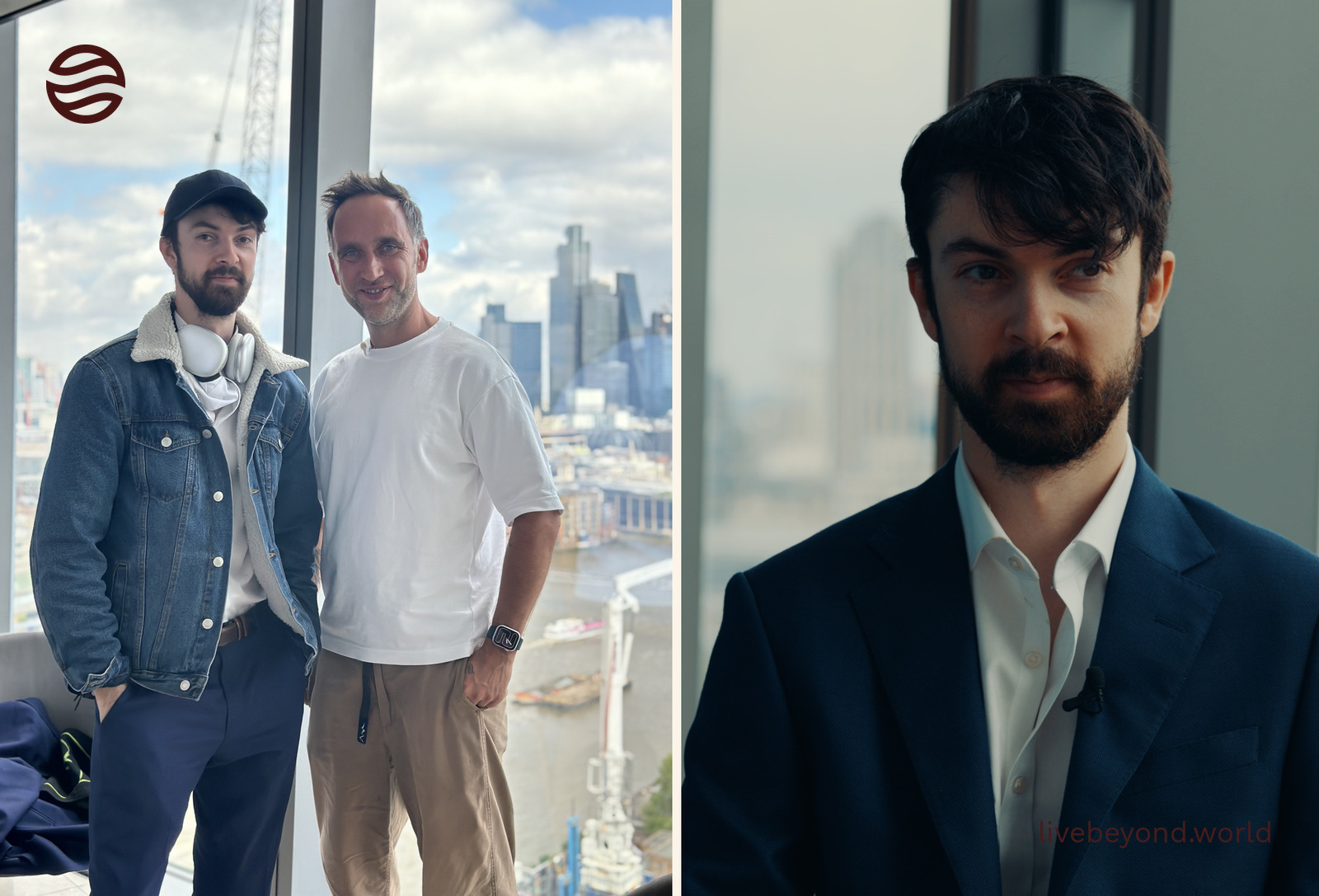
Who Oliver Zolman is

Two photos side by side: Marek and Oliver standing by a window over London, and Oliver in a navy jacket during the interview.
Marek Piotrowski and Oliver Zolman high above the Thames, and Oliver during our interview — London, July 2024, a Live Beyond interview on Blueprint and longevity.

Oli is a longevity doctor based in London. For several years he worked as Bryan Johnson’s doctor, the protocol millions of people saw in the Netflix film Don’t Die. We met him in London in July 2024, high above the Thames, and he turned out to be one of the most careful people on the whole quest: wildly ambitious, and obsessed with evidence.

“I've kind of been in the field maybe 10, 12 years now, since beginning of medical school and meeting people like Aubrey de Grey and reading about research by George Church, Michael Levin, all the stem cell biologists back 10 years ago as well. So yeah, I'm just very inspired by the potential for it.”

Start with level one

Oliver sorts everything into levels. Level one is what helps the most people the most, with the strongest evidence. And the first thing on it isn’t a pill or a scan:

“I remember in med school, like they were saying the most impactful thing you can do for someone as a doctor is not like surgery or like emergency stuff or whatever. It's just getting people to quit smoking, 'cause that's like the biggest impact on lifespan, plus 12 years if you do zero versus 20 cigarettes a day, at a population level.”

Smoking: the biggest single choice

In a study of more than 200,000 American adults, people who kept smoking lost more than ten years of life compared with people who never smoked. Those who quit before 40 avoided about 90% of the extra risk of dying.

Based on: Large study of US adults [1]

And the second thing surprised him too:

“In longevity level one, […] it's the most evidence-based things that affect the most people for improving their health span, not just lifespan, and that they all stack on top of each other as well. So they're not like just ineffective, but they stack if you do all of them. And I recently updated that to include mental health, and mental health is actually the second one. In longevity level one, there's eight things. Mental health is number two out of all those. Smoking being number one, exercise being number three. So mental health actually affects society as bad as 20 cigarettes a day, roughly, based on those epidemiological studies in the US cohorts that I'm using.”

In plain words: Don’t smoke. Look after your mind. Move. Those three come before anything fancy — and they work best together.

Find your weakest link

The heart of his approach is that the same advice doesn’t work for everyone:

“It's very personalized to each individual. Like even the most basic example, right? How do you get someone to quit smoking? It's a very different solution for each individual. […] It's the concept of like focusing on the most important thing to the individual. So whether that's their oldest organ, their biggest genetic risk factor, their lifestyle habits or whatever, and then finding a personalized solution for that. 'Cause yeah, you go and tell people to exercise, you go and tell them to take gene therapy, you go and tell them to see a psychiatrist, and they'll find 100 reasons why not to do it, or they'll do it and it won't work, and it's always a lot more complicated than you think.”
“It's a framework on how to explore personalized precision preventative participatory medicine, as the buzzword was, P4 medicine about 10 years ago. Not just for longevity, but because it's kind of just healthcare, isn't it? Like all healthcare is longevity in a way.”

In plain words: Your plan starts with you: your oldest organ, your biggest risk, the habit that’s hardest for you. That’s where the effort pays off most.

Measure every organ

To find that weakest link, you need to measure well. Oliver has been building his own aging clocks for each organ:

“There's the Zolman clocks, which I've made, which are... I'm trying to make the new gold standard for measuring biological age in every single organ in individuals in the body. So how do you do that? You can't use epigenetics, and you can't use proteomics, which is blood test basically, because it's never as good as using imaging devices and omics and blood tests and everything else all together at the same time. […] And obviously, if you can't measure something, you can't improve it. And the better you can measure something, the better you can improve it.”

When I told him about people who tell me they’re biologically 21 at 58, he laughed:

“Any of those ones, like they're probably not good clocks because it's very unlikely your kidneys are 21 when you are age 60. It's just like implausible.”

More on why there is no single biological age: aging clocks, compared.

Words worth knowing

Three words behind measuring every organ

From our glossary. Tap a card to turn it over: the science on the back, and the people we met who explained it to us.

No. 12 / 66Everyday word

Biomarkers of ageing

Things you can measure today that show how fast you are ageing, long before anything hurts.

No. 12 / 66Everyday word

Biomarkers of ageing

Read more →

“Aging is not one thing, and it’s never going to be simple, and it’s always going to be different things in different people.”

Nikolina Lauc · London, July 2024
Level 04 · The Bridge of Prevention
No. 11 / 66Everyday word

Biological age

How old your body is, rather than how many birthdays you have had.

No. 11 / 66Everyday word

Biological age

Two people born in the same year can be years apart inside. Biological age is estimated from blood markers, from the way your DNA is switched on and off, and from tests of strength and fitness. Unlike your birthday, it can move — in both directions. Read more →

No. 20 / 66Everyday word

Prevention

Prevention is king: staying well, instead of waiting to be treated.

No. 20 / 66Everyday word

Prevention

Screening, genomics, imaging and biomarkers catch a problem while it is still small, cheap to treat and yours to decide about. Most health systems are still built for sick care and act when something breaks; longevity turns that into healthcare. Read more →

Level 04 · The Bridge of Prevention

The boldest idea: new organs

For all his care with evidence, Oli loves the boldest science. His favorite shortcut is one he once wrote in a medical-school exam — and got marked down for:

“One of the easiest ways, in theory, to solve aging or age-related diseases is the replacement strategy. So 'cause then you don't have to worry about doing 100 different therapies to rejuvenate every type of cell type and every type of pathology in each organ. If you could just kind of replace it either via a full surgical replacement or kind of in vivo bioprinting or cell-based replacement, then that's a lot easier way.”

But he’s honest about where that idea stops:

“The brain is tricky. And the brain and mind are kind of separate. Can't really do surgery as much for replacement, and you can make it younger, but if you're still unhappy, it doesn't really fix your mental problems.”

In plain words: You can renew a body. A happy mind is something you build — and that’s why mental health is so high on his list.

Where the joy is

What I loved about Oli is that a doctor who measures the body more carefully than almost anyone ended our talk on mental health and purpose. We agreed that the mindset comes first: when your mind is in a good place, you feel more joy, and you find the strength to choose your health. Everything else can follow.

What to take from Oliver

Oliver Zolman on the Longevity Map

Before you change anything

This page shares what research and the experts we met say. It is not medical advice, and it does not recommend any medicine, supplement or treatment. It knows nothing about you. Before you start, stop or change anything — especially if you are pregnant, live with a health condition or take any medication — please talk to your doctor. In an emergency, call your local emergency number.

Sources

Every number on this page, by the number in square brackets. Quotations come from Live Beyond’s own recorded interviews, cleaned only of “um” and “uh”. Not medical advice. Talk to your doctor before you change anything.

  1. Jha P, Ramasundarahettige C, Landsman V, et al. 21st-century hazards of smoking and benefits of cessation in the United States. N Engl J Med. 2013;368(4):341-350. doi:10.1056/NEJMsa1211128