
Choices · Metformin

Metformin: a great diabetes drug, and a longevity question still open

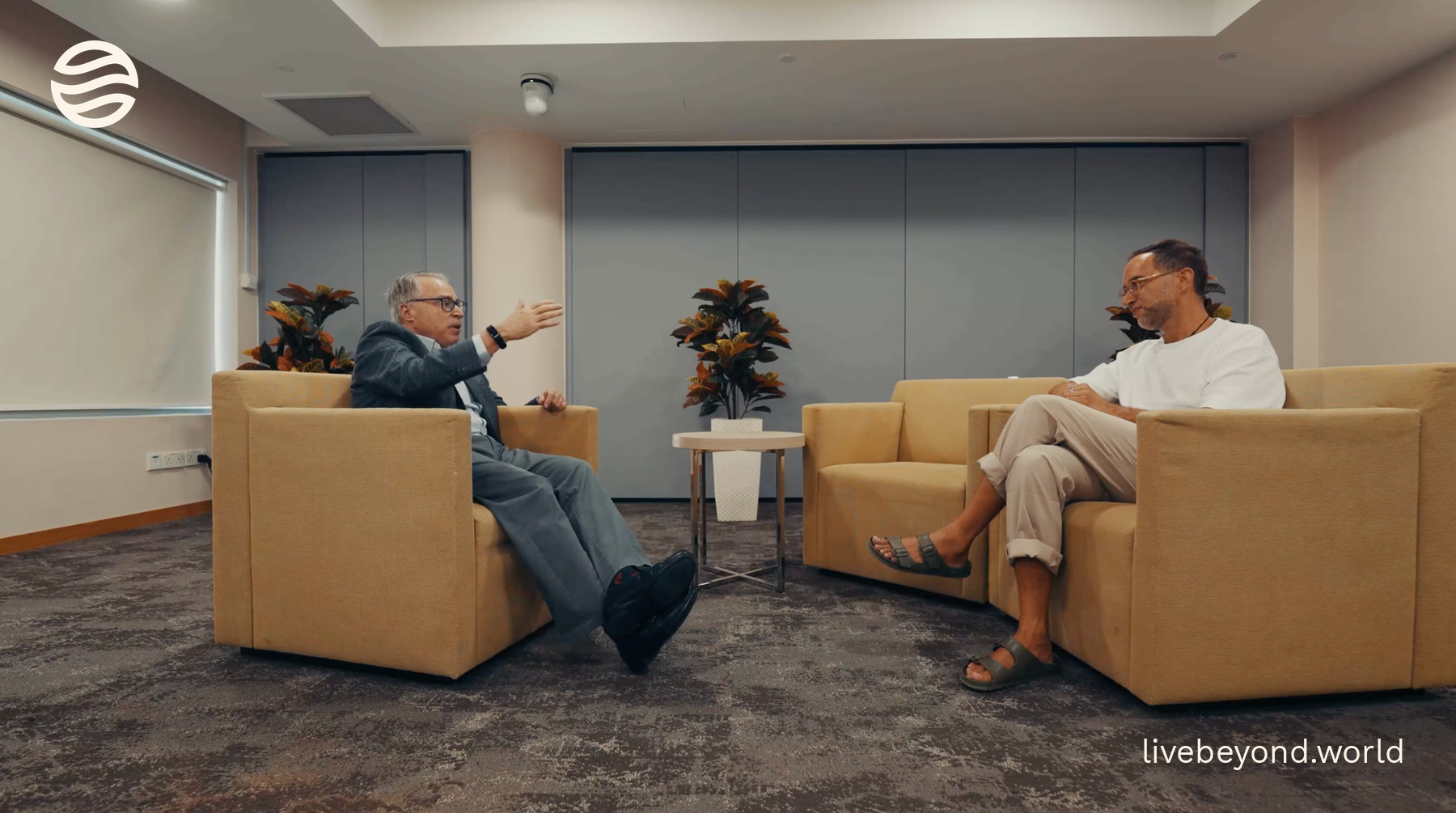
Marek and Nir Barzilai talking in two armchairs during a filmed interview.
Marek Piotrowski and Nir Barzilai at the National University of Singapore, February 2024 — a Live Beyond interview on metformin and the TAME trial.

On our quest, my son Alek and I met more than a hundred longevity experts in 39 countries and states, and metformin came up again and again. For years it was the most famous “longevity pill” of all, an old, cheap diabetes drug that might slow aging itself. I took it myself for a while. I don’t anymore. Here is what the scientists told us, what the studies found, and why the story turned out more complicated than we all hoped.

By Marek Piotrowski · Updated 2026-10-31

In short

A medicine that has helped millions of people with diabetes for decades, and a longevity question that is still open. For people with type 2 diabetes, metformin lowers blood sugar, and in a large trial of people with overweight it lowered the risk of complications and of dying early. In people with prediabetes, it lowered the chance of developing diabetes.

In healthy people, though, the evidence is much weaker than the headlines once said: the famous study that made people hope it beats aging could not be repeated in a larger re-analysis, it can blunt some of the gains of exercise, and the big trial meant to settle the question, TAME, has still not started.

The good news: the things that do the most for your metabolism are already in your hands — moving every day, real food, sleep and the people you love. [1][2][3][4]

This is not medical advice.

This page shares experiences from our quest and what scientists told us. It does not recommend any medicine, peptide, supplement or treatment, and it knows nothing about you.

Never start, stop or change any medicine, peptide, supplement or treatment without your own doctor, who knows your health and can check your blood work. That matters even more if you are pregnant or planning a pregnancy, live with a health condition, or take other medicines.

Longevity, as we mean it: more healthy, joyful years. What we mean →

31%fewer new cases of diabetes in people with prediabetes who took metformin for about three years. Lifestyle changes alone cut new cases by 58%.[2]
14 weeksof strength training in 94 older adults: those on metformin gained less muscle than those on a placebo.[4]
3,000+older adults planned for TAME, the trial designed to test metformin against aging itself. By September 2026, it had still not enrolled anyone.[5][6]

What metformin is

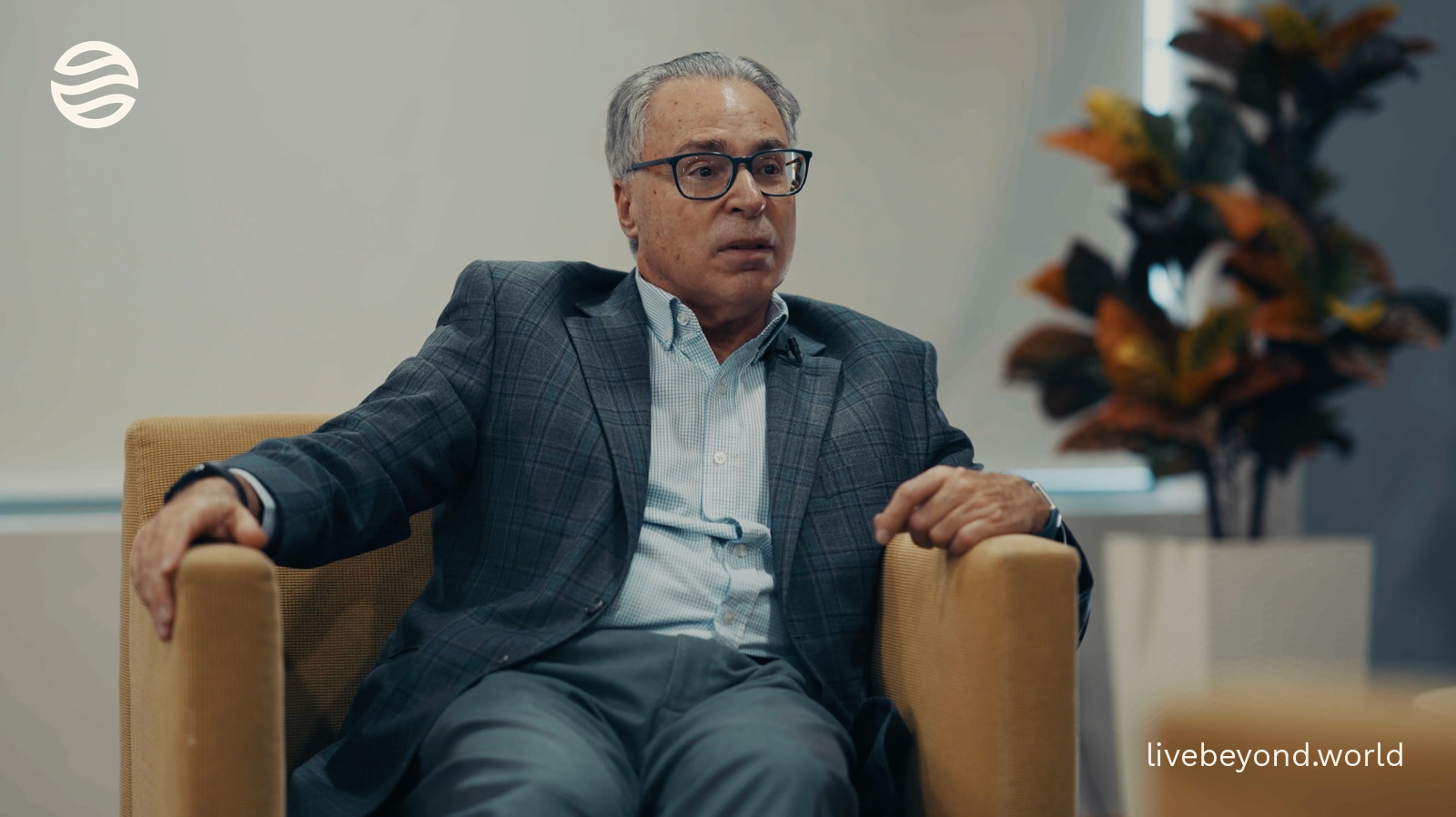
Nir Barzilai in a dark jacket, speaking from an armchair.
Nir Barzilai at the National University of Singapore, February 2024 — a Live Beyond interview with Marek Piotrowski on why metformin was studied in people over 50.

Metformin is a prescription medicine, one of the most used in the world, and for decades the first choice for type 2 diabetes. It lowers blood sugar mainly by making the liver release less sugar into the blood, and by helping the body respond better to insulin. It is cheap, and doctors have a long experience with it.

In Singapore, in February 2024, Alek and I sat down with Nir Barzilai, the scientist who studies people who live to a hundred and who designed TAME, the trial meant to test metformin against aging. I asked him why he talks about metformin only after the age of 50:

“The research that has been done for seven decades, okay, recruited always people over the age of 50. In fact, their average age was 60 or 65 or sometimes 70. Okay? And so we have the data in older people. […] Metformin lowers growth hormone. That’s not good when you’re young. […] There’s a trade-off that you don’t want. By the way, it also in some people, in some males, it decrease testosterone. You don’t want to have low testosterone when you’re young. Okay? Not everything that’s good for you when you’re young is good for you for you’re old, and the other way around.”
Nir Barzilai · scientist who studies centenarians and designed the TAME trial · Singapore, February 2024

In plain words: Almost everything we know about metformin comes from people over 50. And it works partly by lowering growth hormone, which you need when you are young and building your body, so what may help an older person is not automatically good for a young one.

Why scientists hoped it slows aging

Guido Kroemer smiling during an interview.
Guido Kroemer in Singapore, February 2024 — a Live Beyond interview with Marek Piotrowski on the hallmarks of aging.

In mice, a small effect

Middle-aged male mice given a low dose of metformin in their food lived about 4 to 6% longer on average and stayed healthier. A ten-times higher dose shortened their lives.

Based on: Study in mice [7]

The big lifespan test

In the US National Institute on Aging’s large mouse lifespan program, metformin alone did not make mice live longer. Combined with rapamycin, it did.

Based on: Study in mice [8]

In Singapore, the same month, I asked Guido Kroemer, one of the five scientists who described the hallmarks of aging, about the hope that one pill could touch them all:

“The effects of metformin that have been demonstrated in mice have not yet been demonstrated in humans. That’s the reason why we need this huge clinical trial that is called TAME. And the suspicion is that metformin has so many effects on so many different biological systems simultaneously that it may turn out to have a tangible effect on human health.”
Guido Kroemer · co-author of the Hallmarks of Aging papers · Singapore, February 2024

In plain words: What works in mice still has to be shown in people. Metformin touches many systems at once, even the bacteria in our gut, which is exactly why scientists want a big trial to see what it really does.

TAME: designed, not yet started

TAME (Targeting Aging with Metformin) was designed in 2016 to test whether metformin delays the diseases of aging together — heart disease, cancer, dementia and early death — in more than 3,000 people aged 65 to 79, over about six years. It was also meant to show regulators that aging itself can be a target for medicine. By September 2026, it had still not been registered or enrolled anyone; it is still looking for funding.

Based on: Trial design, and a 2026 registry check [5][6]

Words worth knowing

Two words behind the old diabetes pill

From our glossary. Tap a card to turn it over: the science on the back, and the people we met who explained it to us.

No. 36 / 66Therapy

Metformin

The world’s most common diabetes pill, cheap and safe, and the drug chosen for the first trial against ageing itself.

No. 36 / 66Therapy

Metformin

It lowers blood sugar and growth hormone and calms inflammation, all levers of ageing, and has been used for over sixty years. Nir Barzilai designed TAME, a trial to prove that ageing itself can be treated, with metformin as the test. Not for the young: it slows growth you still need. Prescription only. Read more →

“One is the TAME trial, the trial that would show the FDA that aging, what we call aging, they call something else, but it can be targeted.”

Nir Barzilai · Singapore, February 2024

Level 02 · Biohacking Upgrades
No. 53 / 66Inside the body

AMPK

A fuel gauge that, when it reads low, tells the cell to tidy up and burn what it has rather than store more.

No. 53 / 66Inside the body

AMPK

What helps

Exercise is the most reliable activator anyone has found. Metformin and berberine act here too; metformin’s longevity effect in healthy people is still being tested, and the large TAME trial that would settle it has not yet reported.

It came up most in our conversations with: Nir Barzilai, Sandra Kaufmann, Avi Roy

Where it clearly helps: diabetes and prediabetes

People with type 2 diabetes

In a large British trial of people with type 2 diabetes and overweight, those treated with metformin had fewer diabetes-related complications and a lower risk of dying over about ten years than those on the usual care of the time.

Based on: Large randomized trial [1]

People with prediabetes

In more than 3,000 Americans with prediabetes, metformin cut new cases of diabetes by 31% over about three years. Changing what they ate and moving more cut them by 58%.

Based on: Large randomized trial [2]

Nir told us the hard part is not the medicine, it is the habits. In Singapore, in a conversation with Andrea Maier, he described a calculation he had made with the economist Andrew Scott: what it would cost to give people a few more healthy years, with a pill or with a change of lifestyle.

“How much money would it be a drug like metformin versus lifestyle? And it’s $1 for metformin for $100,000 of environment. My point is that we need to have all the tools that we have. […] I’m in diabetes clinic, okay? In the Bronx, and every patient that come with diabetes, we say, “You have to lose weight and exercise.” And it’s about 3% that do it by the next visit.”
Nir Barzilai · in conversation with Andrea Maier · Singapore, February 2024

In plain words: Exercise and good food are the most powerful tools we have, but very few people manage to change their habits. A cheap pill is much easier to give to everyone. Nir’s point: we need both.

What we know in people without diabetes

Amy Killen in a red T-shirt, smiling, in a bright living room.
Dr Amy Killen in Salt Lake City, Utah, May 2024 — a Live Beyond interview with Marek Piotrowski on longevity medicine.

This is where the story changed. In 2014, a British study of health records found that people with diabetes who started on metformin seemed to live slightly longer than similar people without diabetes. It became the most quoted reason to believe metformin could slow aging in everyone.

The famous result could not be repeated

In 2022, Danish researchers re-did that analysis with national registries, including twins. People with diabetes on metformin did not live longer than people without diabetes; their risk of dying was higher. The authors concluded the evidence does not support a survival advantage that could be applied to healthy people.

Based on: Large registry study [9][3]

Changes in the body, not yet in health

In a small six-week study of 14 older adults with slightly high blood sugar (MILES), metformin changed the activity of genes in muscle and fat in ways linked to metabolism. That is a signal worth following, not proof of better health.

Based on: Small crossover trial [10]

Avi Roy, a cell biologist who studies aging, put it to us in London in July 2024:

“Even with things like metformin, which have been around for eighty years, we’re only now learning that, oh, in healthy individuals, if you take it, it may have this contraindication. May. Again, I’m not saying anything negative about metformin. […] When we get phase one, phase two, phase three data, it is in cohorts of people that have a particular disease. […] That data applied to a quote-unquote perfectly healthy person may not be the same outcome.”
Avi Roy · biogerontologist · London, July 2024

In plain words: Most of what we know about medicines comes from people who are ill. A healthy body may respond differently, and some effects only show up after many years of use, even for a drug as old as metformin.

And in Salt Lake City, in May 2024, Dr Amy Killen summed up the mood we heard in many places:

“There’s a lot of talk about metformin, but there’s a lot of talk about it not really being that great. So I think that we just need more and more of these kinds of longevity types of studies.”
Amy Killen · longevity physician · Salt Lake City, May 2024

In plain words: The excitement about metformin has cooled. What we need are more real studies in people, not more opinions.

Metformin and exercise

Sandy Kaufmann sitting by a large plant, listening.
Dr Sandy Kaufmann in Miami, April 2024 — a Live Beyond interview with Marek Piotrowski on the science of aging.

For me this was the most surprising part. Exercise is one of the most proven things for longevity, and two trials in older adults found metformin can take away some of its gains.

Less muscle from strength training

In the MASTERS trial, 94 healthy adults over 65 did 14 weeks of strength training. Those who took metformin gained less lean mass and less thigh muscle than those who took a placebo.

Based on: Randomized, placebo-controlled trial [4]

Less benefit from endurance training

In 53 older adults doing 12 weeks of aerobic training, metformin blunted the improvement in insulin sensitivity and stopped the usual increase in how well the muscles’ mitochondria use oxygen.

Based on: Randomized, placebo-controlled trial [11]

In Miami, in April 2024, Dr Sandy Kaufmann, whom we met together with her daughter Scout, explained why this can happen:

“So what metformin is is an AMP kinase activator, which means by default it’s an mTOR inhibitor, and the mTOR system is what builds muscle.”

In plain words: Metformin turns down a growth signal in the body. That same signal is what helps muscles grow after training, so the two can work against each other.

What about berberine?

Many people who stopped metformin moved to berberine, a yellow compound from plants such as barberry and goldenseal, often sold as a “natural metformin”. Here is what is actually known.

What the studies show

Berberine has been tested mostly in people with type 2 diabetes or high cholesterol. A 2024 analysis of 50 trials with 4,150 people found it lowered blood sugar and blood fats modestly. Most of the trials were small and short, from one to three months.

Based on: Review of trials in people with metabolic disease [12][13]

What has never been tested

There is no trial of berberine against aging or for a longer life in healthy people.

Based on:

It can interact with medicines

Berberine can change how the body handles some medicines. In kidney-transplant patients, it raised blood levels of the anti-rejection drug cyclosporine. Its most common side effects are stomach upsets: nausea, bloating, diarrhea or constipation.

Based on: Clinical study, and the US liver-safety database [14][13]

“Natural” is not the same as safe or tested

A supplement is not checked like a medicine: what is in the bottle can vary, and nobody has tested berberine for longevity. If you take other medicines, especially for diabetes, blood pressure or after a transplant, talk to your doctor or pharmacist first.

Where I stand

I took metformin for some time, after everything I had read and heard. I’m not taking it anymore. Not because it is a bad medicine — for people with diabetes it is a very good one — but because for a healthy person the evidence is not there yet, and because I train every day and I don’t want anything to take away what training gives me.

I’m not closed. If TAME or another big trial shows real, lasting benefits in healthy people, I’ll be glad to tell you here. Nir himself told us every medicine has trade-offs:

“I hear lots of miracles with metformin. […] But metformin is also not tolerated. First of all, 3 to 6% of people get diarrhea that doesn’t go away. […] So every medicine that we’ll talk about has trade-offs, but for people who can tolerate it, it’s going to have effect. […] We have drugs that have really good effects, and you have to know how to use it and when not to use it, and you don’t feel good with it, then it’s not for you.”

In plain words: No medicine is good for everybody. Metformin helps many people, but not everyone tolerates it, and finding what is right for you is a job for you and your doctor.

Before you try anything

Not medical advice, and not a recommendation for or against metformin, berberine or any other medicine or supplement. We describe what the studies say and what the experts told us.

Where the joy is

At the end of our conversation in Singapore, I asked Nir Barzilai what he would wish Alek and me for the rest of our quest. He didn’t start with a pill:

“I think for you guys, exercise, nutrition, sleep, and social connectivity is going to take you a long way […] The bigger question is always a purpose in life, right? What’s our purpose in life, which evolutionary, this is not up to us. We have to invent it, right? And it’s good to invent it because it makes our life meaningful. And you have a purpose in life. Look at the trip that you’re taking. It’s just wonderful.”

In plain words: Move, eat well, sleep and stay close to people: that takes you a long way. And then find a reason to live, because a purpose is what makes life meaningful.

That is my longevity game: moving every day, real food, good sleep, and the people I love. It is free, it is proven, and it feels good today, not only in thirty years.

And there is joy in watching the science find its way. A cheap old pill that might help billions of people is a beautiful idea. I’m grateful to Nir, Guido, Amy, Avi and Sandy for telling us honestly where it stands.

Metformin on the Longevity Map

This is not medical advice.

This page shares experiences from our quest and what scientists told us. Metformin is a prescription medicine for type 2 diabetes; it is not approved as a treatment for aging. Every body is different: what works for one person may not work the same way for another.

Never start, stop or change any medicine, peptide, supplement or treatment without your own doctor, who knows your health and can check your blood work. In an emergency, call your local emergency number.

Sources

Every number on this page, by the number in square brackets. Quotations come from Live Beyond’s own recorded interviews, cleaned only of “um” and “uh”. Not medical advice. Talk to your doctor before you change anything.

  1. UK Prospective Diabetes Study (UKPDS) Group. Effect of intensive blood-glucose control with metformin on complications in overweight patients with type 2 diabetes (UKPDS 34). Lancet. 1998;352(9131):854-865.
  2. Diabetes Prevention Program Research Group. Reduction in the incidence of type 2 diabetes with lifestyle intervention or metformin. N Engl J Med. 2002;346(6):393-403. doi:10.1056/NEJMoa012512
  3. Keys MT, Thinggaard M, Larsen LA, Pedersen DA, Hjelmborg J, Christensen K. Reassessing the evidence of a survival advantage in Type 2 diabetes treated with metformin compared with controls without diabetes: a retrospective cohort study. Int J Epidemiol. 2022;51(6):1886-1898. doi:10.1093/ije/dyac200
  4. Walton RG, Dungan CM, Long DE, et al. Metformin blunts muscle hypertrophy in response to progressive resistance exercise training in older adults: a randomized, double-blind, placebo-controlled, multicenter trial: the MASTERS trial. Aging Cell. 2019;18(6):e13039. doi:10.1111/acel.13039
  5. Barzilai N, Crandall JP, Kritchevsky SB, Espeland MA. Metformin as a tool to target aging. Cell Metab. 2016;23(6):1060-1065. doi:10.1016/j.cmet.2016.05.011
  6. Lakherwal P. Metformin’s aging trial has never enrolled a patient. Longevity Science Daily, 18 September 2026 (ClinicalTrials.gov searched; AFAR’s TAME page). longevitysciencedaily.com
  7. Martin-Montalvo A, Mercken EM, Mitchell SJ, et al. Metformin improves healthspan and lifespan in mice. Nat Commun. 2013;4:2192. doi:10.1038/ncomms3192
  8. Strong R, Miller RA, Antebi A, et al. Longer lifespan in male mice treated with a weakly estrogenic agonist, an antioxidant, an α-glucosidase inhibitor or a Nrf2-inducer. Aging Cell. 2016;15(5):872-884. doi:10.1111/acel.12496
  9. Bannister CA, Holden SE, Jenkins-Jones S, et al. Can people with type 2 diabetes live longer than those without? A comparison of mortality in people initiated with metformin or sulphonylurea monotherapy and matched, non-diabetic controls. Diabetes Obes Metab. 2014;16(11):1165-1173. doi:10.1111/dom.12354
  10. Kulkarni AS, Brutsaert EF, Anghel V, et al. Metformin regulates metabolic and nonmetabolic pathways in skeletal muscle and subcutaneous adipose tissue of older adults. Aging Cell. 2018;17(2):e12723. doi:10.1111/acel.12723
  11. Konopka AR, Laurin JL, Schoenberg HM, et al. Metformin inhibits mitochondrial adaptations to aerobic exercise training in older adults. Aging Cell. 2019;18(1):e12880. doi:10.1111/acel.12880
  12. Wang J, Bi C, Xi H, et al. Effects of administering berberine alone or in combination on type 2 diabetes mellitus: a systematic review and meta-analysis. Front Pharmacol. 2024;15:1455534. doi:10.3389/fphar.2024.1455534
  13. LiverTox: Clinical and Research Information on Drug-Induced Liver Injury. Berberine. National Institute of Diabetes and Digestive and Kidney Diseases; updated 6 October 2020. NCBI Bookshelf NBK564659
  14. Wu X, Li Q, Xin H, Yu A, Zhong M. Effects of berberine on the blood concentration of cyclosporin A in renal transplanted recipients: clinical and pharmacokinetic study. Eur J Clin Pharmacol. 2005;61(8):567-572. doi:10.1007/s00228-005-0952-3