Choices · oral longevity

Oral longevity

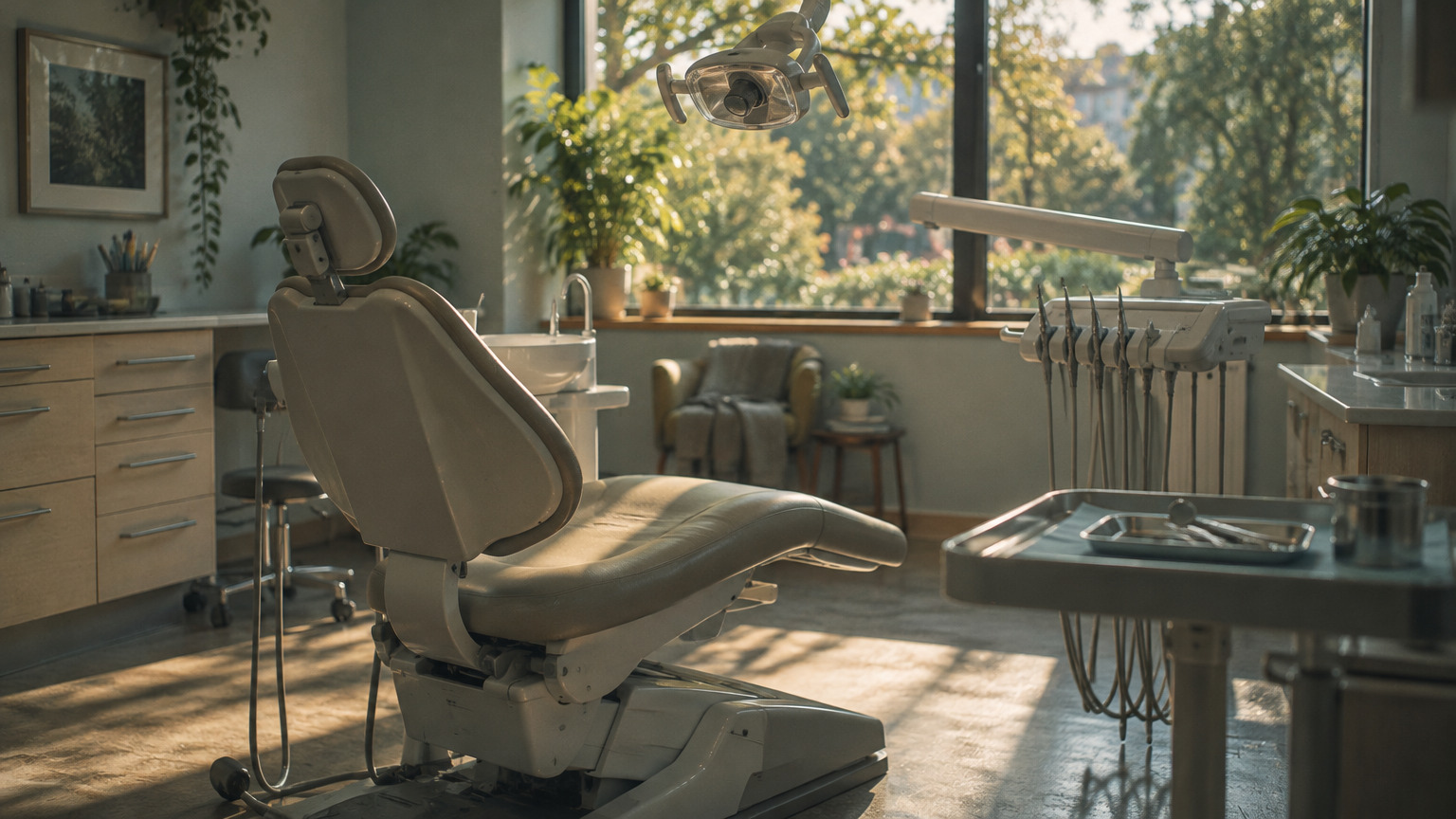
A calm, sunlit dental treatment room with a chair by a large window.
Illustration: a calm dental room by a window.

Your mouth may be the most underrated part of a long, healthy and joyful life. On our quest, father and son, we met more than 100 longevity experts, and again and again the talk came back to the mouth: to gums and bacteria, to chewing and breathing, to saliva. Here is what science knows today, what your dentist can already do, and what is coming. Every number has its source. Where science only shows a link and not a cause, we say so.

By Marek Piotrowski · Updated 2026-10-26

Please read this first

This page shares what research and the experts we met say. It is not medical advice, and it does not recommend any medicine, supplement or treatment. It knows nothing about you. Before you start, stop or change anything — especially if you are pregnant, live with a health condition or take any medication — please talk to your doctor. In an emergency, call your local emergency number.

In short

A healthy mouth is part of a long, healthy life. People who keep their teeth and gums healthy tend to live longer and get dementia less often, and treating gum disease lowers blood sugar in people with diabetes. The everyday care is simple, cheap and safe: brushing with fluoride toothpaste, cleaning between your teeth and seeing your dentist regularly. [1][2][3]

Longevity, as we mean it: more healthy, joyful years. What we mean →

3.73 bnpeople lived with a problem in their mouth in 2023, such as tooth decay, gum disease or lost teeth. It is the most common group of diseases on Earth.[4]
1.09 bnpeople had severe gum disease (periodontitis) in 2023, up from 1.03 billion in 2019.[4]
373 mpeople have no natural teeth left: 11% more than four years earlier, as the world gets older.[4]

Teeth and gums used to be treated as their own little world. Longevity science now sees them differently. Your mouth is where your body meets the outside world every day: food, air, bacteria. Sore, bleeding gums are a small wound that never heals. Through it, bacteria and inflammation reach the rest of the body. And inflammation is the slow fire behind most diseases of aging.

“The state of your teeth and your gums is also a risk factor for heart disease. So unfortunately, a lot of bacteria gets access to your body through your mouth.”
Dr Eu Leong Oh · physician · Chi Longevity, Singapore, March 2024
“We are not just our bodies, we are holobionts, so we are composed by our somatic self plus the entire microbiota that fills our cavities.”
Guido Kroemer · co-author of the Hallmarks of Aging · Singapore, February 2024

In plain words: We are never alone in our bodies. Countless tiny living things, bacteria and other microbes, live in our mouth and our gut, and together with them we make one team. Guido calls that team a holobiont. Look after your mouth, and you look after the whole team.

What is proven

The strongest evidence first. Two words help here. A trial splits people by chance into two groups and gives the treatment to only one of them, so it can show a cause: this does that. A study that simply follows people for years can only show a link: two things that tend to go together. People who floss may also eat better, smoke less or have more money. We tell you each time which one it is.

Treating the gums lowers blood sugar

Gum disease, which doctors call periodontitis, is a long-lasting infection that slowly eats away the gum and bone holding your teeth. In people with diabetes and gum disease, a deep cleaning of the gums by a dentist or hygienist lowered their long-term blood sugar (the HbA1c test, your average over the past 2–3 months) by 0.43 percentage points after 3–4 months, compared with no treatment. That comes from 30 trials with 2,443 people. It works both ways: high sugar harms the gums, and sore gums make sugar harder to control.

Based on: 30 trials taken together · a real effect · moderate certainty [3]

Toothbrushing prevents pneumonia in hospital

When hospital patients had their teeth brushed every day, a third fewer of them caught pneumonia in hospital. In intensive care, deaths fell by 19%, and people spent less time on a breathing machine. That comes from 15 trials with 10,742 patients. It may be the cheapest life-saving treatment in all of medicine.

Based on: 15 trials taken together · shows cause [5]

Gums and the heart: a strong link, not yet proof

People with gum disease get heart and blood-vessel disease more often, even after taking smoking and the other known risks into account. But that does not prove that the gums cause it. European gum specialists and the World Heart Federation still advise telling people with gum disease that their risk of heart attack and stroke is higher. Treating the gums lowers inflammation in the blood a little (doctors measure it with a marker called CRP). In one landmark trial it also helped blood vessels relax and widen better six months later. A large genetic study, which uses the genes people are born with as a natural experiment, found no sign that gum disease causes heart disease. So the honest word is link.

Based on: Expert guidelines · a link from studies that follow people · trials on blood markers, not on heart attacks [6][7][8][9][10]

Teeth and the brain

In 14 studies that followed 34,074 people for years, every extra missing tooth went with a 1.1% higher risk of dementia. People with no teeth at all had a 40% higher risk. And among people who had lost teeth, those without dentures had the higher risk.

Based on: 14 long-term studies taken together · a link, not proof [2]

Flossing and the brain: the surprising one

In an American study of more than 6,000 people followed for 25 years, people who flossed had a 22% lower risk of the most common kind of stroke, the kind caused by a blocked blood vessel. They also had a 12% lower risk of an irregular heartbeat (atrial fibrillation). That held however often they brushed or saw a dentist. In 2.56 million Koreans, brushing twice a day plus regular professional cleaning went with a 17% lower risk of dementia. The flossing result is still early: it was presented at a conference in 2025 and is not yet a full published paper.

Based on: Big studies that follow people · a link, not proof · flossing data still early [11][12][13][14]

Teeth and lifespan

69,265 older adults in Japan were followed for nine years. Of those with fewer than 20 teeth, 26.4% died; of those with 20 or more, 14.4%. In China, among people aged 80 and over, those who still had at least one natural tooth were 38% more likely to reach 100.

Based on: Big studies in Japan, Korea and China · a link, not proof · money and access to care play a part too [1][15][16]

A weakening mouth predicts losing independence

Japan checks older people for oral frailty, a mouth that is getting weaker: chewing and swallowing get harder, the mouth gets dry, teeth are lost. Over nine years, people with oral frailty had a 40% higher risk of needing care from others and a 44% higher risk of dying.

Based on: One study that followed people for 9 years · a link, not proof [17]
“You’ve got amylase and you’ve got these digestive enzymes in your saliva, right? So first, that’s where you’re breaking down the food. By chewing, chewing, chewing, you’re signaling to your brain and your vagus nerve.”

In plain words: Digestion starts in your mouth. Your saliva holds amylase, a helper that begins to break down starchy food like bread or rice. And as you chew, Brendan says, you send word to your brain and to the vagus nerve, the long nerve that links your brain and your belly, that food is on its way. So chew slowly: it is the first step of good digestion.

Your mouth helps set your blood pressure

Leafy greens and beetroot contain nitrate. Bacteria on your tongue turn it into nitrite, and your body turns that into nitric oxide, a molecule that tells blood vessels to relax and widen. Strong antiseptic mouthwash can wipe out these helpful bacteria. Trials of this give mixed results, but in one study, people who used mouthwash twice a day or more had about twice the risk of developing high blood pressure. Promising, and it makes sense, but not settled yet.

Based on: Small trials with mixed results · one study that followed people [18][19]

The basics work

Toothpaste with fluoride prevents tooth decay: the evidence from 55 trials is very strong. Cleaning between your teeth, with floss or little brushes, calms gum inflammation more than brushing alone.

Based on: Cochrane reviews, the most careful summaries of the evidence [20][21]

Japan decided to keep its teeth, and did

Since 1989 Japan has had one simple goal for everybody: 20 of your own teeth at the age of 80. In 1987, 7.0% of 80-year-olds managed it. By 2022 it was 51.6%, more than half. Poland is moving the same way: among Poles over 65, the share with at least 20 of their own teeth rose from 6.0% in 2009 to 15.0% in 2019. [22][23]

Orthodontics, breathing and sleep

“I’m talking just day to day, breathe through your nose, close your mouth, make sure you don’t have sleep apnea, and take nice deep breaths where your diaphragm is actually moving.”
Dr Olivia Lesslar · doctor who kindly agreed to become Live Beyond’s Medical Director · LifeSummit Berlin, May 2026

In plain words: Olivia's everyday recipe is simple. Keep your mouth closed and breathe through your nose. If you snore, get checked for sleep apnea. And take slow, deep breaths that move your belly, not only your chest.

Dentists already treat sleep apnea

In sleep apnea, breathing stops again and again during sleep, often with loud snoring, and the body runs short of oxygen through the night. A sleep doctor makes the diagnosis. Then, for snoring, and for adults who cannot use a CPAP machine (a mask that blows air while you sleep) or prefer something else, guidelines say a trained dentist can make a custom mouth guard. It holds the lower jaw slightly forward and keeps the airway open. Untreated sleep apnea is one of the quiet things that speed up aging.

Based on: Medical guideline [24]

Widening the upper jaw in children

Some children with sleep apnea stop breathing for a moment, again and again, as they sleep. Widening the upper jaw with a special brace (rapid maxillary expansion) cut these pauses by about 7 an hour, across 10 studies. But none of those studies split children by chance, and Cochrane says the evidence is not strong enough either way. A field wide open for good research.

Based on: 10 studies, none of them a trial · very weak evidence [25]

Straight teeth, better lives, mostly in the short run

Braces before 18 make young people feel better about their mouth and their daily life. And fixing upper front teeth that stick out a lot halves the risk of injuring them. Do braces also mean healthier gums and fewer cavities decades later? 87 studies cannot tell yet. That is not proof that braces don't help there; it only means nobody has measured it well.

Based on: Reviews of many studies · low-to-moderate quality [26][27]

What is already here

What your dentist can already do today, with an honest note on how strong the evidence is for each.

Gum regenerationWhere gum disease has eaten deep into the bone, special surgery helps the tooth's support grow back: about 1.3 mm more than standard surgery alone (79 trials). The European standard of care.Strong [28]
Dental implants96.4% are still in place after 10 years. About 1 patient in 5 gets inflammation around an implant, so regular check-ups and cleaning are what make it last.Moderate [29]
Nano-hydroxyapatite toothpasteMade with the same mineral your enamel is made of. In two Polish trials, with children and with adults, it did no worse than fluoride toothpaste at preventing decay.Moderate [30]
Silver diamine fluorideA liquid a dentist can paint onto a cavity. It stops about 81% of cavities in baby teeth, with no drilling. It is on the WHO list of essential medicines.Strong [31]
Self-assembling peptide P11-4A liquid a dentist can apply to an early cavity. It builds a tiny scaffold inside it, so minerals from saliva can rebuild the tooth. No drilling.Moderate [32]
AI on X-raysComputer programs cleared by the US FDA spot decay, bone loss and tartar on dental X-rays.Cleared by the FDA [33]
Blood sugar in the dental chairA finger-prick test in a London dental hospital: 28.7% of patients who did not know of any diabetes had blood sugar in the prediabetes range, the warning stage before diabetes.One study [34]
Cheek-swab aging clocksA swab from inside your cheek estimates your biological age: how old your body seems, not how many birthdays you have had. These tests are on sale. Useful, but not yet fully proven.New [35]
“What we really want is something we can scale to the masses […] we can get blood draws or even better saliva. If we can get the information we need out of that, then we can scale it a lot easier.”

In plain words: Brian wants tests cheap and simple enough for everybody. A bit of saliva is easier than a blood draw: no needle, no clinic. If saliva can tell us how we are aging, a check-up could one day happen at home.

“Sometimes I’m sending in my blood samples, my stool samples, my saliva samples, my hair samples to actually see where I am in the trajectory.”
Andrea Maier · professor of medicine · Singapore, March 2024

In plain words: Andrea, a professor of medicine, tests herself regularly, with blood, stool, saliva and hair, to see where she is on her own path of aging, and to change course in time if she needs to.

What is coming

The frontier, and we tell you where each step stands. Some of it is being tested in people now. Some of it has only worked in mice.

“What Jon showed in his PhD thesis research is, first of all, that aging mice develop periodontal disease. That hadn’t really been shown before. […] If you take old mice who already have developed these signs of periodontal disease, you give them rapamycin for eight weeks, we can reverse all three of those things.”

In plain words: Matt's team found that mice get gum disease as they age, just like people: the bone around the teeth shrinks, the gums get inflamed, and the mix of bacteria in the mouth changes. Rapamycin is a drug first used to protect transplanted organs. After eight weeks on it, all three of those things turned back toward young in old mice. This is research in mice, not something to take: whether it works in people is being tested now, right below.

A drug that made old gums young again, now tested in people

In old mice, eight weeks of rapamycin regrew bone around the teeth, calmed gum inflammation and brought the mouth's bacteria back toward a young mix. Now the University of Washington's RAPID trial is testing it in adults over 50 with gum disease: rapamycin on and off for eight weeks, then a year of follow-up. No results are published yet.

Based on: Mice: shown · people: trial under way [36]

Growing new teeth

A team in Kyoto switched off one protein, USAG-1, which works like a brake on tooth growth, and mice and ferrets grew whole new teeth. The antibody that does this has passed a first safety test in healthy adults. Next is a trial in children born without many of their adult teeth. The company's goal for a treatment: around 2030. Regrowing teeth lost later in life is a later aim, not yet shown.

Based on: First test in people (phase I) done · next trial (phase IIa) coming [37]

Living pulp from stem cells

The pulp is the living core of a tooth, with its blood vessels and nerves. In a randomized trial with 40 children who had hurt their front teeth, stem cells from their own baby teeth grew new living pulp, with blood vessels and nerves, and the roots went on growing.

Based on: One trial · early days in people [38]

Rebuilding enamel and whole teeth

In the lab, a protein gel regrew enamel crystals on human teeth (2025), and first products are announced for 2027. Whole new teeth grown from cells have been made in mini pigs. That is real, but the researchers themselves talk of a decade before it reaches people.

Based on: Laboratory · not yet tested in people [39][40]

The gum–brain question

In 2019, scientists found the enzymes of a gum bacterium, Porphyromonas gingivalis, one of the main bacteria behind gum disease, in the brains of people with Alzheimer's. The first drug against these enzymes missed its goals. A successor is now in a mid-stage trial (phase 2) running to 2028, and in 2026 a vaccine against the bacterium began its first safety study in people with Alzheimer's. Not proven, and one of the most important questions in the field.

Based on: Mid-stage trial under way · an earlier trial failed [41][42]

Oral health and aging is now a national research priority

In September 2026 the US National Institutes of Health, America's main medical research agency, named Oral Health and Aging a highlighted research topic for five of its institutes, including those for aging and for dental research. Alzheimer's and faster aging are part of it. [43]

In clinics today

  • Gum regeneration
  • Silver diamine fluoride
  • P11-4 enamel repair
  • AI reading X-rays
  • Cheek-swab aging clocks
  • Mouth guards for sleep apnea

In human trials now

  • Rapamycin for aging gums (RAPID)
  • Antibody to regrow teeth — children next, goal around 2030
  • Drug against a gum bacterium, for Alzheimer's — phase 2
  • Vaccine against P. gingivalis
  • Donor pulp stem cells (Japan)

Still in the lab

  • Whole bioengineered teeth
  • Regrowing teeth lost in adulthood
  • Senolytics for the gums — drugs that clear out worn-out cells
  • Protein gels that regrow enamel

Where the joy is

A healthy mouth is not only about living longer. It is about living better, every single day. It means biting into a crisp apple or a crusty slice of bread, and eating what you love at any age. It means laughing out loud and smiling in every photo, with no hand in front of your mouth. It means talking easily, telling stories, staying in the conversation at the family table.

As we get older, this matters even more. When chewing hurts, it is easy to start skipping dinners with friends. When you feel shy about your smile, you talk less. Healthy teeth keep you at the table, with the people you love. Think of the best moments of your life: so many of them happened around a table. So when you brush tonight, think of it as a gift to your future self: many more shared meals, many more big smiles. For us, that is the most joyful part of longevity.

A bamboo toothbrush in a glass on a stone bathroom shelf, with the sea outside the window.
Illustration: a toothbrush on the morning shelf, by the sea.

Oral longevity on the Longevity Map

This page began as a gift for our dear friend Dr Emma Kiworkowa, orthodontist and co-owner of Villa Nova Dental Clinic, ahead of our conversation on her podcast Dr. Emma. Emma, thank you for your friendship, and for everything you do to help people keep a healthy smile for life. We are so grateful to have you with us on this journey.

Sources

Every number on this page, by the number in square brackets. Quotations come from Live Beyond’s own recorded interviews, cleaned only of “um” and “uh”. Not medical advice. Talk to your doctor before you change anything.

  1. Matsuyama Y et al. Number of teeth and mortality in 69,265 older Japanese adults (JAGES). J Dent Res 2026;105:1277–1284.
  2. Qi X, Zhu Z, Plassman BL, Wu B. Dose-response meta-analysis on tooth loss with the risk of cognitive impairment and dementia. J Am Med Dir Assoc 2021;22:2039–2045.
  3. Simpson TC et al. Treatment of periodontitis for glycaemic control in people with diabetes. Cochrane Database Syst Rev 2022;4:CD004714.
  4. GBD 2023 Oral Disorders Collaborators. Global and regional progress towards reduced burden of oral conditions, 2019–2023. Lancet Public Health 2026;11:e630–41.
  5. Ehrenzeller S, Klompas M. Association between daily toothbrushing and hospital-acquired pneumonia. JAMA Intern Med 2024;184:131–142.
  6. Lockhart PB et al. Periodontal disease and atherosclerotic vascular disease. AHA Scientific Statement. Circulation 2012;125:2520–2544.
  7. Sanz M et al. Periodontitis and cardiovascular diseases: consensus report (EFP / World Heart Federation). J Clin Periodontol 2020;47:268–288.
  8. Tonetti MS et al. Treatment of periodontitis and endothelial function. N Engl J Med 2007;356:911–920.
  9. Demmer RT et al. Periodontal treatment and C-reactive protein: meta-analysis of 20 RCTs. PLoS ONE 2013;8:e77441.
  10. Bell S et al. Periodontitis and cardiovascular disease: a Mendelian randomization study. Atherosclerosis 2020;313:111–117.
  11. Sen S, Marchesan J, Wood S et al. Dental flossing may lower the risk for incident ischemic stroke, cardioembolic stroke and AF (ARIC). Stroke 2025;56(Suppl 1):A19 — International Stroke Conference, February 2025 (preliminary, conference abstract); American Heart Association news release.
  12. Meyer J, … Sen S. Periodontal disease independently associated with white matter hyperintensity volume. Neurology Open Access 2025;1(4); American Academy of Neurology release, 22 October 2025.
  13. Yoo JE, … Nam GE. Dental diseases, oral hygiene care and dementia in 2,555,618 Koreans. J Am Med Dir Assoc 2023;24:1924–1930.
  14. Yamaguchi S, Murakami T, Satoh M et al. Tooth loss, periodontal disease and hippocampal atrophy (Ohasama Study). Neurology, 5 September 2023.
  15. Kim SY et al. Tooth loss and all-cause mortality, Korean NHIS cohort. Front Med 2022;9:837743.
  16. Wei X, Zhuang L, Li Y et al. Edentulousness and the likelihood of becoming a centenarian. JMIR Aging 2025;8:e68444.
  17. Oral frailty (OF-5) and nine-year disability and mortality, Kashiwa cohort. Geriatr Gerontol Int 2023;23:651–659.
  18. Alzahrani HS et al. The role of dietary nitrate and the oral microbiome on blood pressure and vascular tone. Nutr Res Rev 2021;34:222–239.
  19. Joshipura K et al. Over-the-counter mouthwash use and risk of hypertension. Blood Press 2020;29:103–112.
  20. Walsh T et al. Fluoride toothpastes of different concentrations for preventing dental caries. Cochrane 2019, CD007868.pub3.
  21. Worthington HV et al. Home use of interdental cleaning devices, in addition to toothbrushing. Cochrane 2019, CD012018.pub2.
  22. Japan Ministry of Health, Labour and Welfare. Survey of Dental Diseases 2016 and 2022; Ministry of Agriculture white paper on the 8020 campaign.
  23. Dąbrowski W, … Górska R. Tooth loss among older adults in Poland, PolSenior 2009 and 2019. Dent Med Probl 2025;62:23–30.
  24. Ramar K et al. Clinical practice guideline for oral appliance therapy for obstructive sleep apnea and snoring (AASM / AADSM). J Dent Sleep Med 2015;2:71–125.
  25. Machado-Júnior AJ et al. Rapid maxillary expansion and obstructive sleep apnea in children: meta-analysis. Med Oral Patol Oral Cir Bucal 2016;21:e465–9; Carvalho FR et al. Cochrane 2016, CD005520.pub3.
  26. Javidi H et al. Does orthodontic treatment before 18 improve oral-health-related quality of life? Am J Orthod Dentofacial Orthop 2017;151:644–655.
  27. Macey R et al. Malocclusion, orthodontic treatment and oral health: systematic review. Am J Orthod Dentofacial Orthop 2020;157:738–744.
  28. Nibali L et al. Regenerative surgery versus access flap for intrabony defects: network meta-analysis of 79 RCTs. J Clin Periodontol 2020;47:320–351; Sanz M et al. EFP S3 guideline, 2020.
  29. Howe M-S, Keys W, Richards D. Long-term (10-year) dental implant survival: systematic review and meta-analysis. J Dent 2019;84:9–21; Diaz P et al. Peri-implantitis prevalence. BMC Oral Health 2022;22:449.
  30. Paszyńska E et al. Nano-hydroxyapatite vs fluoride toothpaste, children: Sci Rep 2021; adults (Poznań and Białystok): Front Public Health 2023;11:1199728.
  31. Gao SS et al. Silver diamine fluoride for arresting caries in children: systematic review. JDR Clin Transl Res 2016;1:201–210; WHO Model List of Essential Medicines, 2021.
  32. Keeper JH et al. Self-assembling peptide P11-4 for caries: systematic review. JADA 2023;154:580–591.
  33. US FDA clearances: Overjet Dental Assist (2021), Pearl Second Opinion (2022), DentalMonitoring De Novo (2024).
  34. Ide M, … Nibali L. Chairside HbA1c in a dental hospital, 911 patients. J Dent 2026, art. 106563 (figures as reported by Medical Dialogues and DrBicuspid).
  35. CheekAge: a cheek-swab epigenetic clock trained on 8,045 adults. GeroScience 2024.
  36. An JY, … Kaeberlein M. Rapamycin rejuvenates oral health in aging mice. eLife 2020;9:e54318; University of Washington School of Dentistry, RAPID trial announcement, 29 January 2024; rapamycintrial.com; UW Healthy Aging and Longevity Research Institute (HALO).
  37. Murashima-Suginami A et al. Anti-USAG-1 therapy for tooth regeneration. Sci Adv 2021;7:eabf1798; Toregem BioPharma news, 17 August 2026; Dentistry.co.uk, 18 August 2026.
  38. Xuan K et al. Deciduous autologous tooth stem cells regenerate dental pulp after implantation into injured teeth. Sci Transl Med 2018;10:eaaf3227; Foundation for Biomedical Research and Innovation at Kobe, 25 March 2025.
  39. Hasan A, Mata A et al. Biomimetic protein matrix restores human enamel. Nat Commun 2025; Dentistry.co.uk on Eterna Regeneratives, 18 September 2026.
  40. Tufts University School of Dental Medicine, bioengineered teeth in mini pigs, Stem Cells Transl Med 2025; King's College London, 14 April 2025.
  41. Dominy SS et al. Porphyromonas gingivalis in Alzheimer's disease brains. Sci Adv 2019;5:eaau3333; GAIN trial results (Fierce Biotech, 26 October 2021); FDA clinical hold, January 2022; SPRING trial NCT06847321.
  42. Denteric: FDA IND clearance for GPV381, 26 March 2026; Phase I in early Alzheimer's disease, 28 May 2026.
  43. US National Institutes of Health, Highlighted Topic: Oral Health and Aging, posted 9 September 2026.