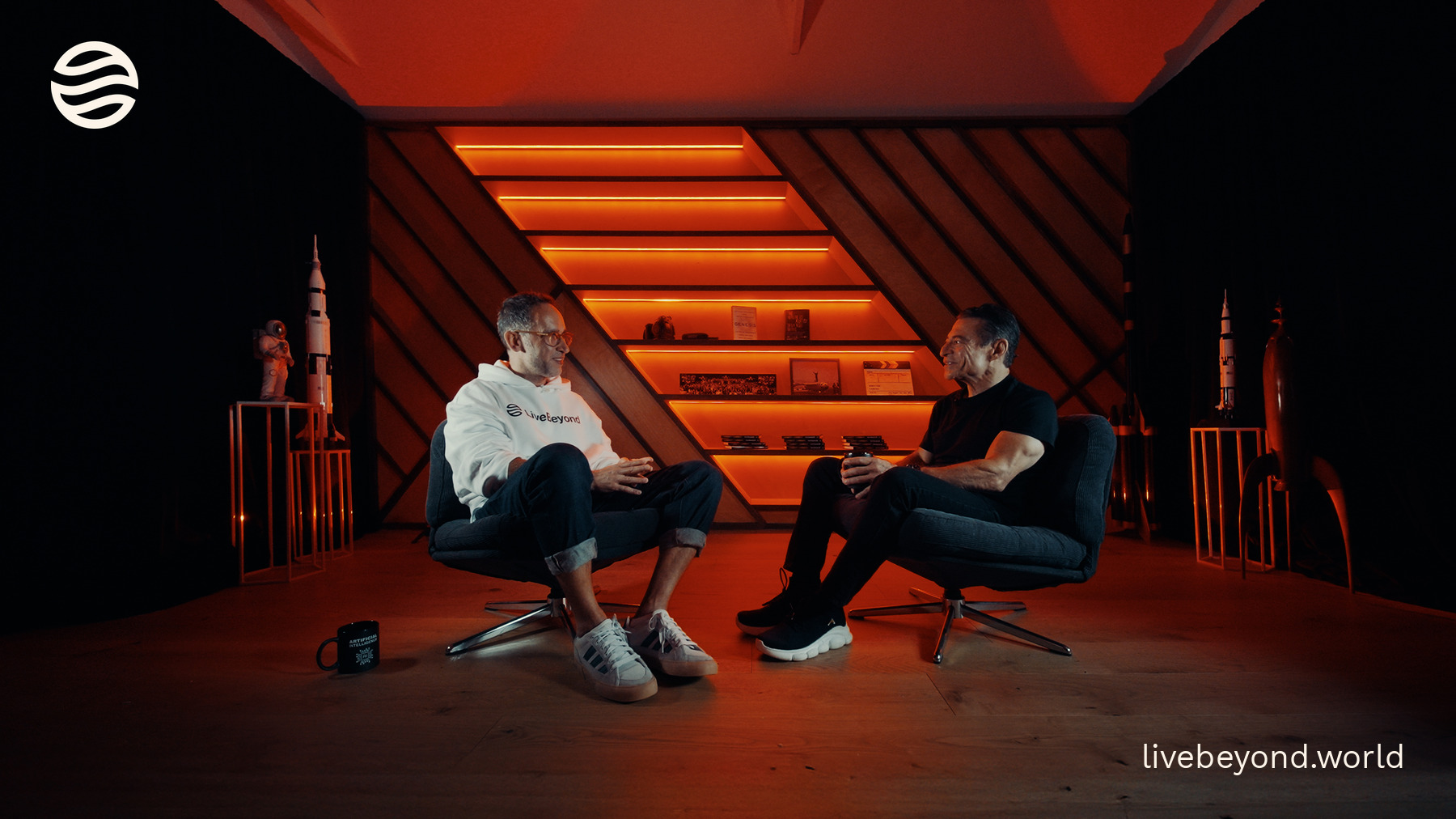
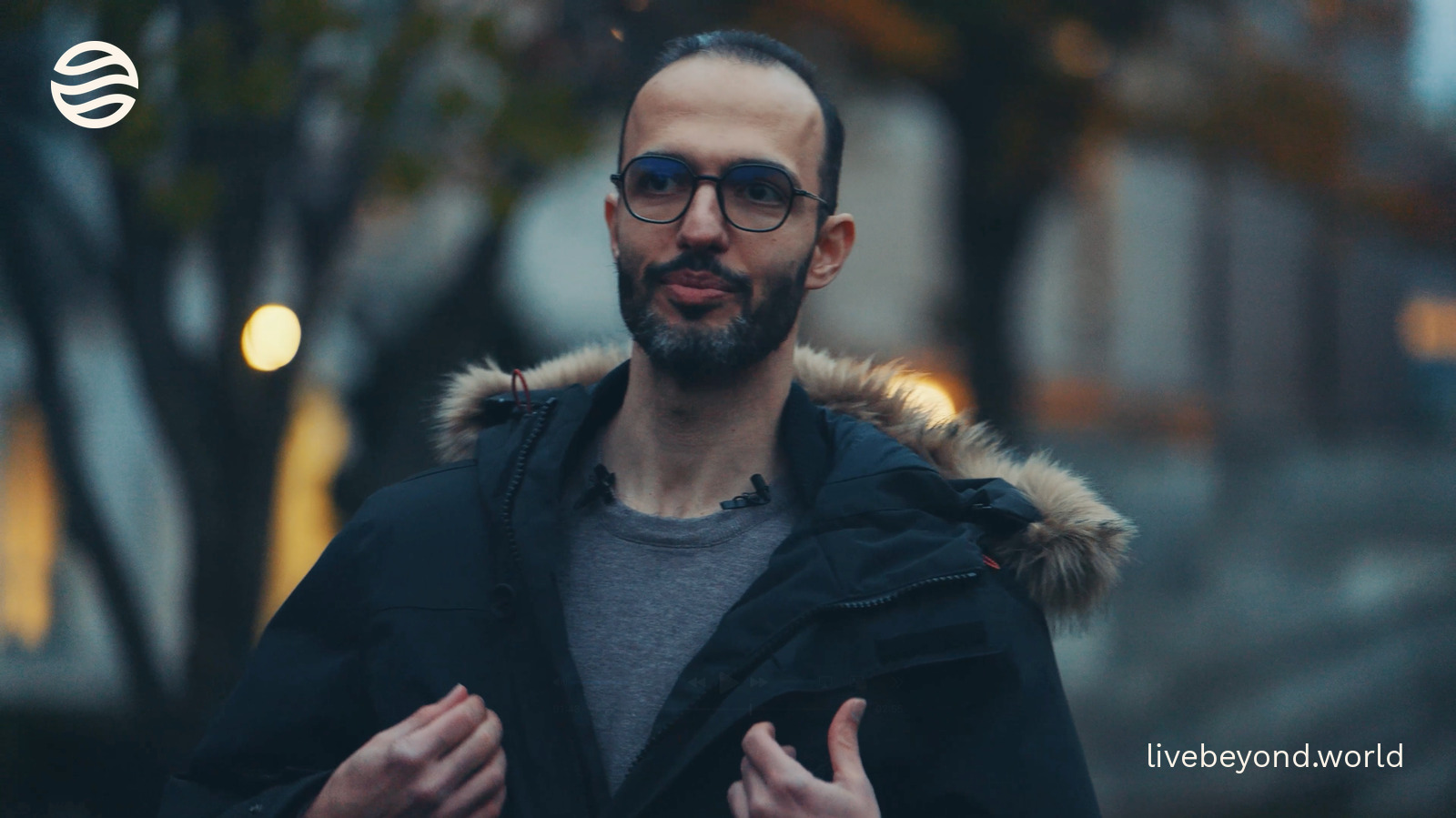
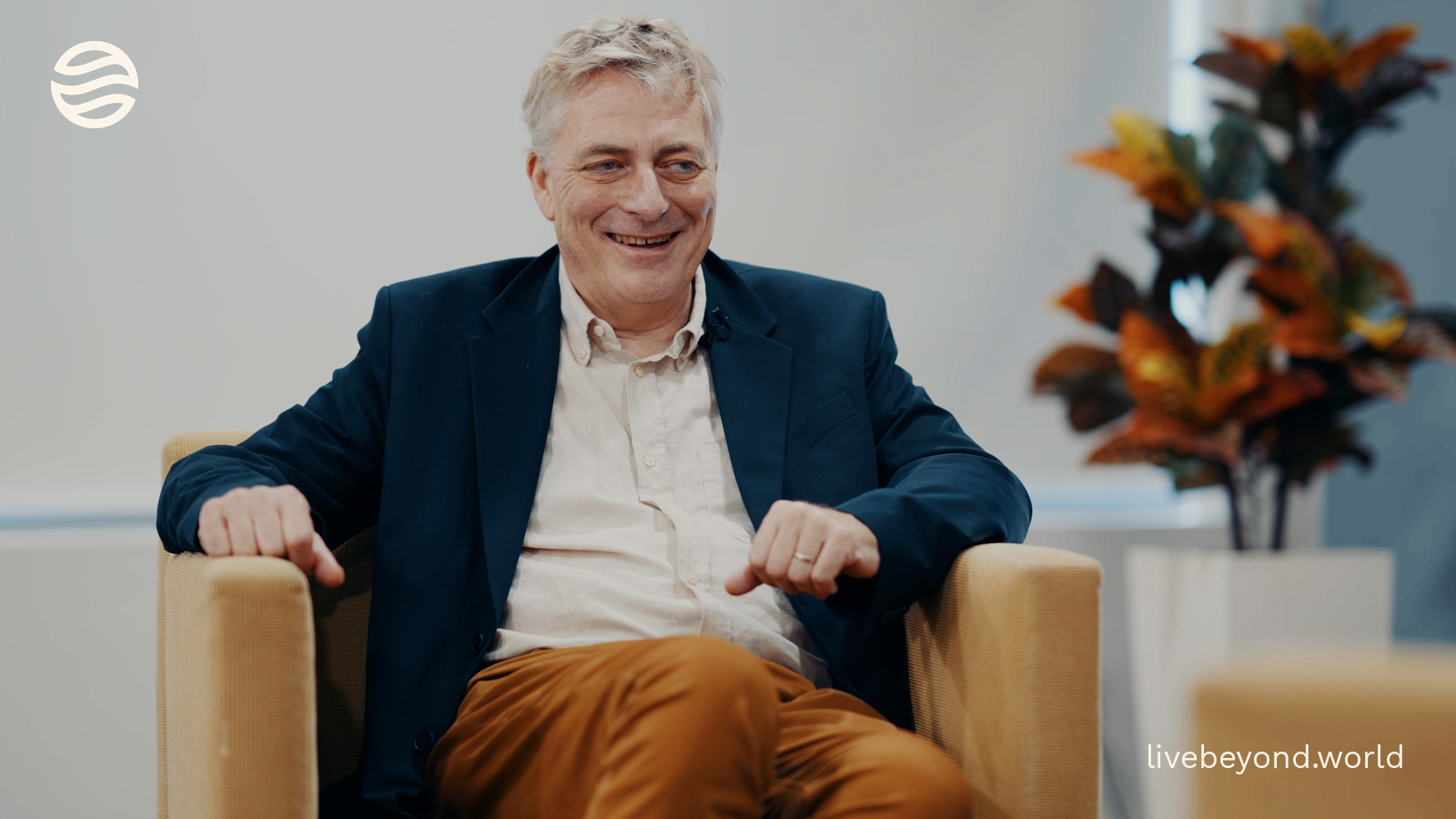
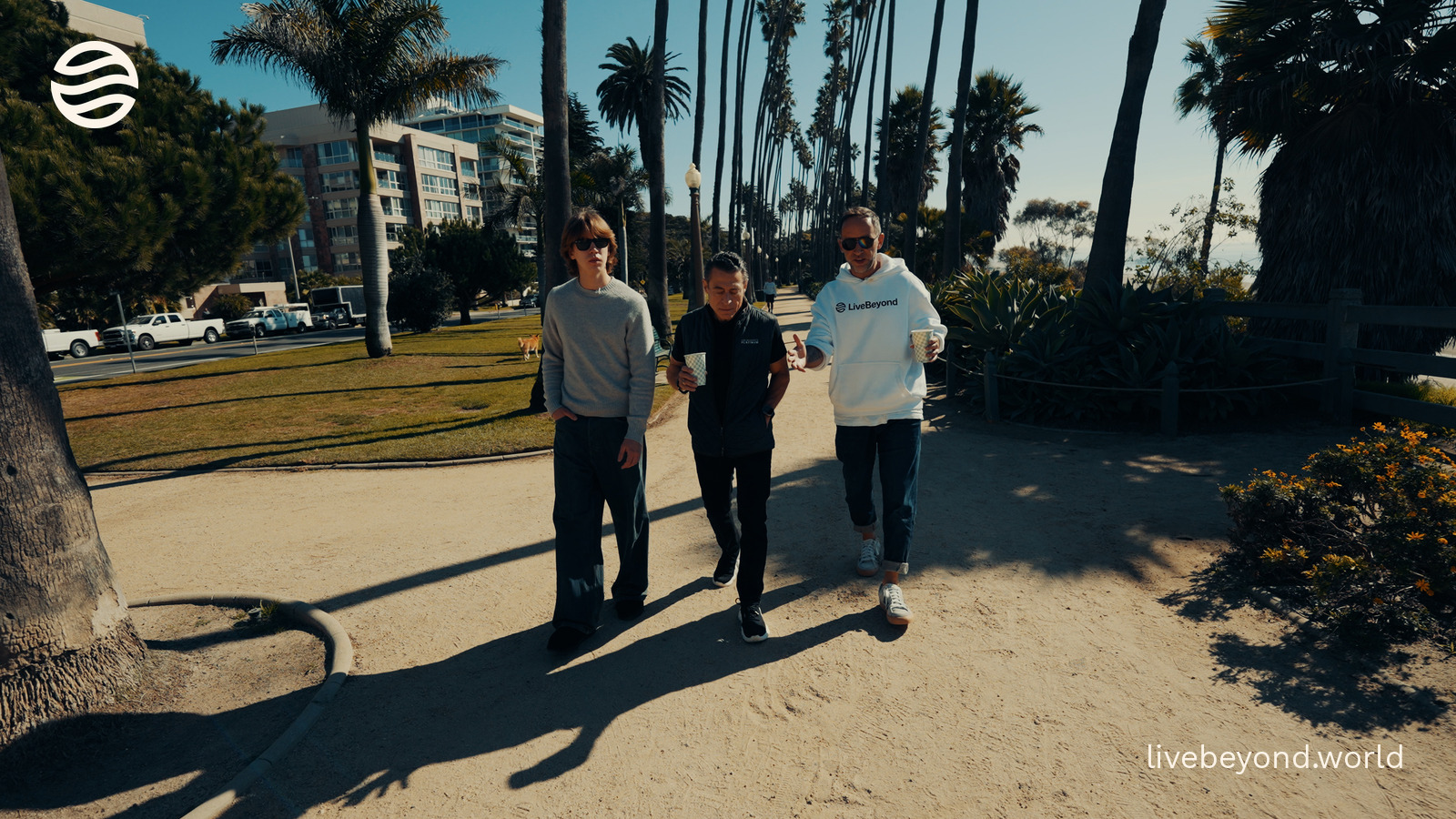
Marek Piotrowski and Peter Diamandis in his studio in Los Angeles, December 2025 — a Live Beyond interview on AI and longevity.
On our quest, my son Alek and I met more than a hundred longevity experts in 39 countries and states, and almost everywhere, sooner or later, the talk turned to artificial intelligence. In Shanghai we walked through a lab where robots and AI work side by side to look for new medicines. In Los Angeles, Peter Diamandis told us the biggest impact on longevity will come from AI. And again and again, the scientists who use it every day told us, just as clearly, what it can’t do yet. This page is about how AI is changing drug discovery, protein science, scans, tests and aging clocks, what it could mean for your own health data and AI doctors, and its honest limits — data, errors, privacy and who owns your data — in the words of the experts who taught us, with gratitude.
AI is giving longevity science something it never had: the power to read more data than any person ever could. It is already helping scientists find new drug candidates faster, predict the shapes of proteins, spot cancers on scans and read our age from tests — and one day it may turn your own scattered health data into one clear suggestion that makes a real difference. It’s a tool, and a tool is only as good as the data it learns from and the people who use it. Used wisely, it can bring us more healthy, joyful years — and give the people who care for us more time for us. [1][2][3]
Longevity, as we mean it: more healthy, joyful years. What we mean →
214 millionprotein sequences with a predicted 3D shape in the free AlphaFold database — almost every protein science knows.[4]
80–90%of drug candidates found with AI passed their first safety trials in people — more than usual. In the next stage, about 40% did, about the same as usual.[2]
20%more breast cancers found when AI helped read mammograms in a Swedish trial of 80,033 women — while doctors read 44% fewer images.[3]
Why AI matters for longevity
Eric Verdin at the Buck Institute, California, May 2024 — a Live Beyond interview with Marek Piotrowski on robots and AI in the lab.
Your body is a huge, busy system, and science can now measure more of it than any person could ever read. Artificial intelligence, or AI, is a computer program that learns patterns from enormous amounts of data and then uses them to make predictions. That is why so many of the scientists we met were excited about it.
In Los Angeles, Peter Diamandis — one of the first people who inspired me about longevity, through his podcasts — put it as strongly as anyone on our quest:
“Without question, the biggest impact on longevity will come from AI. Without any question, right? And so I'm constantly looking at the overlap where AI is helping us understand at a molecular level what is going on inside a cell and be able to run trillions of experiments, where before we could only do hundreds of experiments. Because these systems can run in silico, they can run sort of in imaginary systems and find new information.”
In plain words: AI can test ideas inside a computer, very fast, before anyone touches a test tube. So scientists can try far more ideas than ever before, and keep only the best ones for the lab.
At the Buck Institute in California — a calm, beautiful place with tiny deer outside the windows — Eric Verdin told us how it is already changing his own labs:
“You will see this in most laboratories, including here, robotics is becoming part of the equation. We've got a robotic microscope that allows us to do the work of many scientists, and you see this spreading everywhere. Some of the biggest development would be AI also accelerating the way we think. In some way, AI is robotics for the brain, basically. Allows us to really learn how to find patterns where we cannot see with our own eyes.”
In plain words: Robots do the lab work of many hands. AI does the thinking work of many eyes: it finds patterns in data that we would never see on our own.
Finding new drugs faster
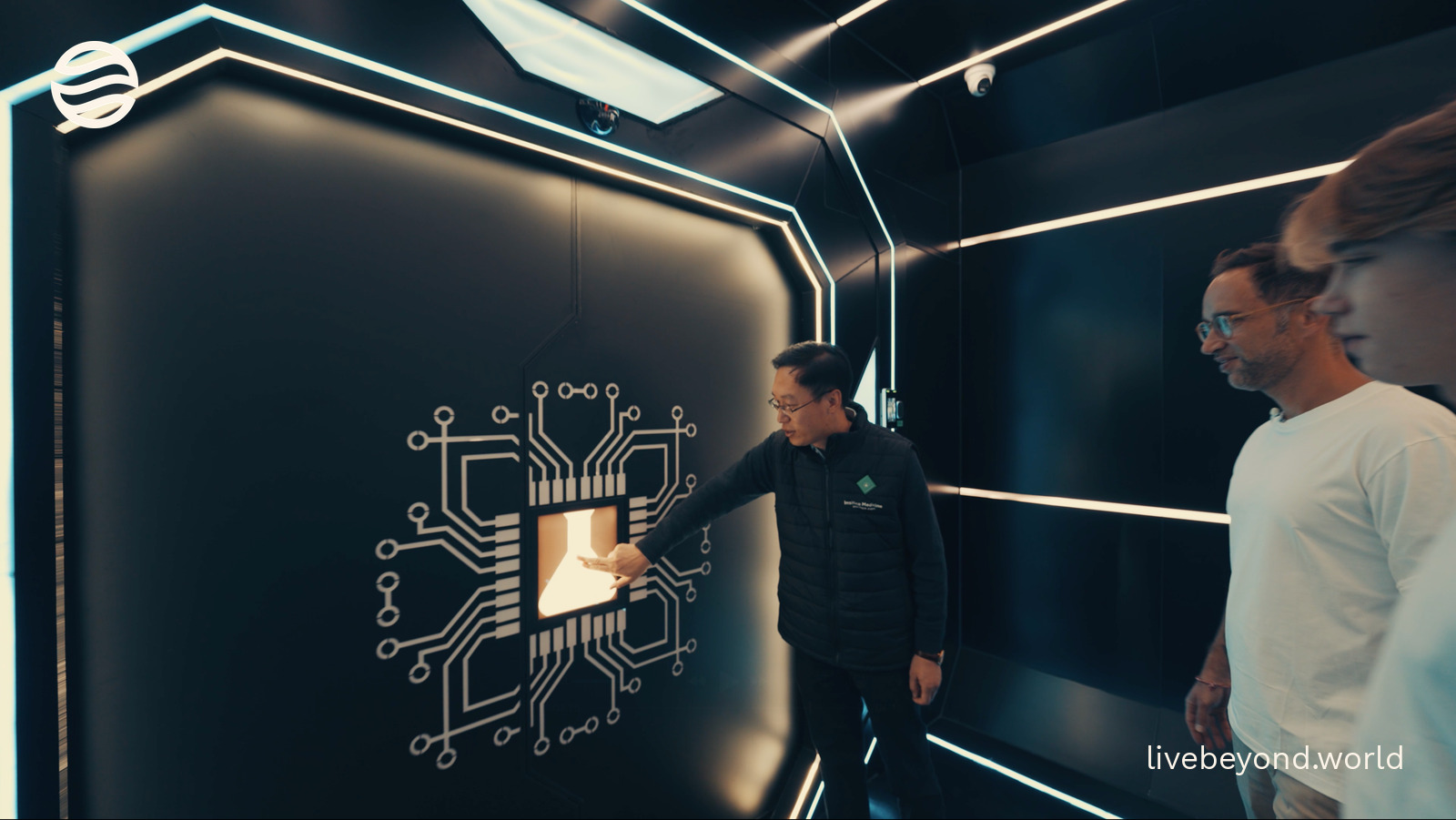
Zhihu Qu showing Marek Piotrowski and Alek Piotrowski around the AI and robotics lab in Shanghai, December 2023 — Live Beyond.
Making a new medicine takes many years. Scientists have to find the right target — often a protein in the body that misbehaves — then design a molecule that fixes it, test it in the lab, and only then test it in people. AI helps most with the first steps.
In December 2023, Alek and I visited a lab in Shanghai that everybody in the field was talking about: robots run the experiments, and AI decides what to try next. Zhihu Qu, an engineer who worked on its robots when we visited, showed us around:
“Suppose we push a drug to the PCC, it's supposed to spend almost three years, but we finish that in 18 months. […] I think if you see in certain stage, AI can accelerate lots of, maybe several fold over time. […] But it's only for the early discovery. For the other part, we have to step by step. It will be like the clinical trial. We cannot accelerate that one.”
In plain words: A “PCC” is a preclinical candidate: the molecule scientists choose to take forward toward testing. AI and robots can make that early search much faster. But testing a medicine safely in people still takes the time it takes.
AI-found drugs pass early safety tests
Researchers looked at medicines found with AI that had reached trials in people. In the first stage, which mostly checks safety, 80–90% succeeded — more than the usual rate. In the second stage, which starts to check whether a drug works, about 40% succeeded, about the same as for drugs found the old way. The numbers in that second stage are still small.
Based on: One analysis of company pipelines · early days [2]
AI doesn’t only design molecules. It also reads. In London, Avi Roy, a biogerontologist, told us why scientists need that help:
“The advent of machine learning and computation trying to solve these complex problems is absolutely the way forward. If you and I go to PubMed today, and it's about two o'clock in United Kingdom, and just check the papers that have been deposited in PubMed since midnight last night, fourteen hours, we wouldn't be able to trawl through all of that biomedical literature in fourteen hours. So imagine what will happen at the end of the month, end of the year. How are you possibly supposed to extract all of that value from all of those papers and know what is reproducible, what is not reproducible? We need help. We absolutely need help.”
In plain words: So much new research comes out every day that nobody can read it all. AI can help scientists find what matters in it — and what really holds up.
AI robotic labs in every hospital
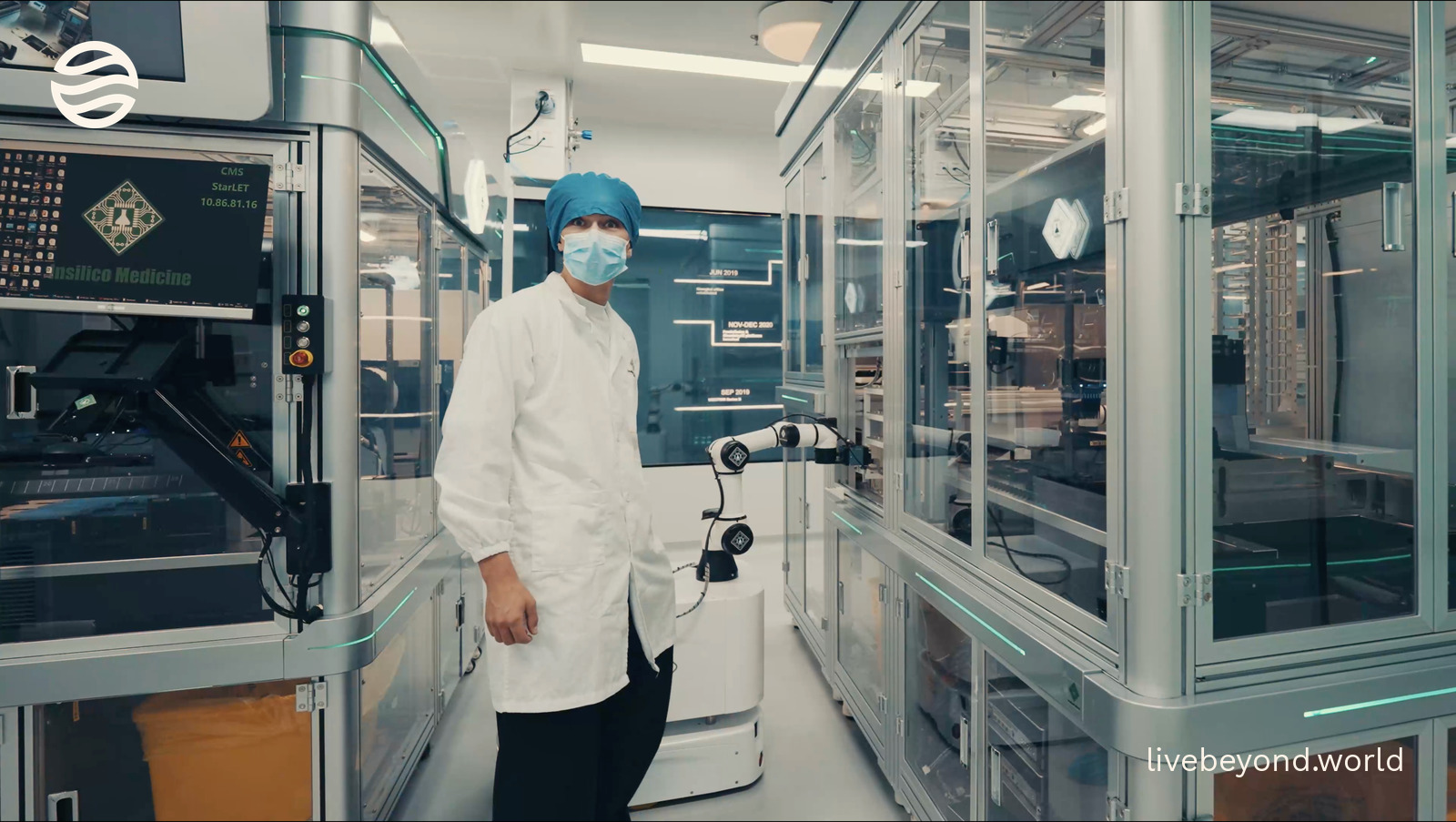
Alek Piotrowski in the AI robotic lab in Shanghai, December 2023 — Live Beyond.
Walking through that lab in Shanghai, I was amazed. Labs like this can change the way research is done. I think the main strength people see in Insilico is that it will discover the new drug that changes everything. But imagine if labs like this were in every hospital in the world, or at least in every major city, and they were connected to each other and could learn from each other. That would be a huge change.
A few days later, still in Shanghai, Evelyne Bischof, an oncology and longevity physician whose clinic already sends samples to that lab, told us how she works with it:
“For clinical work, yes. […] Right now it's still in the form of, of course, ethically approved trials, right? But if it will go with this speed, then very, very soon we can really move to the point that we will have a […] AI robotic miniature lab in our hospital. […] No more transport of samples. […] You're coming, I take the biopsy, I pull it through the robots, they do their job […] will be finished within one day. […] And I can tell you tomorrow what will be the drug that you have to use.”
In plain words: Today a patient’s sample travels to a lab and back. Evelyne’s hope is a small robotic lab inside the hospital, so that the next day the doctor knows which medicine fits that one person.
Then I asked her about the idea I hadn’t stopped thinking about since our visit: labs like this in universities all over the world, connected by one database, comparing their results. She answered:
“It's the power of data that you have right here, right? So if we do that in every hospital in the world or even in a few hospitals all over the world, and we are connected in a cloud, and all the results are being uploaded, that gives us trillions of data. So if then I have a patient who is very rare, but I push it through, and I identify it somewhere in the cloud, I can then still help this patient, right? So […] it will be, I don't say it could be, it will be a very powerful tool, and also for longevity, right?”
In plain words: One hospital sees only a few patients with a rare illness. Thousands of connected labs see them all, and together they can help each one.
For me, that is the future: a treatment made for one patient, from what labs all over the world have learned together. It’s something every country should be investing in, and working on together.
The shapes of proteins
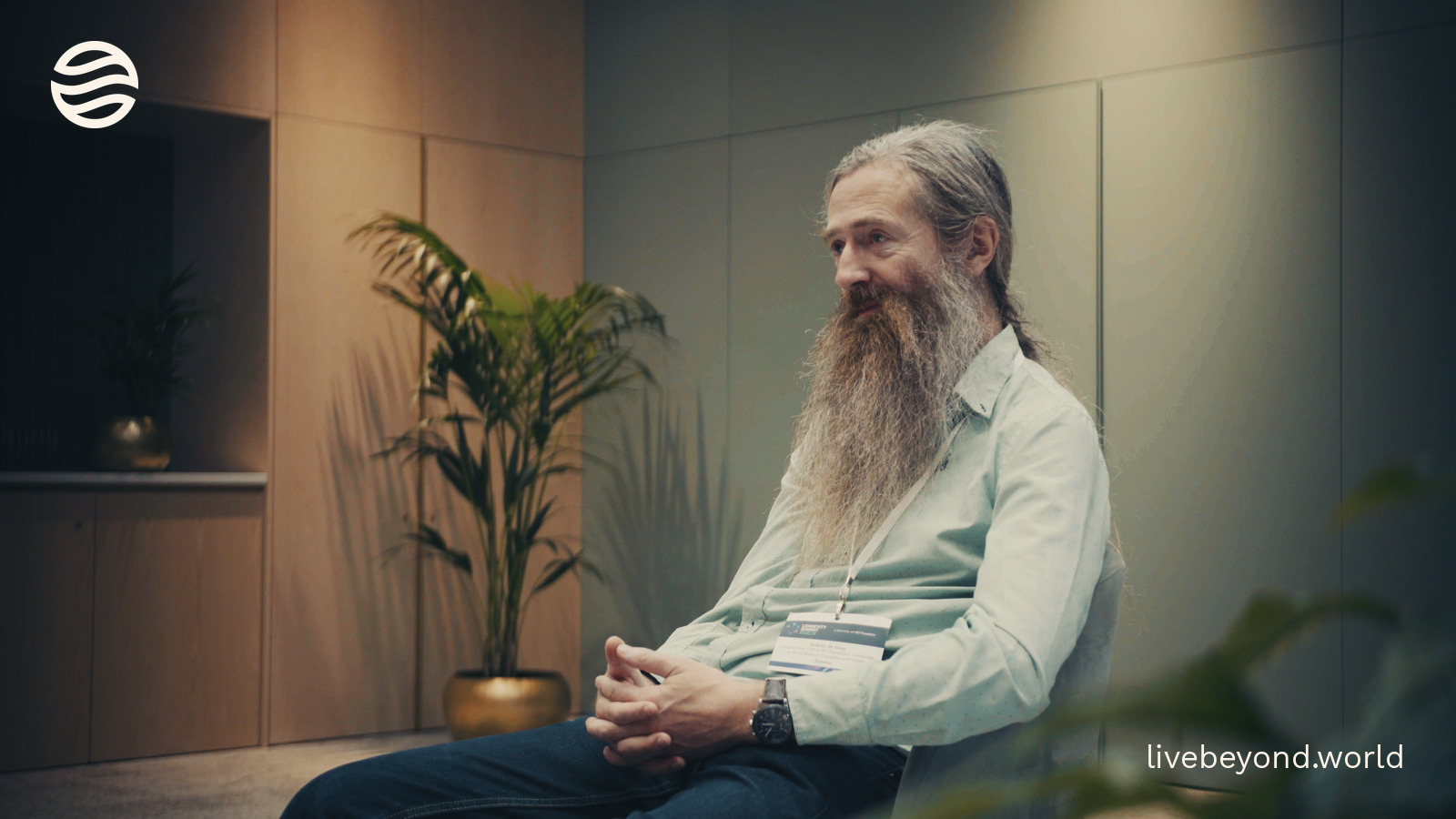
Aubrey de Grey at Longevity Summit Dublin, August 2023 — a Live Beyond interview with Marek Piotrowski on AlphaFold and the shapes of proteins.
Proteins are the tiny machines that do most of the work in your cells. What a protein does depends on its shape, and for decades, working out the shape of just one protein could take scientists months or years in the lab.
A program that predicts protein shapes
In 2021, a program called AlphaFold showed it could predict the 3D shape of a protein from its building blocks, in most cases nearly as accurately as lab experiments. Its free database now covers more than 214 million protein sequences. In 2024, Demis Hassabis and John Jumper shared the Nobel Prize in Chemistry for it, together with David Baker, who designs brand-new proteins with computers.
Based on: A landmark study, a public database and the 2024 Nobel Prize [1][4][5]
At the very first conference of our quest, in Dublin, Aubrey de Grey — the man so many people in this field say first inspired them — told us how big this is:
“Everyone of course talks about AlphaFold, which is this wonderful program that's able to work out the three-dimensional structure of proteins just by starting from their amino acid sequence. That has had an impact already that's comparable to the impact that was seen 20-odd years ago when we first sequenced the human genome. Doesn't actually necessarily make experiments possible that were not possible before, but it makes a lot of experiments a lot more easy and quick to design and implement. And we're gonna see more of that. The natural next step in that particular area is to be able to design proteins from scratch.”
In plain words: Knowing a protein’s shape is like knowing the shape of a lock: it becomes much easier to design a key — a medicine — that fits. The next step is designing new proteins to do the jobs we choose.
In Washington, Larry Callahan, who spent twenty years as a scientist at the US Food and Drug Administration, agreed that these programs are very good — and reminded us that a shape is only the start:
“There are some good AI programs now that give you protein structure that are very good, that are the AlphaFold and the iterations that come after AlphaFold. So you know how the targets are structured now. […] But there's so many things. It's not only going against a target. A drug has to get in the body. To get in the body sometimes it needs to go through a transporter. It's got to get past all the metabolic enzymes.”
In plain words: Finding the lock is not the whole story. A medicine also has to travel through your body, get where it’s needed and not turn into something harmful on the way. That is why testing in people still matters.
Reading scans, tests and aging clocks
Mahdi Moqri at Harvard, Boston, November 2024 — a Live Beyond interview with Marek Piotrowski on AI and biomarkers of aging.
AI is also learning to read what doctors read: mammograms, MRI scans, heart tracings and blood tests. It never gets tired, and it can notice patterns too small for the eye.
More cancers found, less work for doctors
In Sweden, 80,033 women were randomly given either the usual reading of their mammogram by two doctors, or a reading where AI sorted the images and pointed out suspicious spots. With AI, doctors found 20% more cancers, without more false alarms, and read 44% fewer images.
Based on: One large randomized trial in people [3]
The age of your heart, read from a heart tracing
AI trained on the heart tracings (ECGs) of 499,727 patients learned to estimate how old a person is. When the heart looked more than 7 years older than the person really was, that person more often had heart problems such as high blood pressure, narrowed heart arteries or a weaker heartbeat.
Aging clocks, the tests that estimate your biological age, are built the same way: a computer learns from the data of many people. (We wrote a whole page about them: There is no single biological age.) In Boston, Mahdi Moqri, who builds these biomarkers at Harvard, told us why AI matters so much here:
“Maybe the best news about the field of biomarkers and biomarkers of aging is that now we have so much data, and these new mega cohorts and nationwide biobanks are producing huge amount of multi-omics, and every one of those omics, like thousands of measurement from every single blood draw. And we can't process them using old methods or statistical methods. The AI is here to save us with all that data. […] The data is there, the solution is there. We just need better tools to dig through this data. And AI is promised to help us with that.”
In plain words: One blood test can now give thousands of numbers. AI is the tool that can sort through them and find what they say about how each of us is aging.
Words worth knowing
Three words behind the machine
From our glossary. Tap a card to turn it over: the science on the back, and the people we met who explained it to us.
No. 11 / 66Everyday word
Biological age
How old your body is, rather than how many birthdays you have had.
No. 11 / 66Everyday word
Biological age
Two people born in the same year can be years apart inside. Biological age is estimated from blood markers, from the way your DNA is switched on and off, and from tests of strength and fitness. Unlike your birthday, it can move — in both directions. Read more →
Prevention is king: staying well, instead of waiting to be treated.
No. 20 / 66Everyday word
Prevention
Screening, genomics, imaging and biomarkers catch a problem while it is still small, cheap to treat and yours to decide about. Most health systems are still built for sick care and act when something breaks; longevity turns that into healthcare. Read more →
Guido Kroemer in Singapore, February 2024 — a Live Beyond interview with Marek Piotrowski on how his lab uses AI.
Almost every scientist who works with AI told us two things in the same breath: it is powerful, and it is not magic. Max Unfried, the friend who opened Singapore for our quest and who uses AI to study lipids — fats in the body — and aging, put it best:
“AI can understand language, AI can understand images, and AI can understand somewhat basic rules of chemistry. So I think that's quite powerful in that way, in those very narrow tasks, so to speak. At the same time, when it comes of like throwing AI onto everything, I'm less optimistic. And AI is being like used as a buzzword, right? And at the same time, I think the AIs that we currently have, the powerful AIs that have been very useful, like in making sense of social media, they need a lot of data. And my personal view is for a lot of aging related things, we don't have this amount of data yet. So yes, you can like throw the AI at it, and it will give you something back. But giving the insufficient data, it's probably like not correct or like maybe even wrong. And I think that's where we have to be like a little bit careful, right? That good AI models are great, but we need a lot of really good high quality data to get the most out of it.”
In plain words: AI is very good at narrow jobs it has seen many examples of. Give it too little data, or poor data, and it will still give you an answer — but the answer may be wrong.
Brian Kennedy, who felt like family from our very first day in Dublin, told Alek about another problem. (One of the graduate students he meant was Max.)
“We're using AI a lot more now. It's a little bit crazy 'cause I have graduate students that know way more than I do about it. […] AI is really allowing us to go in new places and to analyze big data, to get new insights. […] AI allows us to analyze all those pathways together, and it spits out an answer, but sometimes that can be frustrating because you don't know why that answer's true. It's just that's the answer, but it's not as satisfying from understanding the mechanism of what's going on. So now there's a movement toward meaningful AI. I'm not sure what that means yet, but I hope it's successful because I think we not only need the answers, but we need to understand why those are the answers. And so we need to blend a little bit the AI with the wet lab traditional science.”
In plain words: Sometimes AI gives an answer without being able to explain why. Scientists want both, the answer and the reason, so they check AI’s ideas with real experiments.
When a program learns the wrong lesson
A program used by US health systems to decide who should get extra care judged how sick people were by how much had been spent on their health. Less money had been spent on Black patients with the same needs, so the program underestimated how sick they were. Fixing it would have raised the share of Black patients picked for extra help from 17.7% to 46.5%.
Guido Kroemer, one of the authors of the Hallmarks of Aging, uses AI in his lab every day. In Singapore, he gave us a line worth remembering:
“We use, in the laboratory, artificial intelligence for many questions, so we dock molecules that have been modeled in three-dimensional space by artificial intelligence. We do calculations on molecular modeling. We generate large data sets that in part are subjected to bioinformatic analysis that are linked to AI. We do image analysis, so we take photographs or videos of cells that behave in one way or another fashion in vitro, and then exploit the information by using AI tools. So it is an artificial intelligence […] or at least it is called artificial intelligence, but it is just a tool that requires real intelligence to become useful.”
In plain words: AI is a tool, like a microscope. It becomes useful only in the hands of people who know what to ask, and how to check the answer.
Your own health data — and who owns it
Marek Piotrowski and Tina Woods at Longevity Summit Dublin, August 2023 — a Live Beyond interview on who owns our health data.
I would love a platform that helps people understand their own medical data. Not only the big results from a clinic, but the everyday data too, because without help people get crazy about them. Many of us have blood tests, scans and notes from different doctors, scattered over the years, and now numbers from our watches and rings every minute, and we understand very little of it.
I don’t need a screen on my wearable telling me what is happening minute by minute — you’re running, Marek. I know I’m running. I want my wearable to send its data to a program, my own personal AI, that learns the patterns from all my wearables and all my medical data and gives me actionable guidance. At the end of the month, it tells me what I did and recommends one change that would make a real difference. That’s what’s important.
Then comes the question of who owns all this. In Dublin, in the first days of our quest, Tina Woods — a longevity activist and an energy booster if ever there was one — talked with us about it:
“There's this whole space of, like, sort of digital biomarkers and sort of passive capture of data 'cause of course, we've got watches. We've got all these sensors […] And of course, you have to deal with public concerns over privacy and all that. […] So I'm fascinated in personal data wallets, for example. How in a click a person can decide who they share their data with. […] We need the legislation and regulation to support our ability to share data at scale. So I'm really fascinated in concepts like data donation, data philanthropy, where the general public can be part of a mass-scale scientific research project that will stimulate companies to grow because we'll have greater access to data.”
In plain words: Your watch, your tests and your scans create data about you. You should be the one who decides who sees it — and, if you want, you can give it to science to help everyone.
“Anonymous” data isn’t always anonymous
Researchers showed that 99.98% of Americans could be correctly identified again in a dataset that held 15 ordinary facts about them, such as age, gender and marital status — even with their names removed.
AI assistants that answer health questions are here too. They can explain a lab result in plain words, which is wonderful. But they can sound sure and still be wrong, and what you type into them may be stored. Here are good questions to ask before trusting any of them:
Where does my data go? Who can see it, where is it kept, and can I delete it?
Who owns it? Can it be sold or shared without asking me?
What did it learn from? AI is only as good as the data behind it. Was it tested on people like me?
Can it explain itself? A good answer comes with a reason you can check.
Is a doctor in the loop? Take what an AI tells you to your doctor before you change anything.
Where the joy is
Peter Diamandis walking with Marek Piotrowski and Alek Piotrowski in Santa Monica, Los Angeles, December 2025 — a Live Beyond conversation on AI and conscious leadership.
The joy in all this is time. If machines do the reading, the sorting and the paperwork, the people who care for us get their hands and their hearts back. In Shanghai, I told Evelyne Bischof, an oncology and longevity physician, that I hoped AI would one day let her work four hours a day. She laughed, and then she said this:
“I truly hope that the AI is actually bringing us solutions that can take away a lot of the burden, from paperwork to administration, things that just take time. If we could take that away and I can be from high tech to high touch, spend more time with the patient and adjust, and then also spend more time with me and my longevity, that would be awesome.”
In plain words: The dream isn’t a robot doctor. It’s a doctor with more time for you — and for her own long, healthy life.
And there is joy in what AI opens up for young people. When Alek asked Andrea Maier about AI in Dublin, she gave him career advice any teenager could use:
“I think in longevity medicine, we are at the stage that we first have to crunch the data ourselves because we have to make sure that it makes sense, that the data are good and that it makes sense physiologically. But then we have to really write the right algorithms to make my life a little bit easier to crunch the data, and artificial intelligence really has a big, big role. So if you want a career, I would say either study medicine, go into health and longevity medicine, become a health and longevity medicine physician. And if you are really smart, do both. So study also artificial intelligence, combine it, and the future is yours.”
In plain words: Doctors who understand data, and data people who understand the body: that is where the future of longevity medicine is being built.
Walking along the ocean in Santa Monica with Peter Diamandis, I told him how I see it:
“For me, I usually say that there are two most important things, and AI is just a tool. So first one is longevity, so that we can live longer, this beautiful life, and experience these emotions. But second is conscious leadership, that everything we do, all the technology we can create, we will use for the good of humanity and not for the bad. And this is actually the hardest task to do.”
This page shares what research and the experts we met say. It is not medical advice, and it does not recommend any medicine, supplement or treatment. It knows nothing about you. Before you start, stop or change anything — especially if you are pregnant, live with a health condition or take any medication — please talk to your doctor. In an emergency, call your local emergency number.
Sources
Every number on this page, by the number in square brackets. Quotations come from Live Beyond’s own recorded interviews, cleaned only of “um” and “uh”. Not medical advice. Talk to your doctor before you change anything.
Jumper J, Evans R, Pritzel A, et al. Highly accurate protein structure prediction with AlphaFold. Nature. 2021;596(7873):583-589. doi:10.1038/s41586-021-03819-2
Jayatunga MKP, Ayers M, Bruens L, Jayanth D, Meier C. How successful are AI-discovered drugs in clinical trials? A first analysis and emerging lessons. Drug Discov Today. 2024;29(6):104009. doi:10.1016/j.drudis.2024.104009
Lång K, Josefsson V, Larsson AM, et al. Artificial intelligence-supported screen reading versus standard double reading in the Mammography Screening with Artificial Intelligence trial (MASAI): a clinical safety analysis of a randomised, controlled, non-inferiority, single-blinded, screening accuracy study. Lancet Oncol. 2023;24(8):936-944. doi:10.1016/S1470-2045(23)00298-X
Varadi M, Bertoni D, Magana P, et al. AlphaFold Protein Structure Database in 2024: providing structure coverage for over 214 million protein sequences. Nucleic Acids Res. 2024;52(D1):D368-D375. doi:10.1093/nar/gkad1011
The Nobel Prize in Chemistry 2024: David Baker “for computational protein design”; Demis Hassabis and John Jumper “for protein structure prediction”. NobelPrize.org, Nobel Prize Outreach AB, announced 9 October 2024.
Attia ZI, Friedman PA, Noseworthy PA, et al. Age and sex estimation using artificial intelligence from standard 12-lead ECGs. Circ Arrhythm Electrophysiol. 2019;12(9):e007284. doi:10.1161/CIRCEP.119.007284
Obermeyer Z, Powers B, Vogeli C, Mullainathan S. Dissecting racial bias in an algorithm used to manage the health of populations. Science. 2019;366(6464):447-453. doi:10.1126/science.aax2342
Rocher L, Hendrickx JM, de Montjoye YA. Estimating the success of re-identifications in incomplete datasets using generative models. Nat Commun. 2019;10(1):3069. doi:10.1038/s41467-019-10933-3