The gut microbiome and longevity: the friends we carry inside us
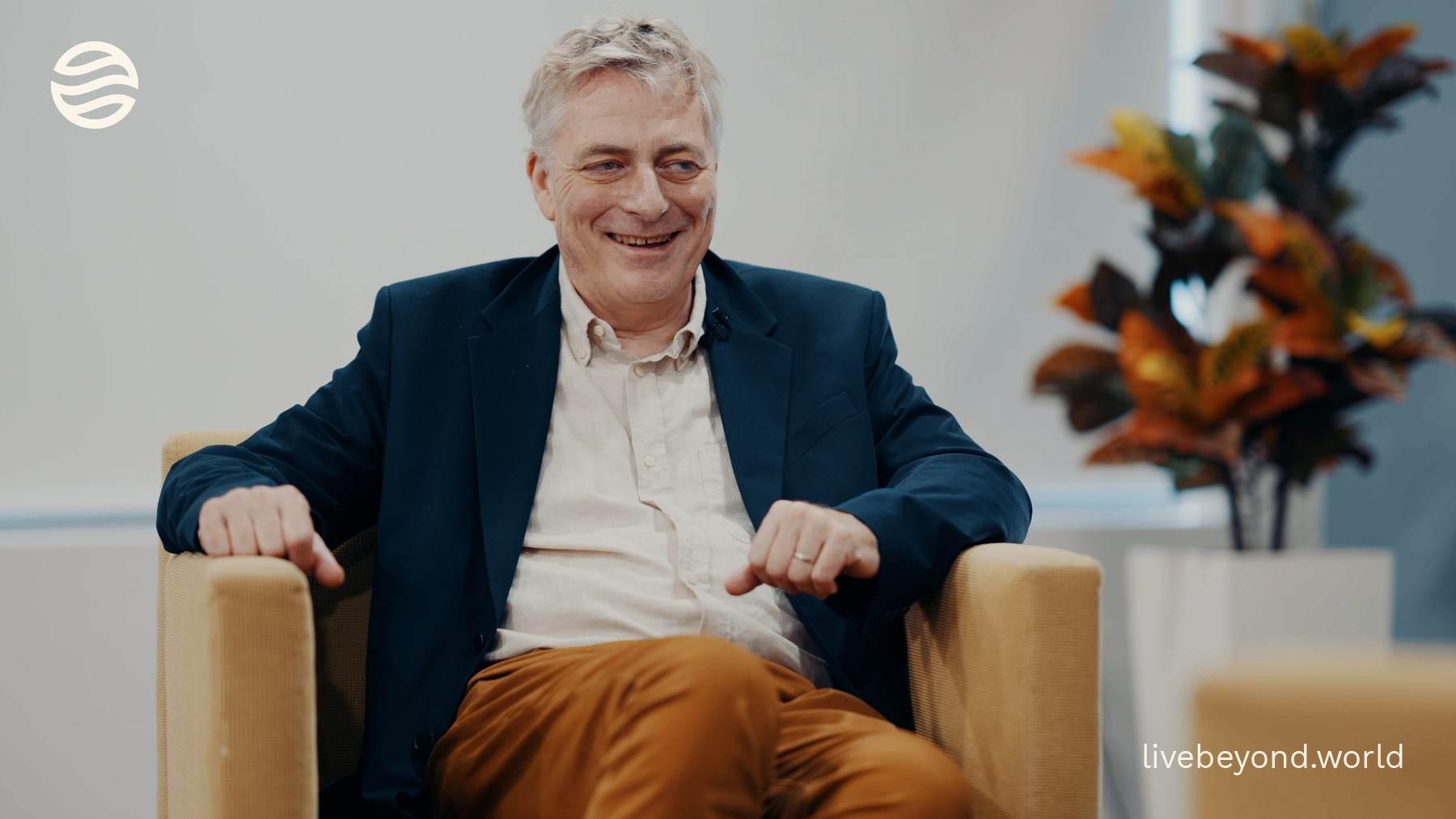
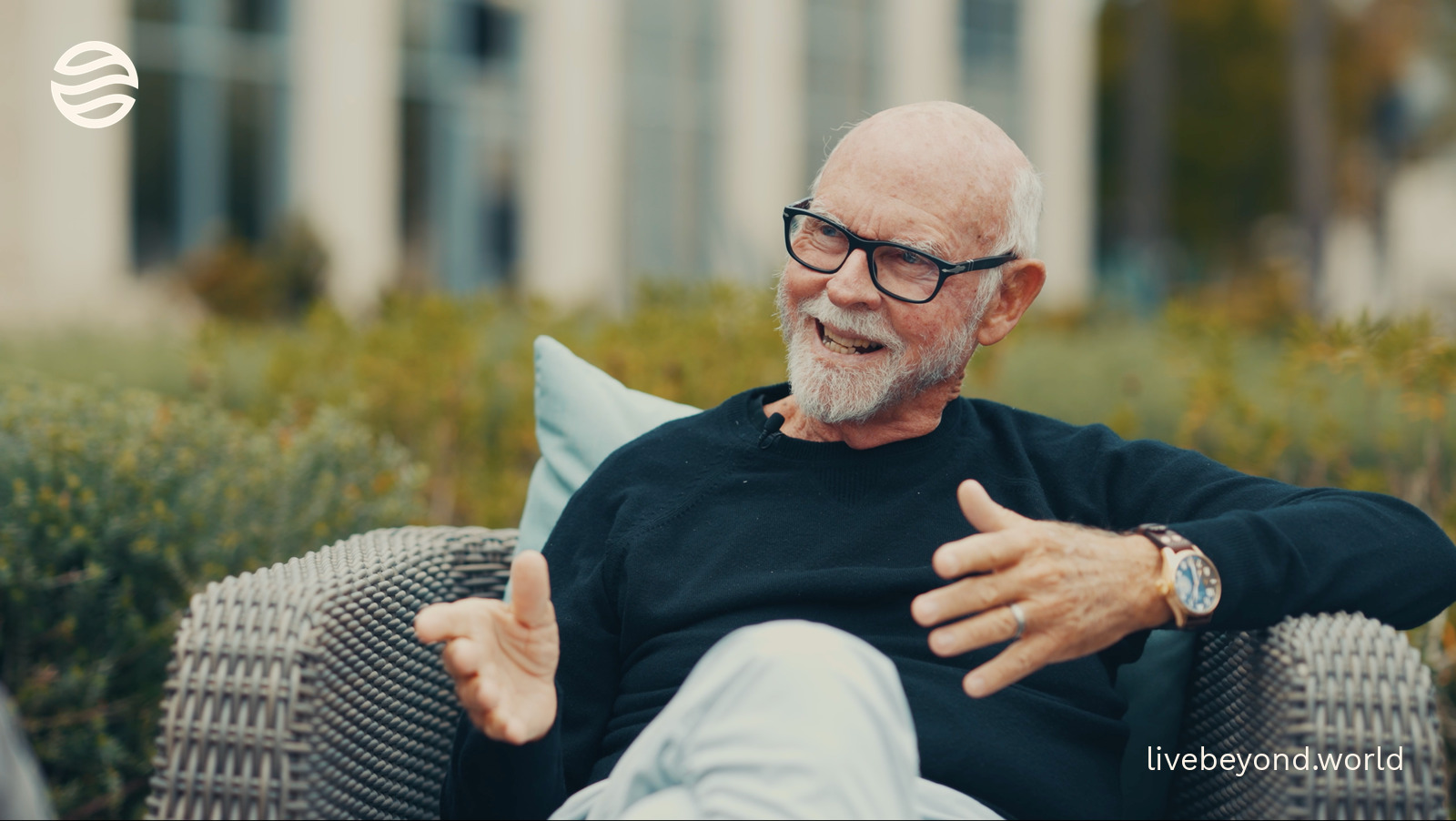
Guido Kroemer in Singapore, February 2024 — a Live Beyond interview with Marek Piotrowski on the hallmarks of aging and the gut microbiota.
On our quest, my son Alek and I met experts who told us all disease begins in the gut, and others who told us the field is full of wishful thinking. Both made us curious. I had my own microbiome tested, and learned as much about the tests as about my gut. Here is what the people we met told us, and what the science really shows.
Our gut is home to trillions of bacteria and other microbes, about as many cells as our own body has. They help digest food, make useful substances and train our immune system. In a ten-week trial, eating fermented foods every day made the gut microbiome more diverse and lowered markers of inflammation. And in large studies, older people who stayed healthy had a gut microbiome that kept changing and becoming more unique with age.
The field is young, and many claims go far beyond the evidence.
The good news: the habits that feed good gut bacteria are simple, cheap and already in your hands: plants, fiber, fermented foods, and antibiotics only when you really need them. [1][2][3]
Longevity, as we mean it: more healthy, joyful years. What we mean →
What the gut microbiome is
In Singapore, in February 2024, Guido Kroemer, one of the scientists who described the hallmarks of aging, told us something that changed how I see my own body:
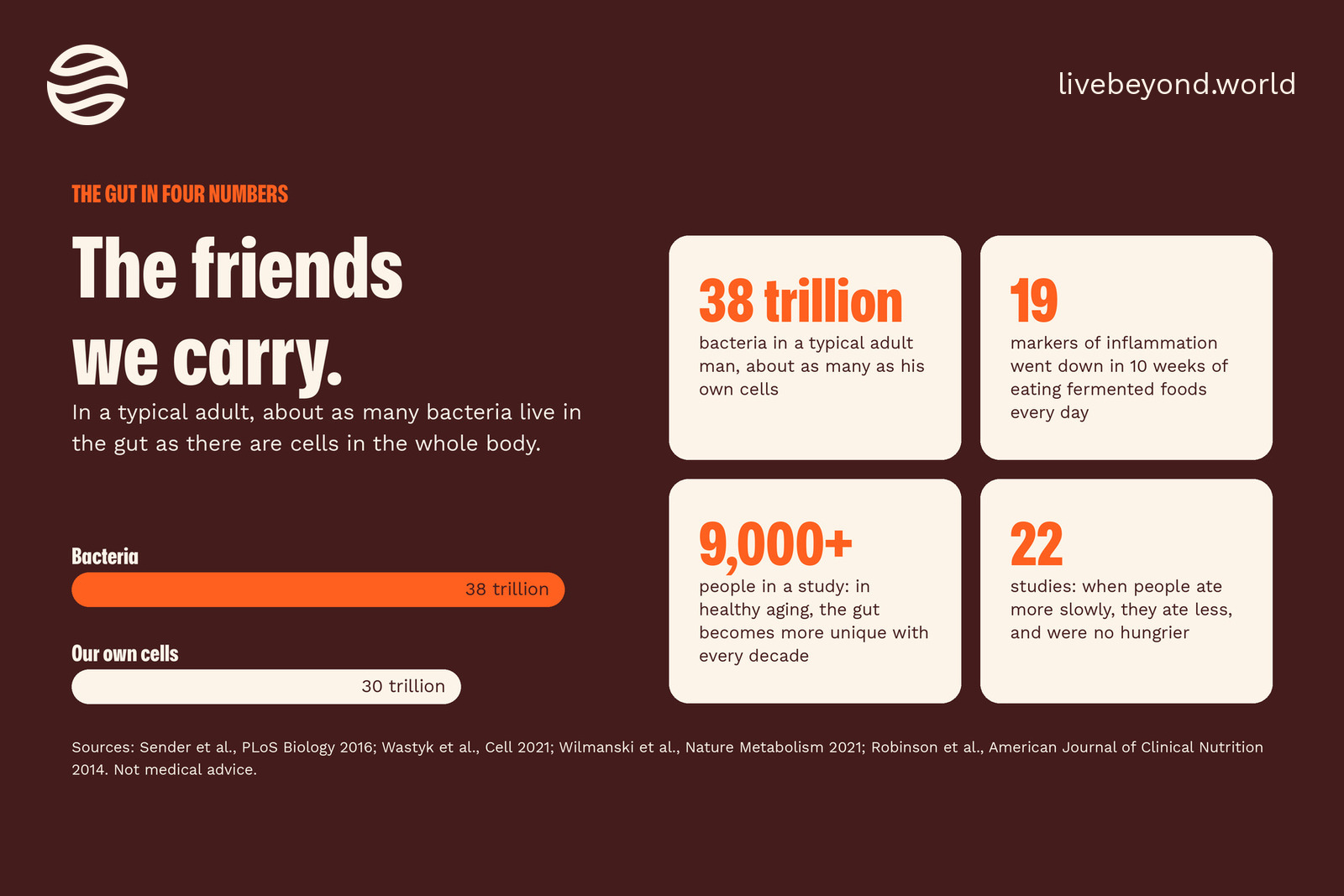
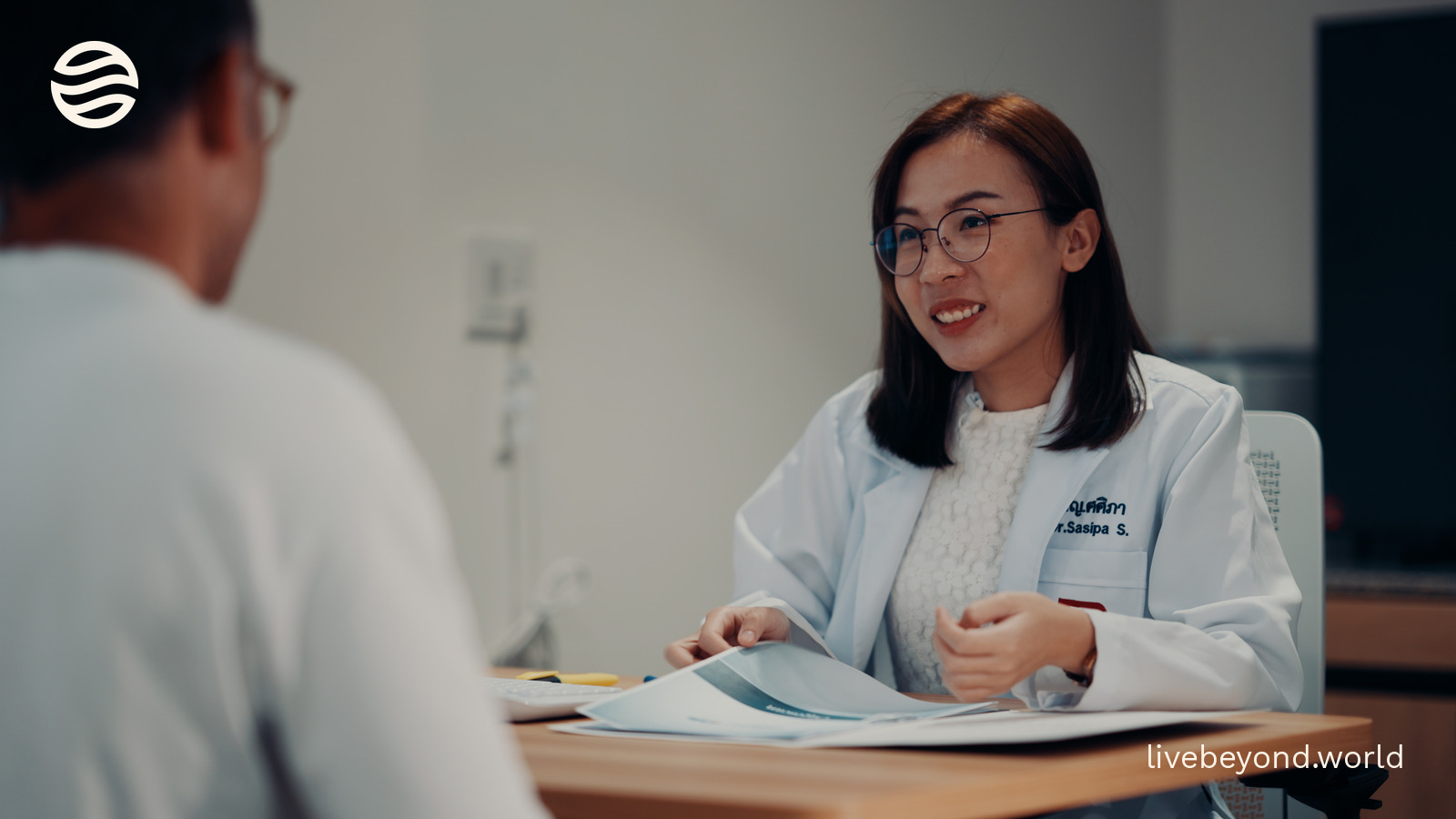
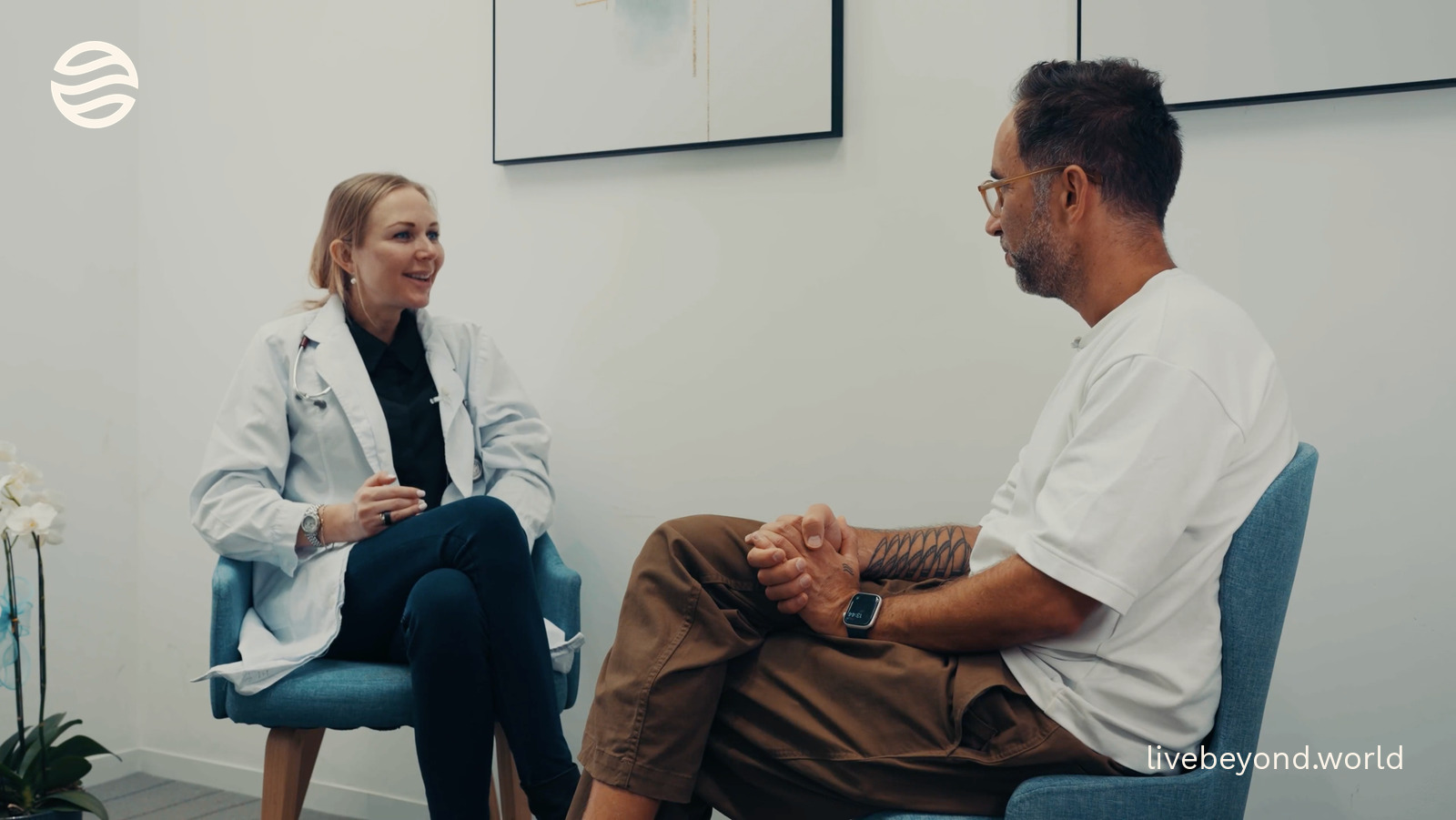
The gut in four numbers — a Live Beyond infographic from Sender et al. (PLoS Biology, 2016), Wastyk et al. (Cell, 2021), Wilmanski et al. (Nature Metabolism, 2021) and Robinson et al. (American Journal of Clinical Nutrition, 2014).Dr Bow at the Laguna Clinic in Phuket, Thailand, December 2023 — a Live Beyond interview with Marek Piotrowski on prevention and the gut.
“We are not just our bodies, we are holobionts, so we are composed by our somatic self plus the entire microbiota that fills our cavities. […] And the interplay between the microbiota and the rest of the system determines the state of the health of the individual and has a major impact on aging as well.”
How many
A careful count from 2016 found about 38 trillion bacteria in a typical adult man, roughly as many as the 30 trillion cells of his own body.
In plain words: We are not alone in our bodies. Our gut is home to a whole community of microbes, mostly bacteria, and they work together with us. Their health and ours are connected, including how we age.
In Phuket, in December 2023, Dr Bow, a preventive-medicine doctor, described them in the simplest way:
“They also eat the same thing that we eat, sleep at the same time that we sleep, so it live same as us”
In plain words: Our gut bacteria live the life we live. What we eat, how we sleep and how stressed we are shapes them, and they in turn shape us.
Words worth knowing
Three words behind the gut
From our glossary. Tap a card to turn it over: the science on the back, and the people we met who explained it to us.
No. 66 / 66Inside the body
The gut microbiome
A garden you did not plant and cannot see, which feeds you back.
While it is varied it looks after the wall between your gut and your blood. When it thins, that wall leaks a little, and the immune system spends its life mildly annoyed.
What helps
Plant variety is the strongest and dullest answer — the number of different plants in a week beats any supplement in the data there is. Read more →
Sleep, weight, muscle, oral health, and treating the obvious sources. Omega-3s have decent evidence. This is also one of the few processes where a simple blood test — high-sensitivity CRP — tells you something useful and cheap.
The years in which you can still do what you love: move freely, think clearly, travel, play with your grandchildren. For most people the gap between lifespan and healthspan is about a decade, and closing it is what most of the field is really working on.
Guido told us the gut bacteria set the everyday tone of our immune system:
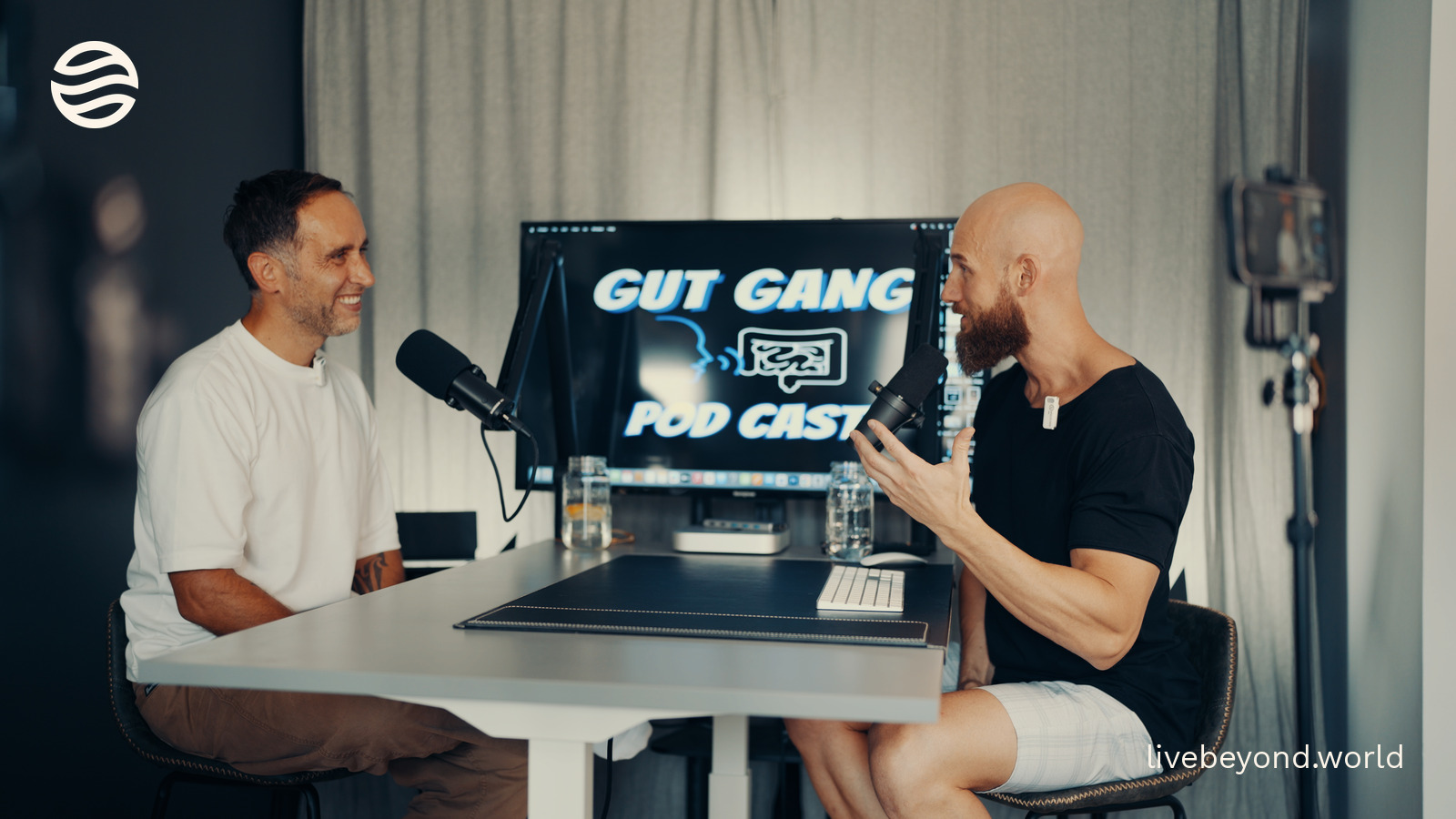
Brendan Coates, the Gut Whisperer, in his podcast studio in Toronto, July 2024 — a Live Beyond interview on the gut and longevity.
“If you sterilize the gut by giving broad-spectrum antibiotics over a certain period, you take away the capacity of the immune system to recognize vaccines, to react to new challenges, to fight against cancer in the context of immunotherapy, just because the microbiota determines the normal tonus of the immune system.”
Antibiotics and vaccines
In a study of healthy adults, a course of broad-spectrum antibiotics before a flu vaccine weakened part of the immune response to the vaccine in people who had little immunity to flu before.
In plain words: If you really need antibiotics, take them: they save lives. But they also clear out many helpful bacteria. So don’t take them when you don’t need them, and when you do, protect your gut: eat yogurt, kefir and other fermented foods, and plenty of plants and fiber, which feed the bacteria that are left and help them grow back.
Real food rather than capsules
In a study in people, a mix of probiotic capsules taken after a course of antibiotics slowed the return of their own gut bacteria compared with doing nothing, and the recovery stayed incomplete. It is one more reason to lean on real food.
In Toronto, in July 2024, Brendan Coates, a clinical nutritionist known as the Gut Whisperer, put the gut at the very center:
“If you’re not absorbing, if you do not have basic digestion, doesn’t matter. You’re not gonna achieve that longevity.”
The microbiome and aging
J. Craig Venter in San Diego, May 2024 — a Live Beyond interview with Marek and Aleksander Piotrowski.Evelyne Bischof and Marek Piotrowski in Shanghai, December 2023 — a Live Beyond interview on aging clocks and longevity medicine.
A more unique gut in healthy old age
In more than 9,000 people, the gut microbiome became more unique to each person with every decade of life, but only in those who stayed healthy. Among older people, those whose microbiome stayed the least unique were less likely to survive the next four years.
In Shanghai, in December 2023, Dr Evelyne Bischof told us scientists are now building clocks that read our age from our gut bacteria:
“Deep Longevity collaborated with that lab in order to build the microbiome aging clock, which I think will be very, very important for us”
But in San Diego, in May 2024, Craig Venter, who led the first sequencing of the human genome and also sequenced the ocean’s microbes, warned us:
“The microbiome field is a little bit like the human longevity field. It’s loaded with lots of overinterpretation and misinformation. Because there are so many variables, people come up with correlations for everything”
In plain words: Thousands of things affect our gut bacteria, so it is easy to find links that aren’t causes. Most of what we know about the microbiome and aging comes from mice and from observing people, not yet from trials that prove what works.
Food that feeds it
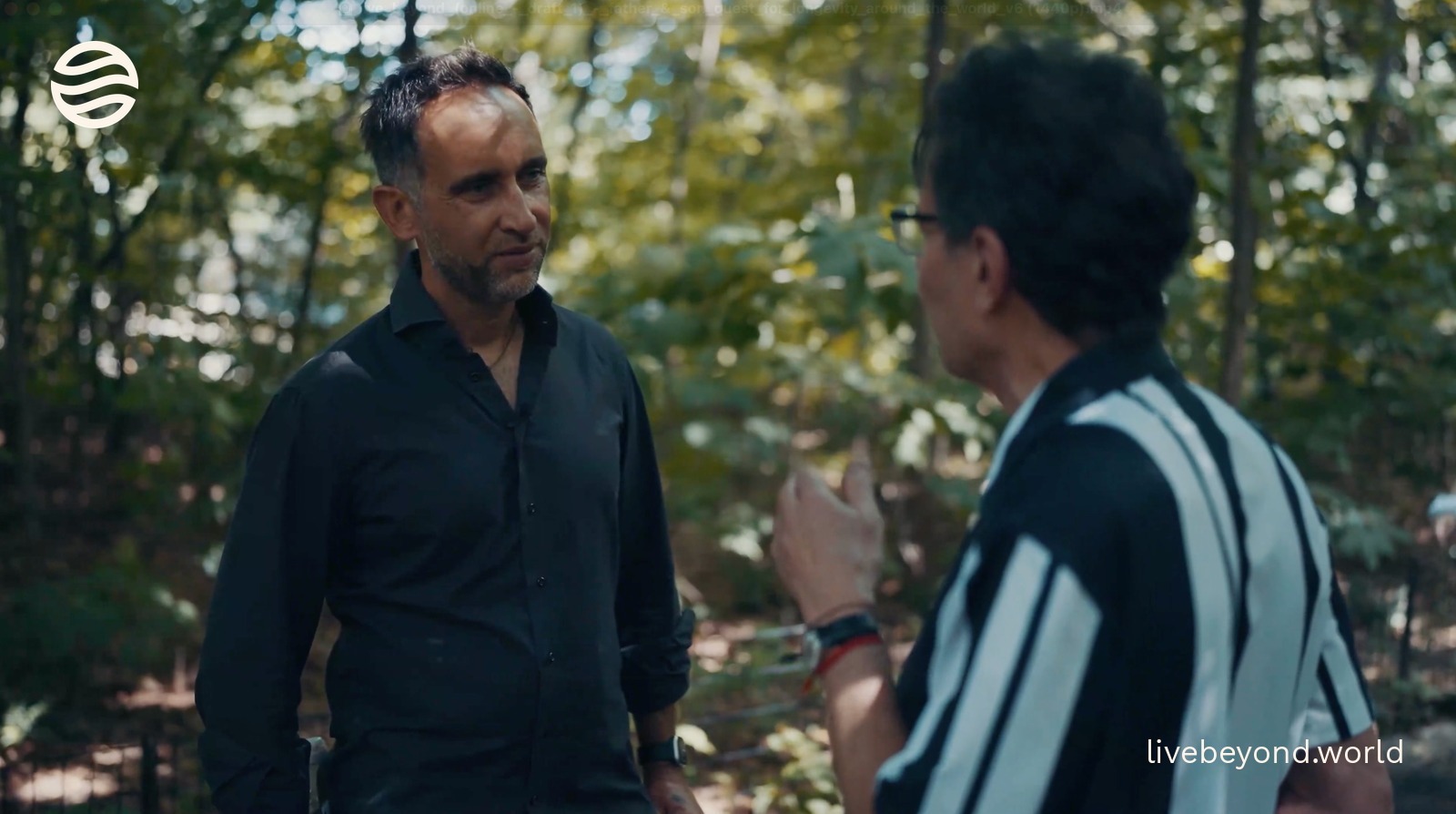
Marek Piotrowski and Oz Garcia in Central Park, New York, June 2024 — a Live Beyond interview on nutrition and the gut.
Fermented foods, ten weeks
36 healthy adults ate either more fermented foods (yogurt, kefir, kimchi, sauerkraut, kombucha) or more fiber for ten weeks. The fermented-food group got a more diverse microbiome and lower levels of 19 inflammation markers. The fiber group did not change as much in that short time, though fiber feeds bacteria in other ways.
In New York, in June 2024, the nutritionist Oz Garcia was honest about the debate, and clear about what he does:
“There now is some dispute, as it often happens, as to whether or not a healthy microbiome does play a role in human health. […] you and I would agree that eating fermented foods has great value […] And to the extent that we’re not building a healthy microbiome, I suspect we’re gonna cut our lives short.”
In plain words: Even people who believe strongly in the microbiome admit the science is still being settled. But fermented foods, plants and fiber are good for us in many other ways too, so there is little to lose.
How we eat
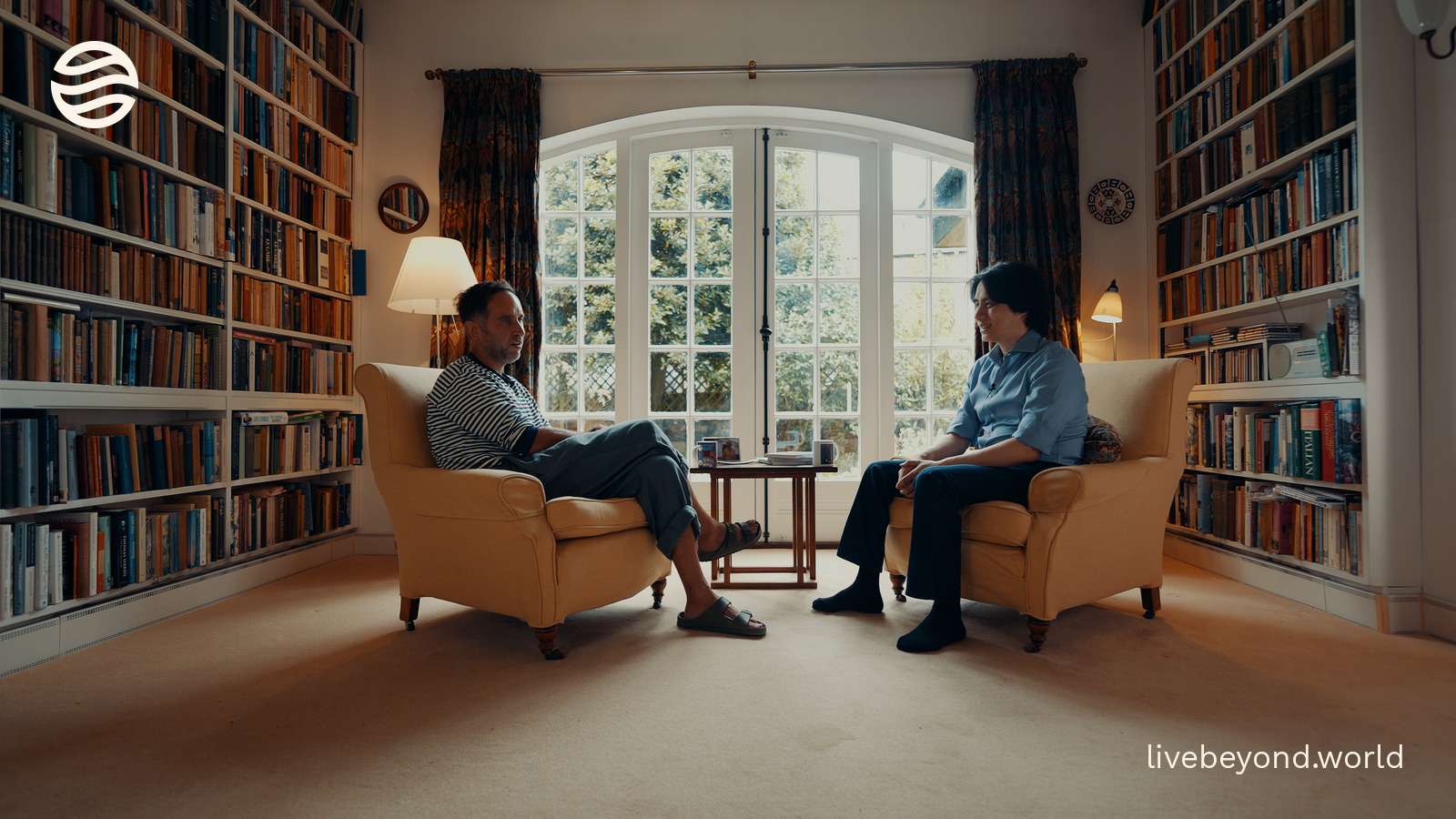
Dr Bow told us our gut bacteria live the life we live. In Oxford, in July 2024, Dr Paul Ch’en, a GP and one of the founders of the Oxford Longevity Project, told us:
Paul Ch’en and Marek Piotrowski in a library in Oxford, July 2024 — a Live Beyond interview on whole-person medicine.Eric Dinenberg and Marek Piotrowski on the beach in San Diego, May 2024 — a Live Beyond interview on mindset and mindful eating.
“But actually, the context to which you eat also makes a huge difference. So it goes down to, okay, why do you eat? Is it important to be mindful of how you eat, what you eat, when you eat? Because that also plays a part of how you digest, how you get the good stuff.”
Brendan Coates put it even more simply:
“When you were a kid, do you remember your mom or your grandpa telling you, ‘Chew your food’? Just chew your food, right? […] By chewing, chewing, chewing, you’re signaling to your brain and your vagus nerve, ‘Hey, we’ve got some chewing. We’ve got some food happening. Let’s start secreting these digestive enzymes.’”
Eating more slowly
A review of 22 studies found that people who ate more slowly ate less, without feeling hungrier at the end of the meal or in the hours after.
I learned to eat mindfully at a retreat years ago, and I told Eric Dinenberg about it at Human Longevity in San Diego:
“Like she said, ‘Okay, just try to feel what you eat.’ And what I love is, like, close your eyes and get a bite, and then just feel all the taste inside. And then of course you eat slower, but then you enjoy it so much more. So now when I have something that is, like, really tasty, I just close my eyes. I just tell my friends, ‘Okay, just don’t be afraid. I’m just closing my eyes.’”
In plain words: How we eat may matter as much as what we eat. Chewing starts digestion, and eating slowly helps us notice when we have had enough. Science has not yet measured what mindful eating does to the gut microbiome, but it costs nothing and makes every meal better.
Microbiome tests
I was curious, so I had my own microbiome tested more than once: at Chi Longevity in Singapore, and at YEARS in Berlin, where my samples went to three different labs. What I learned is that the results can differ a lot, even depending on which part of the sample is tested. Today’s tests are interesting snapshots, not a precise map of your health.
Marek Piotrowski with Dr Eu Leong at Chi Longevity in Singapore — during the check-up that included a microbiome test, for the Live Beyond film.
Before you pay for a test
Ask what the lab measures, how precise it is, and what you would actually change with the result. Be careful with tests sold together with expensive supplements.
Questions to ask
Do I really need this antibiotic? Ask your doctor; take it if you do, and eat fermented foods and plenty of plants to help your gut recover.
How many different plants do I eat in a week? Variety feeds variety. Beans, vegetables, fruit, nuts, seeds and whole grains all count.
Could I add one fermented food a day? Yogurt, kefir, sauerkraut or kimchi are easy places to start.
What would a test change for me? If nothing, the money may be better spent on good food.
Where the joy is
I love the idea that we are never alone: inside each of us lives a whole community, and when we eat well, we feed them too. Taking care of it is one of the most joyful parts of longevity, because it happens at the table: a bowl of beans, a spoon of kimchi, fruit from the market, and good company.
Marek Piotrowski and Fritz Thieme at Can7 on Formentera, July 2024 — dinner being cooked in the open air, for the Live Beyond film.
Not medical advice. We describe what the studies say and what the experts told us. If you have a gut condition, talk to your doctor.
Before you change anything
This page shares what research and the experts we met say. It is not medical advice, and it does not recommend any medicine, supplement or treatment. It knows nothing about you. Before you start, stop or change anything — especially if you are pregnant, live with a health condition or take any medication — please talk to your doctor. In an emergency, call your local emergency number.
Sources
Every number on this page, by the number in square brackets. Quotations come from Live Beyond’s own recorded interviews, cleaned only of “um” and “uh”. Not medical advice. Talk to your doctor before you change anything.
Wastyk HC, Fragiadakis GK, Perelman D, et al. Gut-microbiota-targeted diets modulate human immune status. Cell. 2021;184(16):4137-4153. doi:10.1016/j.cell.2021.06.019
Wilmanski T, Diener C, Rappaport N, et al. Gut microbiome pattern reflects healthy ageing and predicts survival in humans. Nat Metab. 2021;3(2):274-286. doi:10.1038/s42255-021-00348-0
Sender R, Fuchs S, Milo R. Revised estimates for the number of human and bacteria cells in the body. PLoS Biol. 2016;14(8):e1002533. doi:10.1371/journal.pbio.1002533
Hagan T, Cortese M, Rouphael N, et al. Antibiotics-driven gut microbiome perturbation alters immunity to vaccines in humans. Cell. 2019;178(6):1313-1328. doi:10.1016/j.cell.2019.08.010
Suez J, Zmora N, Zilberman-Schapira G, et al. Post-antibiotic gut mucosal microbiome reconstitution is impaired by probiotics and improved by autologous FMT. Cell. 2018;174(6):1406-1423.e16. doi:10.1016/j.cell.2018.08.047
Robinson E, Almiron-Roig E, Rutters F, et al. A systematic review and meta-analysis examining the effect of eating rate on energy intake and hunger. Am J Clin Nutr. 2014;100(1):123-151. doi:10.3945/ajcn.113.081745