Keeping the brain young for longevity: memory, dementia and the years your mind stays clear
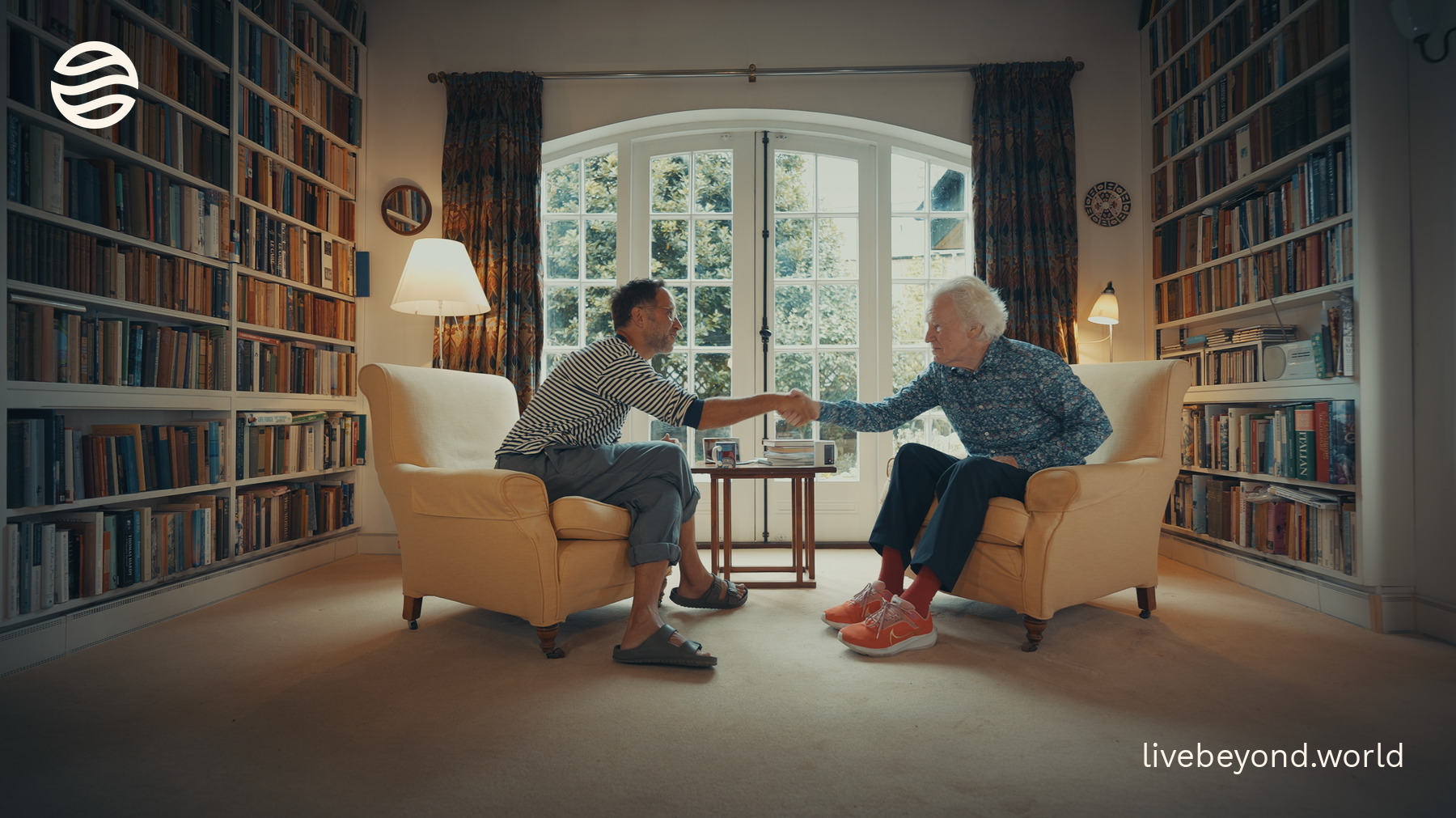
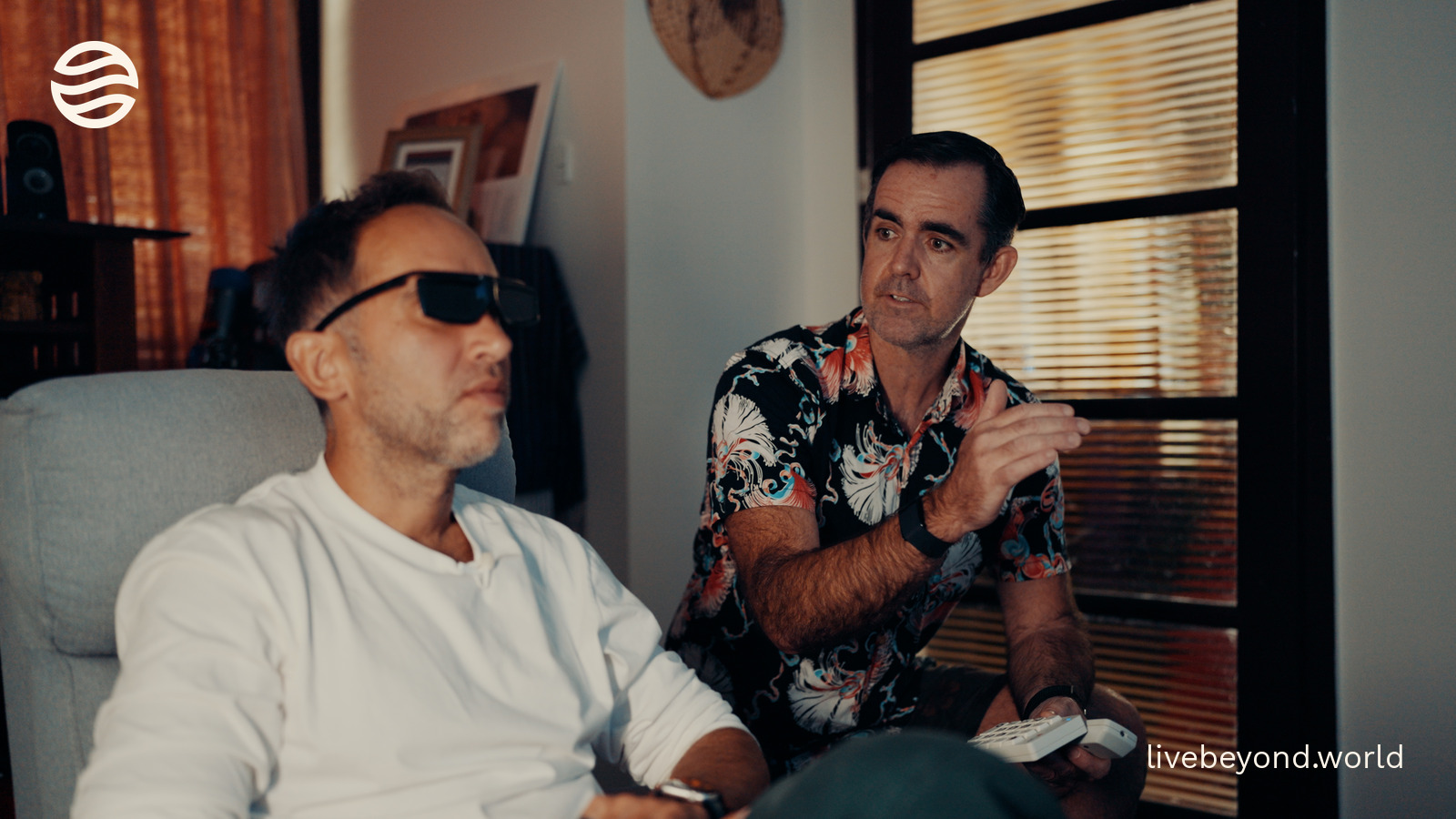
Marek Piotrowski and Sir Muir Gray in Oxford, July 2024, a Live Beyond interview on ageing, fitness and the brain.
Of everything about getting older, losing my mind is what scared me most. I said it out loud in Oxford, to a doctor who has spent his life asking what the evidence really shows. On our quest, my son Alek and I met the scientists who study the ageing brain, a geriatrician, and people who train the brain for a living. What they told us is the most hopeful thing on this page: a clear mind is not only luck, and much of it is in our hands, at any age.
Your brain can stay sharp for a very long life, and much of what keeps it that way is in your hands. Forgetting a name now and then is normal ageing, not dementia.
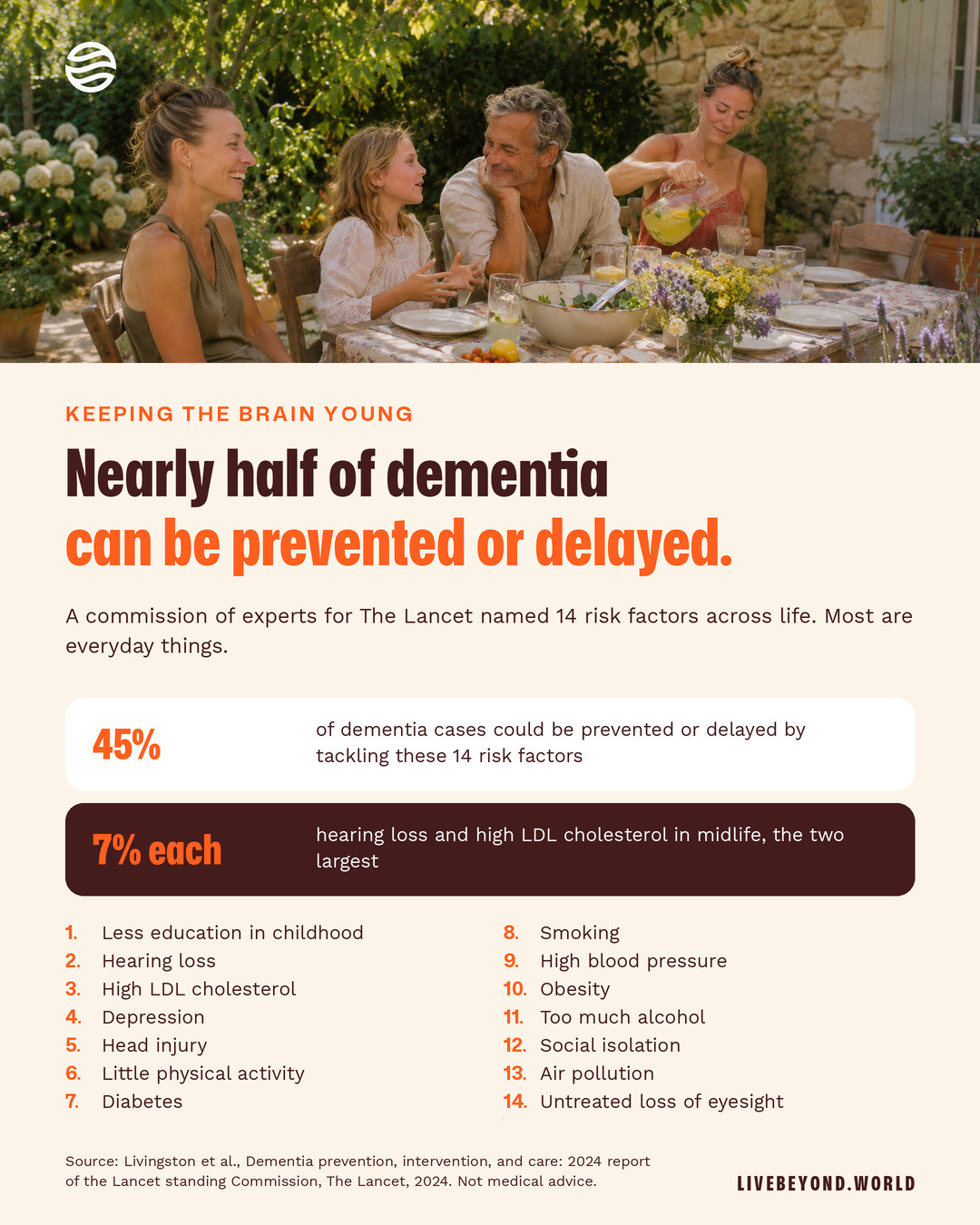
A commission of experts for The Lancet estimates that nearly half of dementia cases could be prevented or delayed by tackling 14 risk factors, from hearing loss and high blood pressure to inactivity and loneliness.
Moving every day, staying curious, sleeping well, hearing well and staying close to people protect the brain at every age. [1]
Longevity, as we mean it: more healthy, joyful years. What we mean →
What happens to the brain as we age
In Oxford, in July 2024, I told Sir Muir Gray what I fear most: the biggest thing I’m afraid of is losing my mind. And losing myself in it.
Muir Gray set up the world’s first Centre for Evidence-Based Medicine. He answered me as a doctor:
“Well, you have to understand what is happening is a result of normal aging, and we do know that with normal aging there are memory problems. […] these are just filing problems, they're not signs of dementia. And I forget the names of books and people and... But they are just filing problems. […] So if I have trouble remembering someone's name, I ask them for their email address, and they write it down for me.”
In plain words: Forgetting a name or the title of a book now and then is part of normal ageing. It is a filing problem, not a sign of dementia. His trick is simple: ask for the email address and let the other person write it down.
In Santiago, in April 2024, Felipe Court, a neuroscientist who studies why the brain becomes vulnerable with age, told us what changes inside. We don’t lose many brain cells in healthy ageing, he said. What we slowly lose are their long connecting cables, the axons:
“And from the 30s, you start to lose this 10% every ten years. And then your brain is constantly in a place, compensating that loss, using other circuits.”
In plain words: From our thirties, the brain slowly loses some of its connections and keeps working by sending signals along other routes. And, as he told us next, this loss is not fixed.
“But we have seen that other interventions […] like exercise […] decreases that axonal degeneration. […] Other thing that we have to try is intermittent fasting then basically caloric restriction. We have some data showing that it also decreases the rate of axonal degeneration. Then there's ways that are not pharmacological or genetic intervention that can help […] This is not as terrible as it sounds because it can be modified.”
In plain words: In his research, exercise, and eating less in studies of fasting and calorie restriction, slowed the loss of these connections. The brain is not a clock that only runs down. Felipe gave me an idea that stayed with me: the main thing against ageing is increasing our resilience.
Keeping the brain young lengthens what we call the cognitive span: the years in which your mind stays clear, curious and your own. That is longevity too, as we explain in what longevity really is.
Nearly half of dementia can be prevented or delayed
This is the most hopeful number on this page, and it comes from the largest review of the evidence there is.
The risk factors for dementia from the 2024 Lancet Commission report, a Live Beyond infographic.
These are the 14 risk factors, from childhood to old age:
1. Less education in childhood
2. Hearing loss
3. High LDL cholesterol
4. Depression
5. Head injury
6. Little physical activity
7. Diabetes
8. Smoking
9. High blood pressure
10. Obesity
11. Too much alcohol
12. Social isolation
13. Air pollution
14. Untreated loss of eyesight
Where the numbers come from
In 2024, a commission of 27 experts for The Lancet, one of the world’s leading medical journals, looked at all the evidence and estimated that about 45% of dementia cases could be prevented or delayed by tackling these 14 risk factors across life. Hearing loss and high LDL cholesterol in midlife carry the biggest share, about 7% each.
Based on: An expert commission combining many studies · an estimate, not a promise [1][2]
In plain words: Most of these are everyday things: hearing, blood pressure, moving, not smoking and the people around us. Several of them can be checked at an ordinary doctor’s visit.
Hearing well: a careful hope
In the ACHIEVE trial, 977 people aged 70 to 84 with hearing loss were picked at random to get hearing aids with counselling, or health education. Over three years there was no difference in the whole group. In the 238 people who already had more risk factors, memory and thinking declined about 48% more slowly with hearing care.
Based on: One large fair test · a result in one group, not yet proof [3]
In plain words: If the world sounds muffled, getting your hearing checked is a simple step. It helps your life with people today, and it may help your brain later.
One more clue comes from an unexpected place, a vaccine. In April 2026, Avi Roy, a cell biologist who has studied aging for eighteen years, told me about the shingles vaccine and dementia.
Fewer dementia diagnoses after the shingles vaccine
In Wales and in Australia, the vaccine was offered by date of birth: people born just after a cutoff date could get it, people born just before could not. That made two almost identical groups, a natural experiment. In Wales, people who got the vaccine were about one in five less likely to be diagnosed with dementia over the next seven years, and the effect was clearly stronger in women. Australia showed the same direction.
Based on: Natural experiments in two countries · a strong clue, not yet proof [4][5]
I asked Avi how big he thinks the effect really is:
“Some natural experiments have pulled it up to 40, but I think there’s a lot of confounding results on that. […] I think it would be closer to 20 to 25%, which is huge because there’s nothing in works that has that much impact.”
In plain words: These studies were not built to test dementia, so it is not proven yet. But the vaccine already exists, protects well against shingles, and in many countries is free from a certain age. If you are eligible, ask your doctor. We wrote a whole page about it: the shingles vaccine and dementia risk.
Words worth knowing
Three words behind a young brain
From our glossary. Tap a card to turn it over: the science on the back, and the people we met who explained it to us.
No. 06 / 66Everyday word
Resilience
Taking a hit and coming back. Your cells can do it and so can you, and both get better with training.
No. 06 / 66Everyday word
Resilience
Young cells shrug off heat, a hard workout, a day without food; with age they recover more slowly, and so do we. Read more →
“There are 100 stressors, and young cells can resist those stressors. But as we get older, we just become less resilient.”
A reason to get up in the morning that is bigger than yourself.
No. 07 / 66Everyday word
Purpose
In Okinawa they call it ikigai; in Nicoya, Costa Rica, plan de vida; in Bali, Ketut Arsana calls it the goal you play for. People with a strong sense of purpose live longer and stay healthier, and doctors see what happens when it disappears at retirement. It does not have to be grand: grandchildren, a garden, a craft, a cause. Read more →
“Life is altogether too short … if your blood is not singing at the thought of being who you are and doing what you do, then your life is wasted.”
Prevention is king: staying well, instead of waiting to be treated.
No. 20 / 66Everyday word
Prevention
Screening, genomics, imaging and biomarkers catch a problem while it is still small, cheap to treat and yours to decide about. Most health systems are still built for sick care and act when something breaks; longevity turns that into healthcare. Read more →
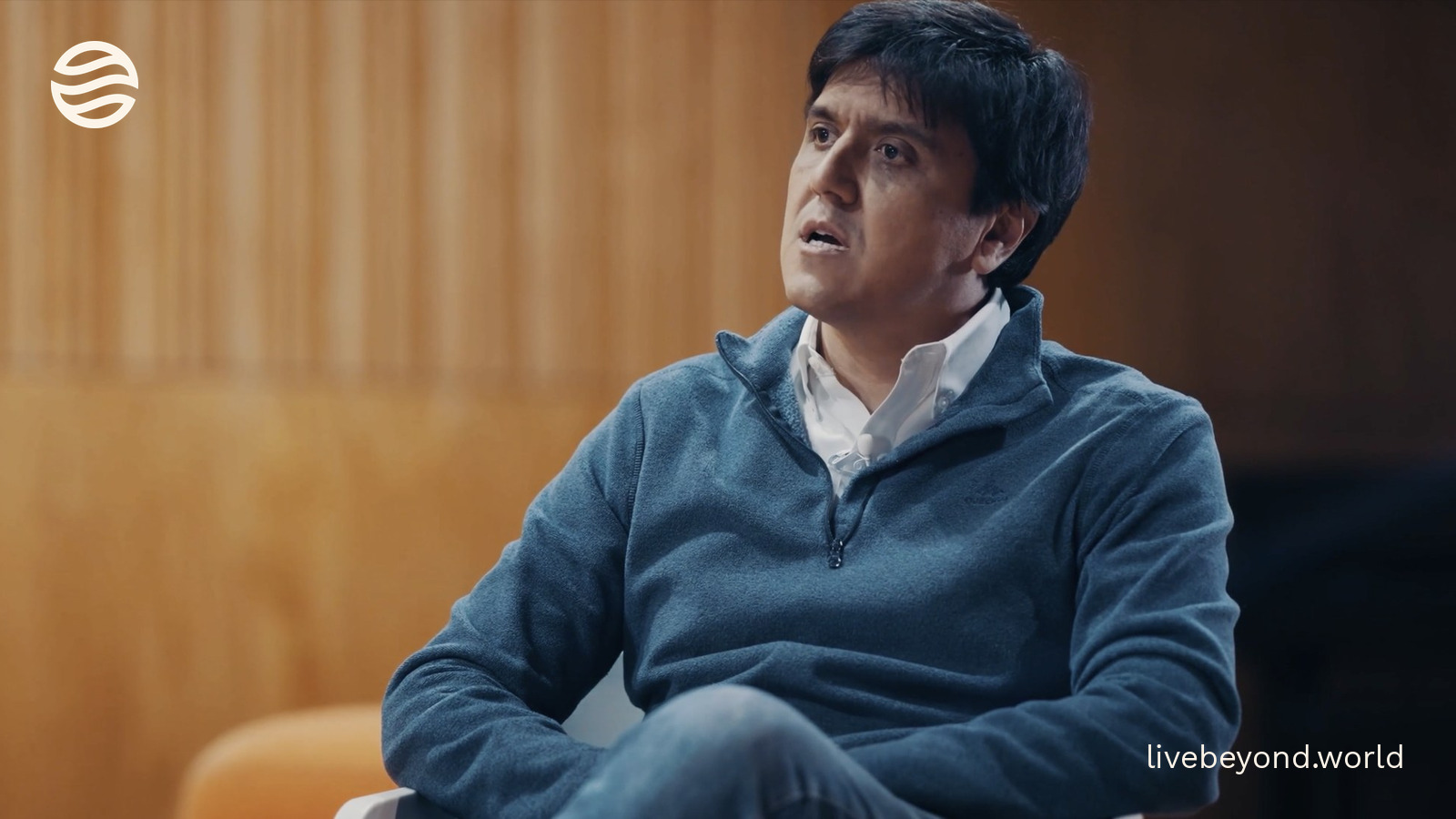
In Santiago, Felipe Salech, a geriatrician and geroscientist at the Universidad de Chile, told us what the goal of all of this is:
Felipe Salech at the Universidad de Chile, Santiago, April 2024, a Live Beyond interview on healthy ageing and staying independent.
“And to be independent you need two main things. You need a brain that allows you to take your decisions. And you need a body that can move your brain to reach that decisions.”
And then what he tells every patient first:
“So the first thing that I will indicate always, always is exercise. Exercise is good for all your body. Up to date we do not have any drug that is so good as exercise is good for your brain, is good for your skin, is good for your lungs, is good for your health, for your liver, for your muscles, for everything.”
In plain words: No pill helps the brain as much as moving the body. Exercise keeps the brain and the muscles talking to each other, which also protects us from falls as we get older.
A bigger memory centre after a year of walking
In a fair test with 120 older adults, a year of brisk walking, 40 minutes three times a week, made the hippocampus, the brain’s memory centre, about 2% bigger. That is roughly one to two years of age-related shrinking turned back. In the group that only stretched, it kept shrinking a little. Memory got better in both groups.
Based on: One fair test · shows cause, in older adults [6]
Steps and dementia
In 78,430 adults in the UK followed for about seven years, people who walked about 9,800 steps a day had about 51% lower risk of dementia. Even about 3,800 steps a day went with a 25% lower risk.
Based on: One long-term study · a link, not proof [7]
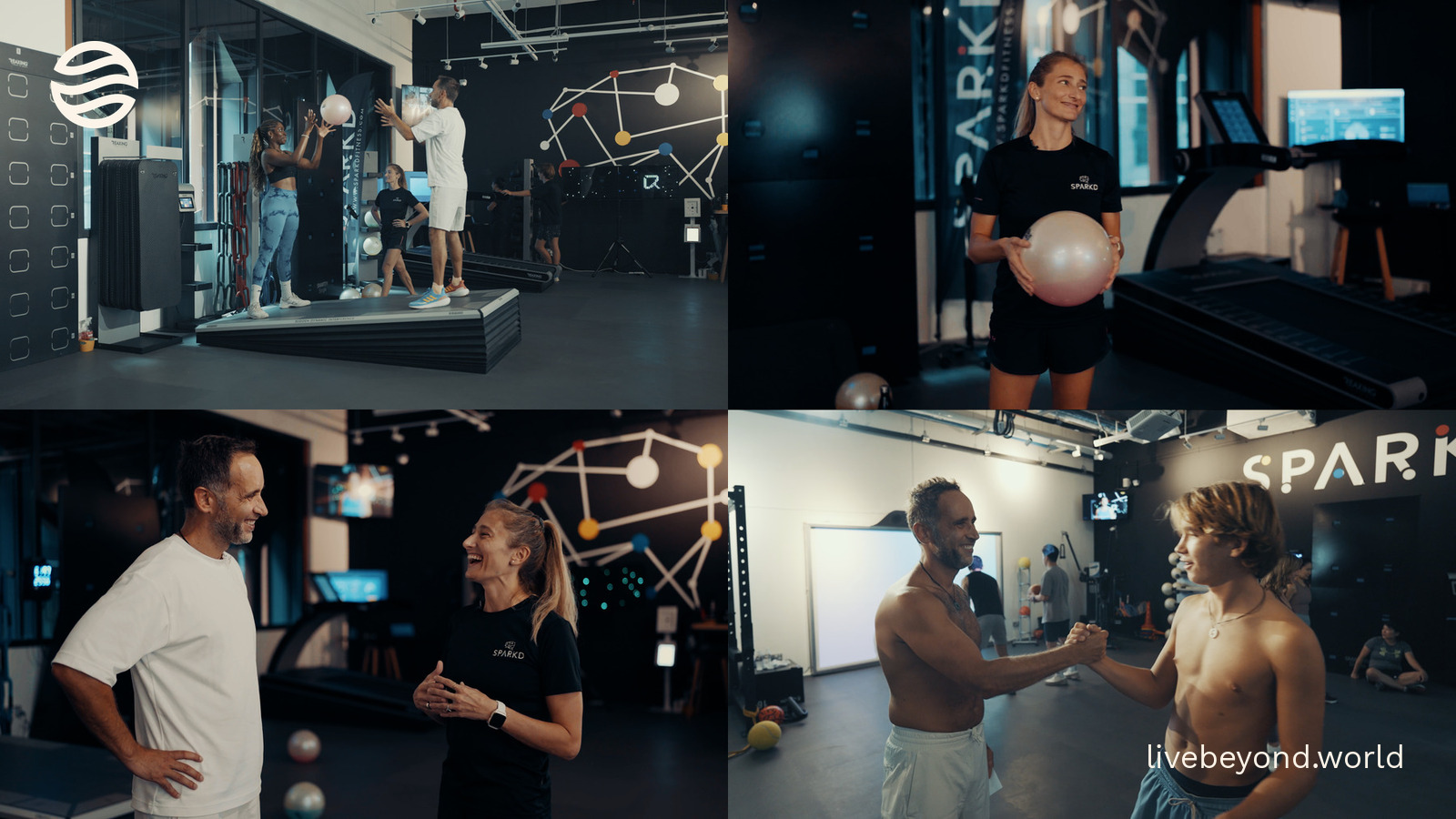
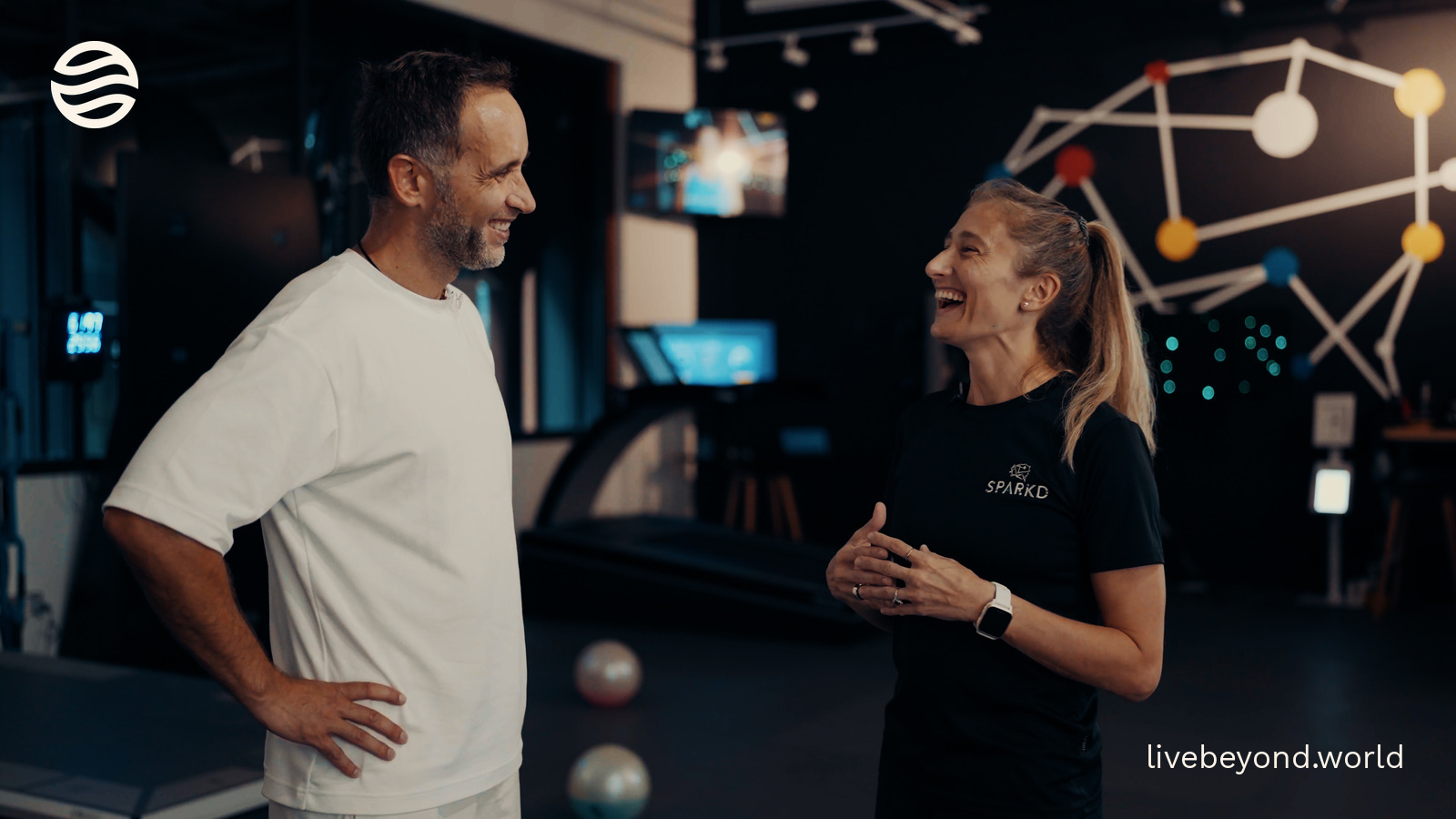
Marek and Alek Piotrowski with Anna Milani and Simisola Oke at SparkD, Singapore, February 2024.
In Singapore, in February 2024, Anna Milani showed Alek and me SparkD, the gym she built to train the brain and the body together. She told us why she started:
“I used to train for the looks before. I wanted to look good, and I still wanna look good, and I wanna look good when I'm 90, 100, hopefully. But at the same time, brain and cognition is very, very important. And in order to maintain a super high functioning, performing life, I want to keep my brain healthy. And so that's where I worked on the combination of the two and I conceptualized SparkD. So SparkD really means the spark that happens in your brain as you are working out in this way.”
Every machine there asks two things of you at once. On one platform the floor never stops moving: it tilts up and down at different angles while you hold a plank, so your core, your balance and your brain all work together. On the same platform, Simisola Oke and I did squats side by side and threw a ball filled with water to each other. The water shifts inside, so the ball never lands the same way twice. On a big wall, lights flash up in different places and colors, and you tap the right ones, sometimes while you squat.
“It creates instability. It gets you to work harder, in your brain and muscles. As you are exercising on the board, there’s sudden interference, so your muscles and your brain are going, ‘Ooh, what’s happening here? I need to start paying attention.’ So there’s way more engagement on a brain-body connection.”
“As we age, I think it’s super important if we wanna live a good quality of life, we want to move. I wanna continue dancing until I’m old. I don’t wanna walk around like a robot. Being able to move 360 degrees, to me, is really, really important. On top of that, being stable on my feet, making sure I’m not falling and I’m not having a broken hip.”
In plain words: Training that makes your body and your attention work together, with balance, reaction and focus, trains the brain while you move. It also keeps you steady on your feet, which protects you from falls as you get older.
“While on top of that, we also look at your brain health, your brain fitness, like we call it, and your cognition. […] As we age, we slow down physically and cognitively, so we wanna counteract that by doing more cognitive motor training.”
That afternoon I told Anna what I thought:
“A studio like that should be at every gym.”
I still think so. After SparkD I understood that we have to train our brains, not only our bodies. Gyms like this belong in every hospital and every home for elderly people. And every ordinary gym should have a corner where you train the mind and the body at the same time. Governments should support it, to keep people agile in old age and young people sharp. I believe we would be more agile, live longer, and keep our minds clear.
Train the brain, and stay close to people
Back in Oxford, I asked Muir Gray what his main message is for people of 60, 70 and 80. He did not say puzzles:
Rob Gronbeck testing Marek Piotrowski in the Brain Room, Melbourne, January 2024, a Live Beyond interview on training the brain.
“Increase physical, cognitive, and emotional activity. And perhaps the most interesting research now is about the benefits of, let's call it cognitive and emotional activity, that we can increase our brain ability, no matter what age we are. And it's not just doing puzzles and learning a language, although those are useful, but it's being engaged with others and having a social purpose, being challenged. So I say to people, my advice is to become a volunteer and get on the committee of a volunteer organization, 'cause that's where you'll be challenged. You may do good to other people, but it will certainly do you good.”
In plain words: Puzzles and new languages help, but the strongest brain training is a life with other people and a challenge in it. Volunteering gives you both, and it does good to others at the same time.
“So what happens as we live longer is a gap opens up between our best possible rate of decline due to aging and our actual rate of decline. But at any age, and no matter how many condition you've got, you can close the fitness gap.”
Healthy habits together protect thinking
In Finland, 1,260 people aged 60 to 77 with a higher risk of dementia were picked at random. For two years, half of them got advice on healthy eating, exercise, brain training and care for their blood pressure and other risks. Their scores on a broad test of memory and thinking improved about 25% more than in the group that got regular health advice.
In Melbourne, in January 2024, I met Rob Gronbeck again. He runs the Brain Room, where athletes and everyday people train focus, reaction and tracking moving objects. Even he started with the basics:
“Well, we generally know that the cognitive processes tend to decline. That fluid intelligence, working memory, processing speed, peripheral vision, attention span, these things tend to decline. And we also know that physical fitness also declines. So the easiest […] way to reduce or even reverse is, as we know, physical exercise, diet and sleep. They're our backbones.”
In plain words: Brain training tools can be fun and useful, but the foundation is the same for everyone: move, eat well and sleep. Our pages on sleep and stress show why rest matters so much for the brain.
What science is working on
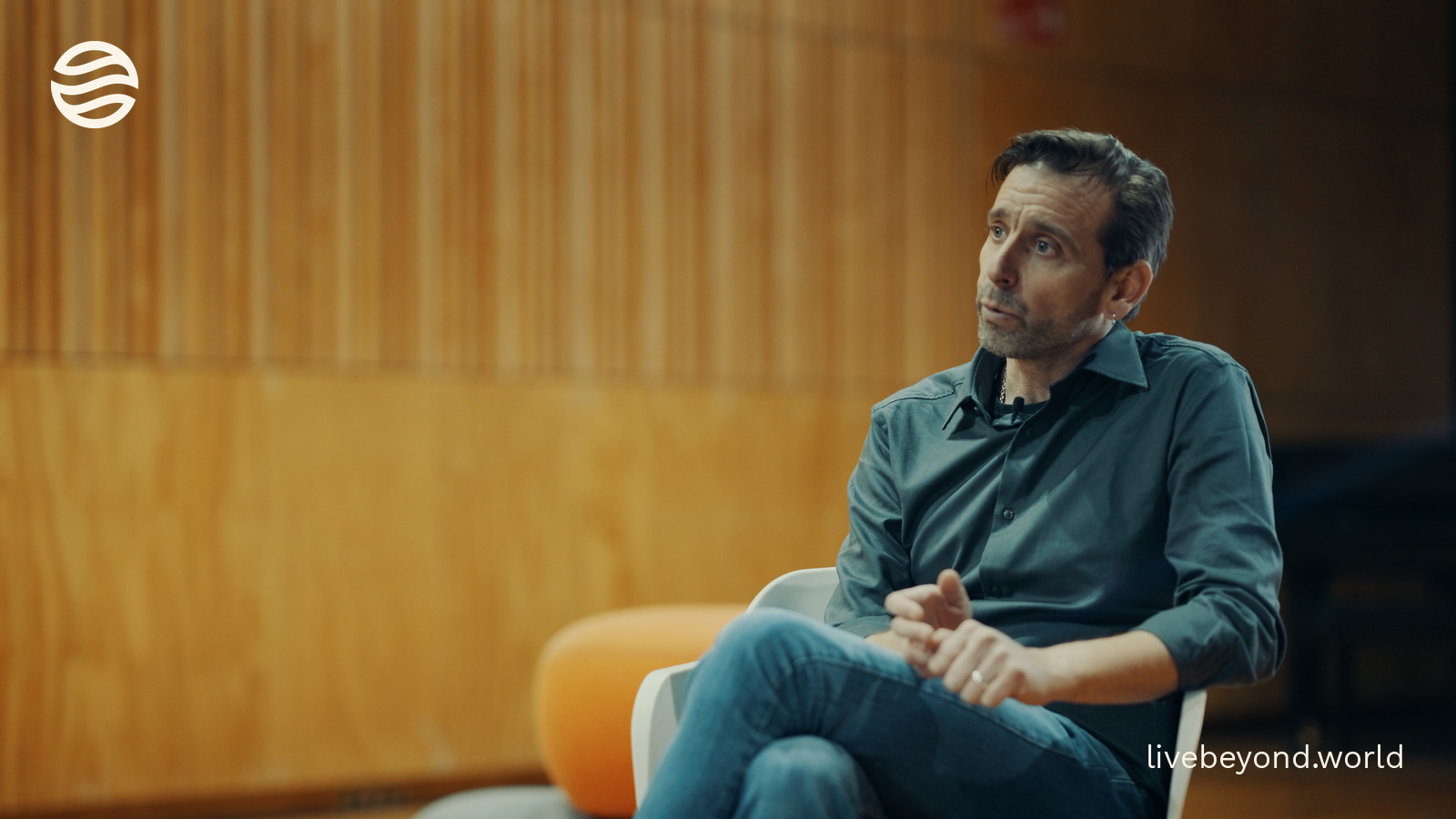
Felipe Court’s lab is looking for ways to protect the brain’s connections directly.
Felipe Court in Santiago, April 2024, a Live Beyond interview on the ageing brain.
Younger memory in old mice
In old mice, his team blocked a process that destroys the brain’s connections, first by changing a gene and then with a drug given for four weeks. Fewer connections were lost, and in memory tests the old mice did about as well as younger adult mice. This has only been done in mice.
In plain words: It is a hopeful direction, not a treatment. For now, the things that protect our connections are the everyday ones on this page.
Where the joy is
Marek Piotrowski and Anna Milani at SparkD, Singapore, February 2024, a Live Beyond interview on training the brain and the body together.
Almost everything that keeps the brain young also makes life fun: dancing, walking with a friend, learning something new, laughing at a full table, being part of something bigger than yourself.
Felipe Salech tells his oldest patients the same thing: you have to enjoy your life. He sees that people who have fun and stay connected with others age better, also in their minds.
For us, a long life only makes sense with a clear, curious mind in it. That is the cognitive span, and every day you use your brain with joy, you are lengthening it.
When to talk to a doctor
Usually normal
Forgetting a name or where you put your keys, and remembering it later.
Memory problems that get in the way of everyday life, or changes your family notices. Many causes can be treated, such as depression, stress, poor sleep, thyroid problems, a lack of vitamin B12, side effects of medicines, or not hearing and seeing well.
We wrote this page from Live Beyond’s own recorded interviews and the published studies listed below, with gratitude to everyone who taught us. Hey, and one question at the end: what new thing will you learn this year? Just tell me in one line. On Instagram or LinkedIn, wherever you are.
Before you change anything
This page shares what research and the experts we met say. It is not medical advice, and it does not recommend any medicine, supplement or treatment. It knows nothing about you. Before you start, stop or change anything, especially if you are pregnant, live with a health condition or take any medication, please talk to your doctor. In an emergency, call your local emergency number.
Sources
Every number on this page, by the number in square brackets. Quotations come from Live Beyond’s own recorded interviews, cleaned only of “um” and “uh”. Not medical advice. Talk to your doctor before you change anything.
Livingston G, Huntley J, Liu KY, et al. Dementia prevention, intervention, and care: 2024 report of the Lancet standing Commission. Lancet. 2024;404(10452):572-628. doi:10.1016/S0140-6736(24)01296-0
The Lancet. Nearly half of dementia cases could be prevented or delayed by tackling 14 risk factors. Press release, EurekAlert!, 31 July 2024.
Lin FR, Pike JR, Albert MS, et al. Hearing intervention versus health education control to reduce cognitive decline in older adults with hearing loss in the USA (ACHIEVE): a multicentre, randomised controlled trial. Lancet. 2023;402(10404):786-797. doi:10.1016/S0140-6736(23)01406-X
Eyting M, Xie M, Michalik F, et al. A natural experiment on the effect of herpes zoster vaccination on dementia. Nature. 2025;641:438-446. doi:10.1038/s41586-025-08800-x
Pomirchy M, Bommer C, Pradella F, Michalik F, Peters R, Geldsetzer P. Herpes zoster vaccination and dementia occurrence. JAMA. 2025;333(23):2083-2092. doi:10.1001/jama.2025.5013
Erickson KI, Voss MW, Prakash RS, et al. Exercise training increases size of hippocampus and improves memory. Proc Natl Acad Sci U S A. 2011;108(7):3017-3022. doi:10.1073/pnas.1015950108
del Pozo Cruz B, Ahmadi M, Naismith SL, Stamatakis E. Association of daily step count and intensity with incident dementia in 78,430 adults living in the UK. JAMA Neurol. 2022;79(10):1059-1063. doi:10.1001/jamaneurol.2022.2672
Ngandu T, Lehtisalo J, Solomon A, et al. A 2 year multidomain intervention of diet, exercise, cognitive training, and vascular risk monitoring versus control to prevent cognitive decline in at-risk elderly people (FINGER): a randomised controlled trial. Lancet. 2015;385(9984):2255-2263. doi:10.1016/S0140-6736(15)60461-5
Arrázola MS, Lira M, Véliz-Valverde F, et al. Necroptosis inhibition counteracts neurodegeneration, memory decline, and key hallmarks of aging, promoting brain rejuvenation. Aging Cell. 2023;22(5):e13814. doi:10.1111/acel.13814
Alzheimer’s Society (UK). Why is my memory bad? Causes of memory problems. alzheimers.org.uk