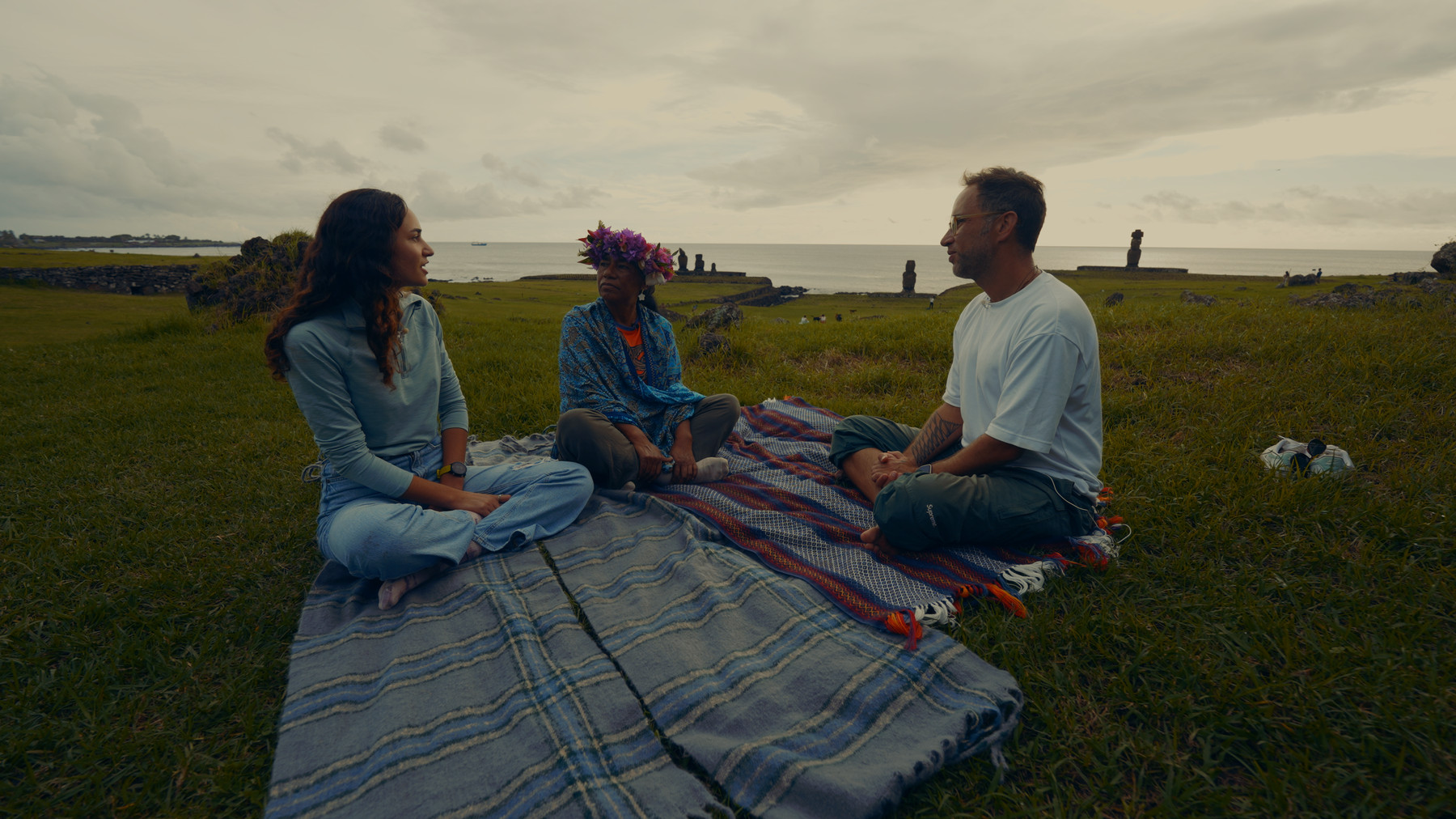
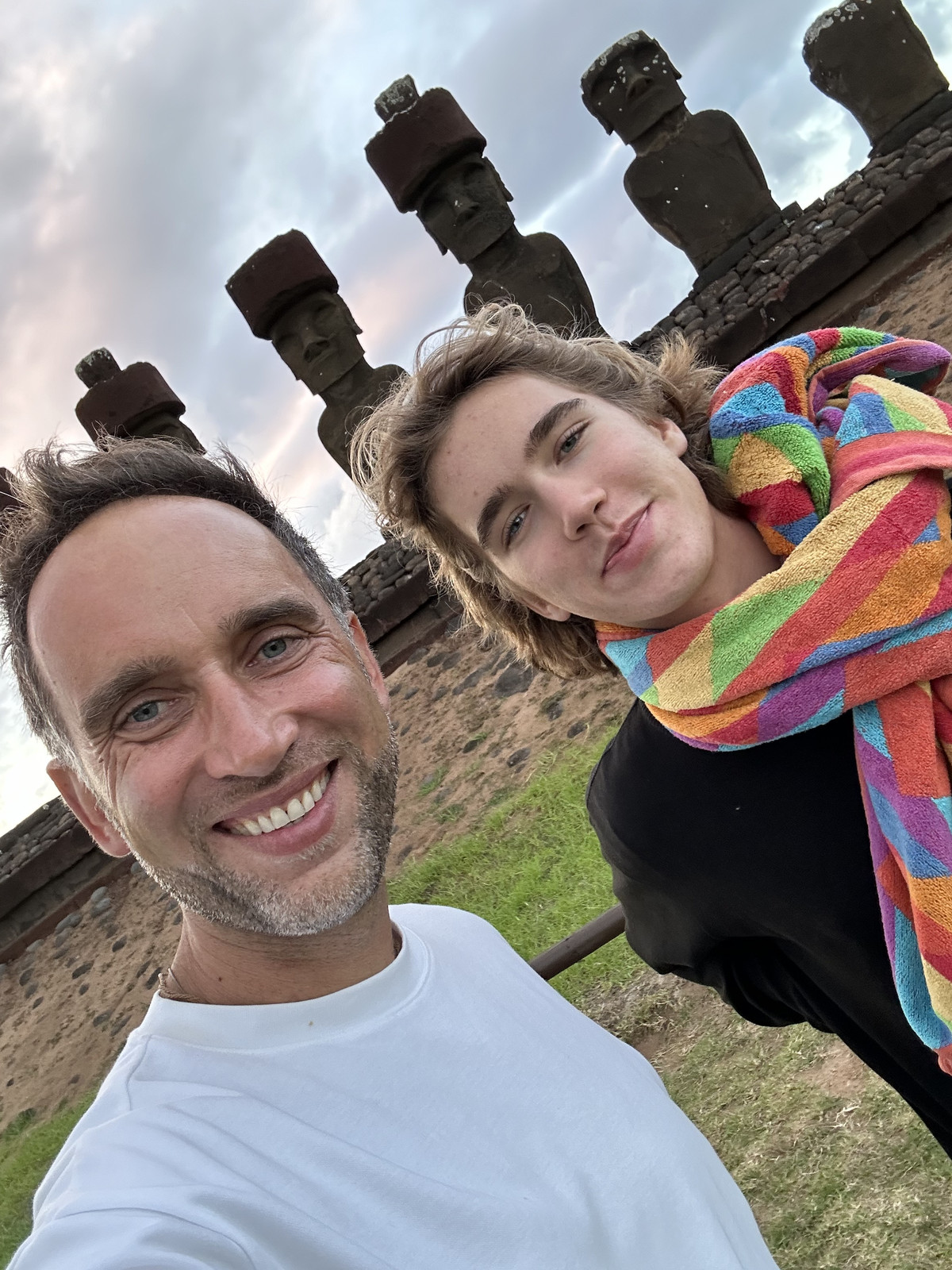
Alek and Marek on Rapa Nui, the island where rapamycin was found, May 2024.
Almost every longevity scientist we met had something to say about rapamycin. Some study it. Some take it. All of them want to know if it works in people. So instead of another page of numbers, we brought you into the rooms where we asked them. Five conversations, from an island in the Pacific to a lab in Seattle. And at the end, what the research really shows so far.
Rapamycin is a medicine first found in the soil of Easter Island (Rapa Nui). It is approved for organ transplants and some cancers. In the lab, it has made mice, worms, flies and yeast live longer, even when mice started it in old age. [1]
In people, we do not know yet. The first trials of low doses in healthy older adults are small and short, with mixed results and no serious safety problems so far. [3] Bigger trials, including one in pet dogs, are still running. [4]
So our honest answer: very promising, not proven. Follow the research.
This is not medical advice.
This page shares experiences from our quest and what scientists told us. It does not recommend any medicine, peptide, supplement or treatment, and it knows nothing about you.
Never start, stop or change any medicine, peptide, supplement or treatment without your own doctor, who knows your health and can check your blood work. That matters even more if you are pregnant or planning a pregnancy, live with a health condition, or take other medicines.
Longevity, as we mean it: more healthy, joyful years. What we mean →
What we know, and what it might do
What has been shown
Yeast, worms, flies and mice live longer on rapamycin. In mice, even when they start late in life, at an age like a 60-year-old person. [1]
In old mice, eight weeks of rapamycin reversed gum disease and bone loss around the teeth. [2]
In people: a one-year trial of low weekly doses in 114 healthy adults found no more side effects than a placebo, and only small benefits, mostly in women. [3]
At high doses, after organ transplants, it weakens the immune system. At low doses, mouth sores are the most common complaint.
What it might do one day
Keep the heart, brain and immune system younger. In old mice, function in these organs improved.
Keep gums and teeth healthy. A trial in people with gum disease is running.
Slow the aging of the ovaries, which shapes how fast a woman ages after menopause. A trial is running in Colombia.
Help our dogs live longer and healthier. The Dog Aging Project trial is running. [4]
Not proven in people yet. That is why the trials matter.
Words worth knowing
Three words behind the island’s gift
From our glossary. Tap a card to turn it over: the science on the back, and the people we met who explained it to us.
No. 35 / 66Therapy
Rapamycin
A drug from the soil of Easter Island that switches cells from growing to cleaning up. In animals it extends life.
No. 35 / 66Therapy
Rapamycin
It slows mTOR, the cell’s growth switch, so cells stop building and start recycling their junk. It has extended life in every animal properly tested; trials in people and pet dogs are under way. Prescription only. Read more →
“In every animal model where it’s been tested, it increases lifespan and seems to improve healthspan. … What we don’t know yet is whether the same thing is gonna be true in people.”
The goal is not to switch it off — you need it to build muscle — but to stop it running all day.
What helps
Periods without food and without constant protein. This one has a real tension in it: the same signal that drives ageing also builds the muscle that keeps you alive after seventy. Read more →
With Hapa Tepano, the healer, and our guide Lanii Cardinali, Rapa Nui, May 2024.
To get to Rapa Nui, you fly to Santiago in Chile, and then almost six more hours over the Pacific. A few scientists told us they would come with us. In the end, it was just Alek and me. I had a secret hope. That a local healer would tell us her people had used this soil as medicine for hundreds of years, and that I would find something the labs had missed.
Alek and Marek with the moai.
She smiled and told us the truth. It was not her people who found it. It was scientists from abroad who visited the island and took soil samples home. And on the island itself, there are no labs, and no hospital that could do that kind of research. The most famous longevity molecule in the world comes from a place that has never studied it. That is where our rapamycin story starts.
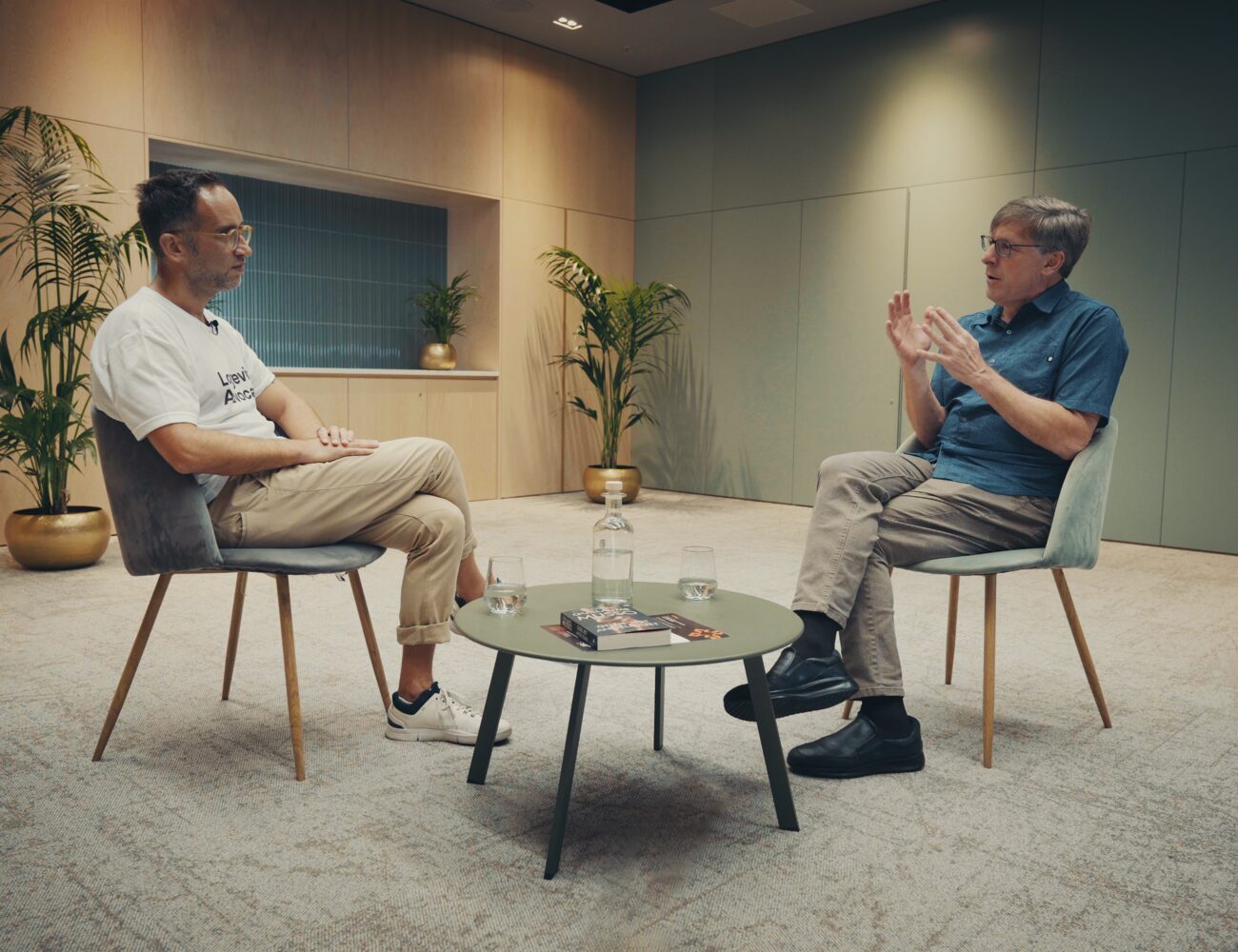
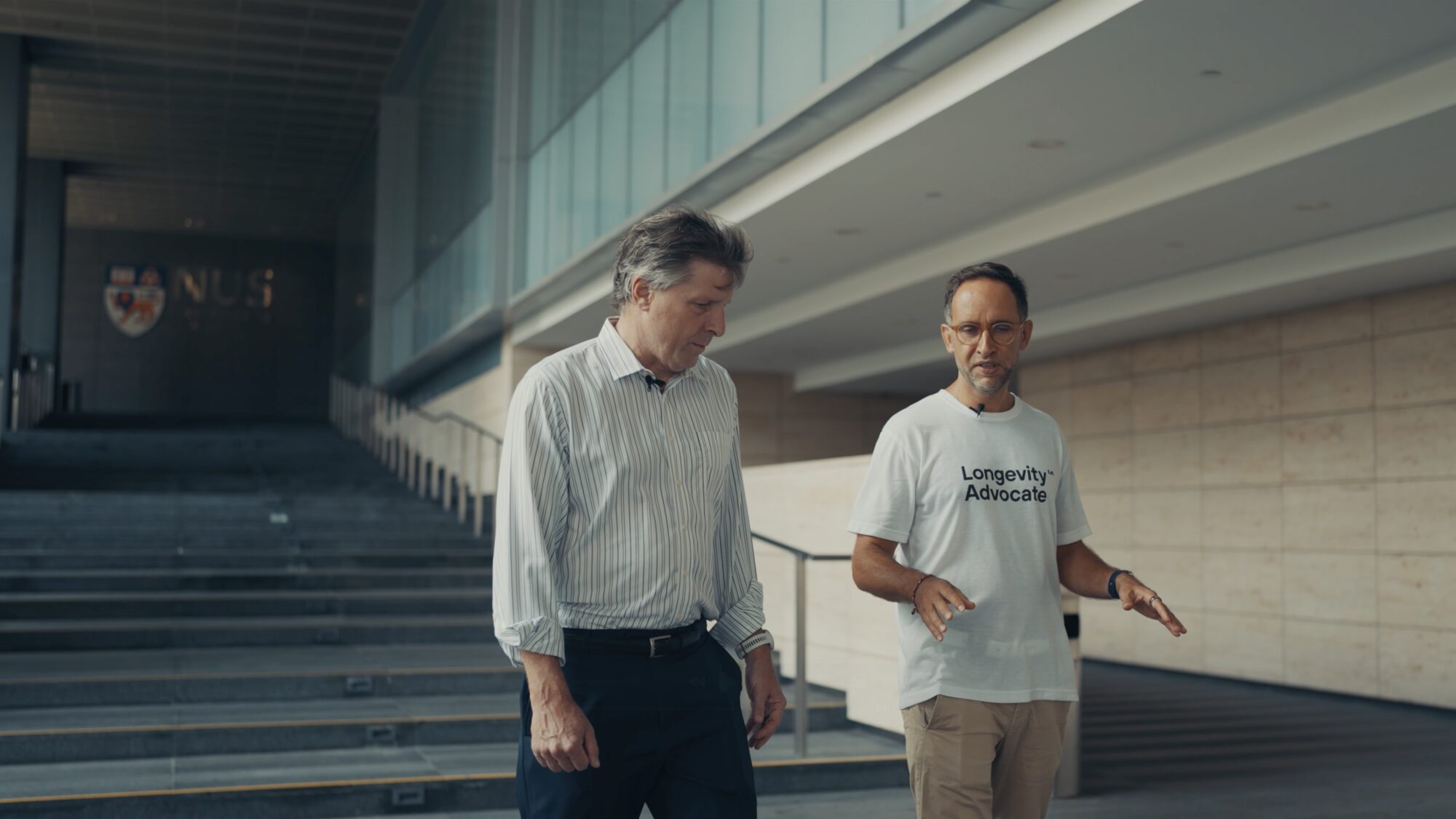
Brian Kennedy is a Distinguished Professor at the National University of Singapore, and later he wrote the foreword to our book. When we visited his labs, his team was planning a rapamycin trial of their own. I started with the question everybody asks.
Marek
Finally, rapamycin, because everybody’s talking about rapamycin.
Brian Kennedy
There’s some community-based studies going, but I agree. I think the challenge is that rapamycin has a reputation for having side effects, and that’s largely because it’s used in high dose with cyclosporine, another immunosuppressant, in an organ transplantation context, and it does suppress the immune system in that context. But at low intermittent dosing, the clinical studies suggest that it doesn’t cause side effects above background, and that gives us an opportunity to see whether it affects aging.
Walking through the National University of Singapore with Brian.
Marek
If you were to explain to a person that has never heard about rapamycin, like my son, what would you say?
Brian Kennedy
You’re always blaming him. [laughs]
Brian Kennedy
So rapamycin has an interesting history, so perhaps I’ll start there. It was found in a soil sample on Easter Island, which is a part of Chile, and it’s very famous for having these very large human sculptures, from hundreds of years ago. The people were called the Rapa Nui. And so mycin being an antibiotic, essentially, so rapamycin.
Brian Kennedy
If conditions are good, meaning there’s lots of nutrients and there’s low stress signaling, then it tells the cells to grow and proliferate. If conditions are not so good, low nutrients or high stress, […] the cells become stress-resistant and stop growing and proliferating. And it’s that stress-resistant mode that rapamycin mimics.
In plain words: rapamycin switches the cell into its “careful” mode, the one it uses when food is short. Repair goes up, growth slows down. In animals, that mode goes with a longer, healthier life.
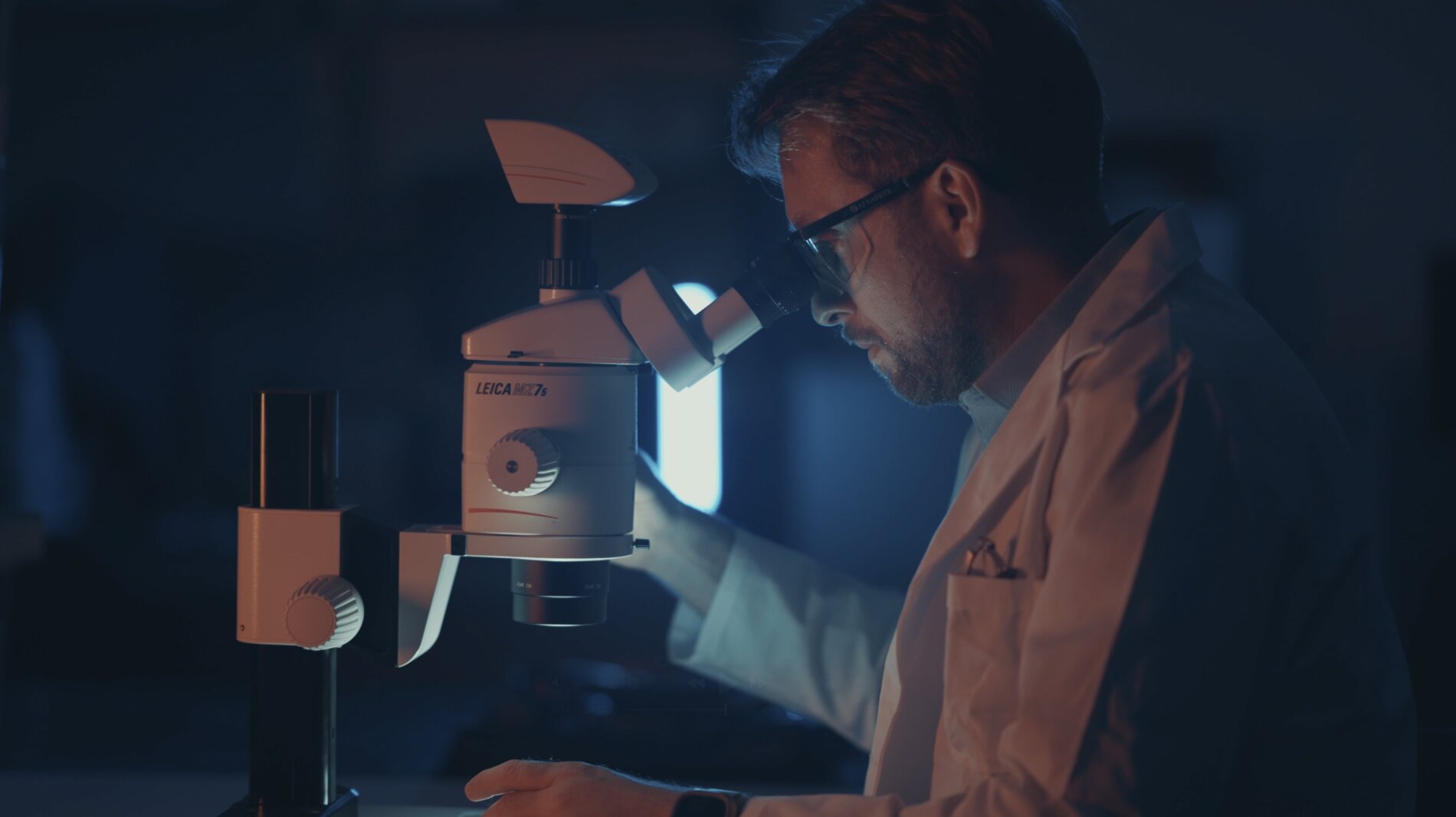
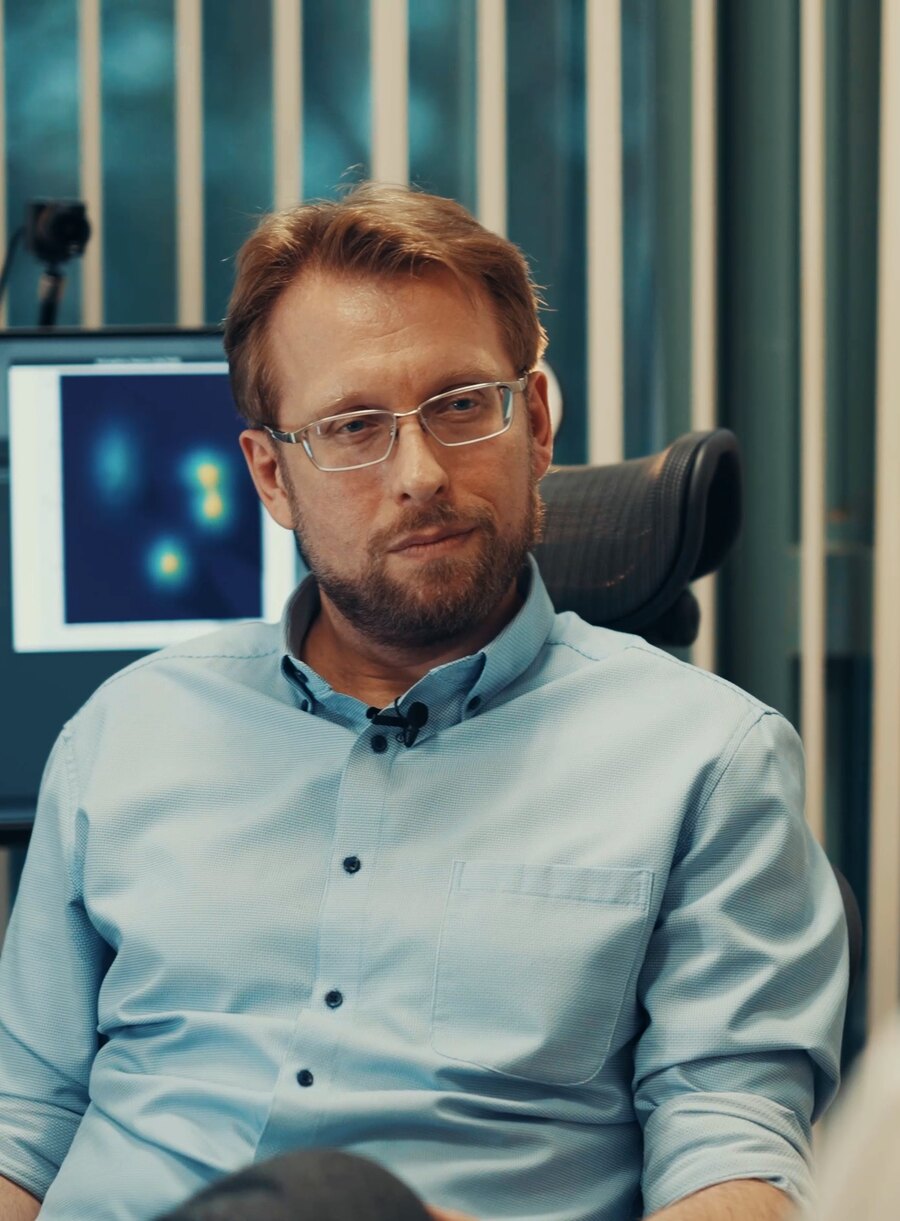
If one scientist is the face of rapamycin research, it is Matt Kaeberlein. For me he is one of the three pillars of this field, together with Brian Kennedy and David Sinclair. We first met in Dublin, and it was Liz Parrish who brought us together again in Seattle, a few weeks after we came back from Rapa Nui. Matt also leads the Dog Aging Project, so dogs come into this story more than once.
Marek
Tell me, what’s your view on rapamycin, and how do you think it will impact our longevity?
Matt Kaeberlein
What we know about rapamycin from the scientific literature is, in the context of aging, in the laboratory, in every animal model where it’s been tested, it increases lifespan and seems to improve healthspan, so improves function across multiple tissues and organs.
Matt Kaeberlein
You can start the treatment in middle age. So you can take a mouse equivalent of a 60-year-old person, 70-year-old person, start giving the mouse rapamycin, and it will live longer, and it will function better.
Marek
You said that you are involved in the research using rapamycin for having longevity benefits for our teeth and gums. Tell us about it.
Matt Kaeberlein
What Jon showed in his PhD thesis research is, first of all, that aging mice develop periodontal disease. That hadn’t really been shown before. […] If you take old mice who already have developed these signs of periodontal disease, you give them rapamycin for eight weeks, we can reverse all three of those things.
Marek
When I listen to you talking about all these potential advantages of rapamycin for us, that sounds like a wonder drug.
Matt Kaeberlein
Rapamycin is like anything else, right? There’s a dose response. And we know that if you take too much rapamycin, you can actually have potentially negative effects in the context of aging.
Matt Kaeberlein
So everything’s gonna have side effects, and so it’s just important to appreciate, while I think there’s a lot of potential for rapamycin, there are also some risks, just like with anything else. And we need to be aware of both.
“Jon” is Jonathan An, a dentist who did his PhD in Matt’s lab and now teaches at the University of Washington. The three things they reversed in old mice were bone loss around the teeth, inflamed gums and an unhealthy mix of microbes in the mouth. [2] Jon is now testing the same idea in people with gum disease. Matt is also part of the Dog Aging Project, which is testing rapamycin in pet dogs, because in dogs a trial can show results about ten times faster than in people. [4]
Matt’s last word to us: he is pretty optimistic that rapamycin can help healthspan, and maybe lifespan, in people too. And he was the first to tell us about the risks.
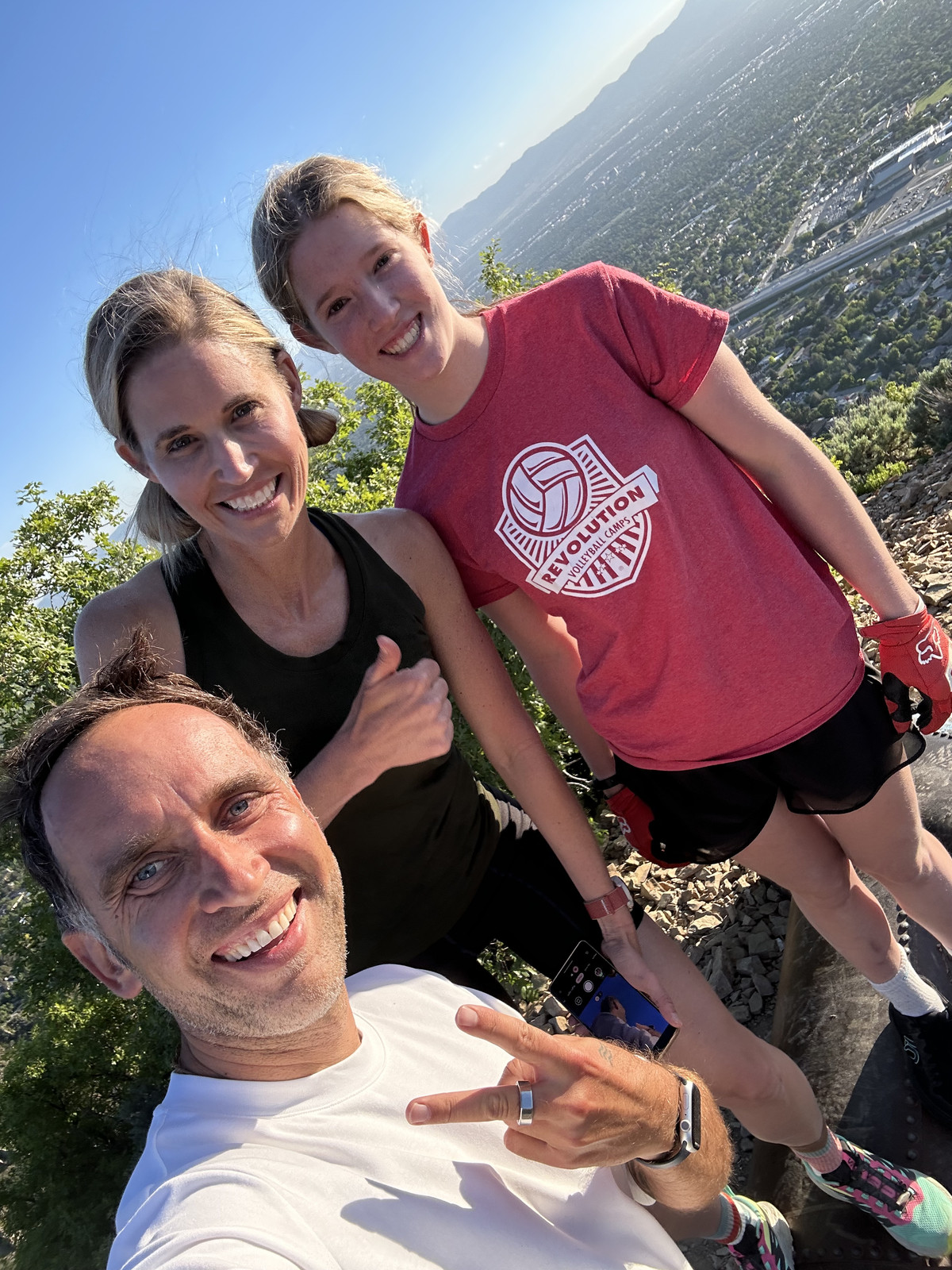
Dr Amy Killen calls herself a bio-slacker. We spent two days with her in Utah: the interview, her kitchen, a bike ride above the city and dinner with her whole family. Halfway through the interview, she turned the question around.
Amy Killen
Do you take rapamycin?
Marek
Not yet. I still decided to wait for more research, and I wanted to speak to more scientists.
On the bike ride with Amy and her daughter.
Amy Killen
I’ve been doing rapamycin for about four years, so I haven’t really observed… I don’t feel very different, but I don’t feel bad, and I like the idea of it, and I like the research, at least in the animals that has been done.
Amy Killen
Some mouth sores sometimes, but there’s not a lot of other downsides. I have seen a couple of older people, like in their 70s, who it makes them very tired or things like that, so you gotta be a little careful.
Amy Killen
There’s one also in Colombia. They were looking at ovarian aging and, I think a short course, like a 12-week course of rapamycin or sirolimus, the generic, to look at ovarian aging and if they can slow down ovarian aging.
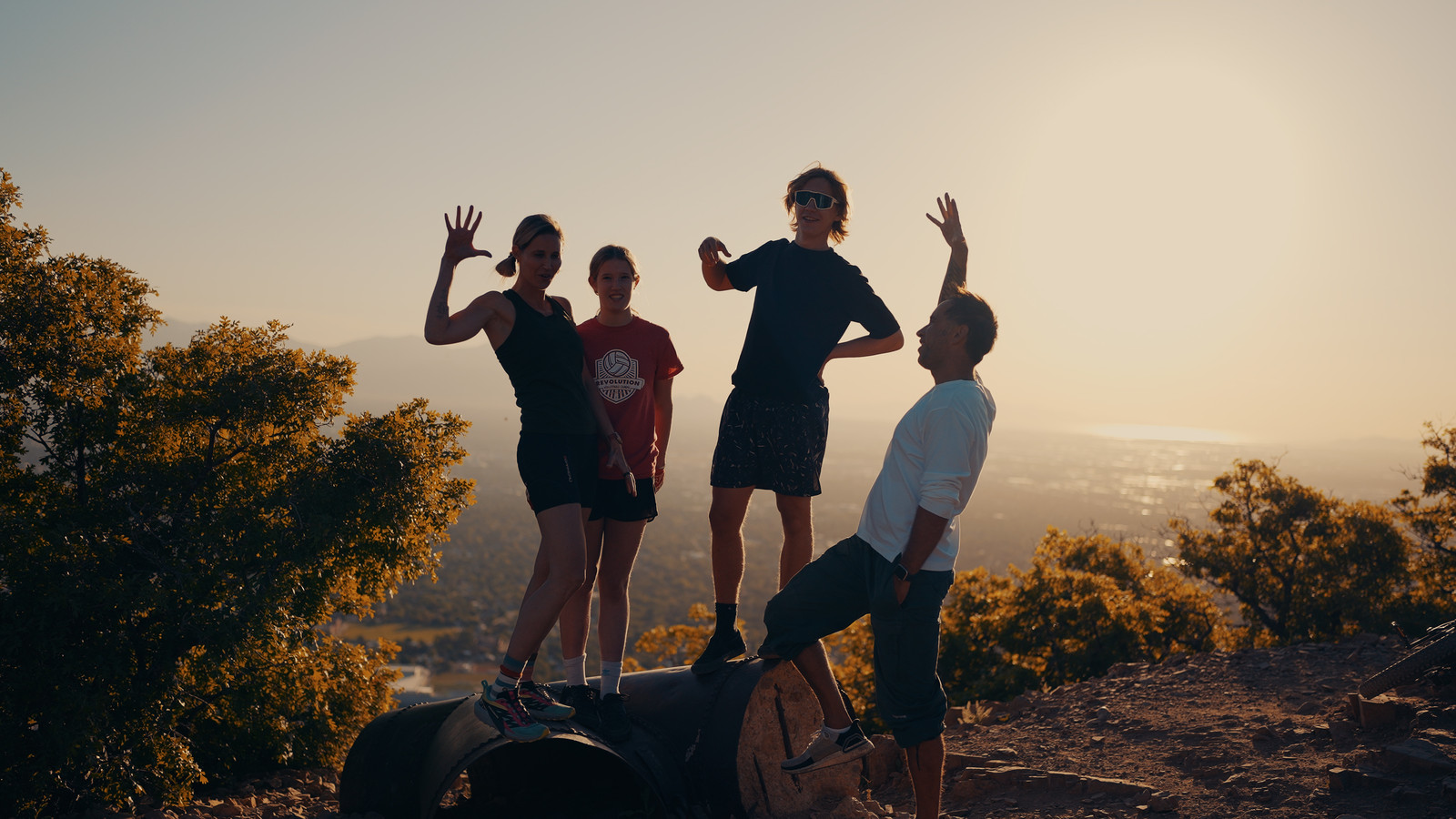
Amy, her family, Marek and Alek at sunset above Salt Lake City.
What stayed with me: even a doctor who takes it does not feel a difference. She takes it because of what it did in animals, and she watches the side effects carefully, with her doctor’s eye.
Jan Gruber tests longevity compounds on worms and other small animals, again and again. I asked him why so many of his colleagues keep coming back to this one molecule.
Jan Gruber
In the lab, I mean, there are a few drugs that work quite reliably in all model organisms. Rapamycin is one of them. I mean, I’ve tried many things, and there’s lots of variability in lifespan effects with compounds that have really beautiful publications, and then you try them and they might not quite work as well in your lab.
Jan Gruber at the National University of Singapore.
Jan Gruber
But of course, when you see them work time and time again in the lab, you sort of decide that, yeah, maybe that’s something that you wanna…
That is the quiet reason behind the noise. Many compounds look great in one study and fail in the next lab. Rapamycin keeps working.
New York · June 2024
A dog who looks years younger
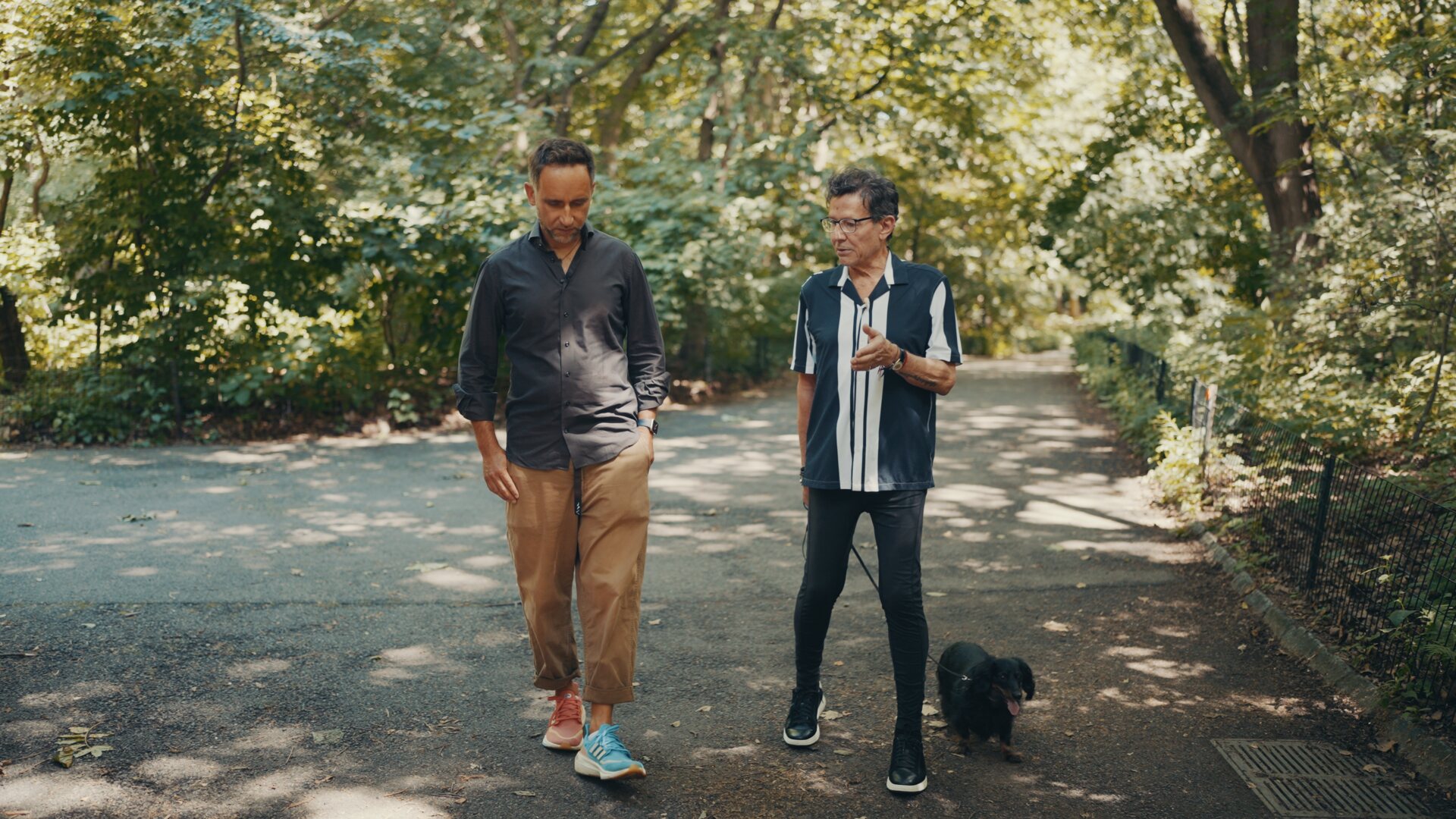
With Oz Garcia and his dog, Central Park, June 2024.
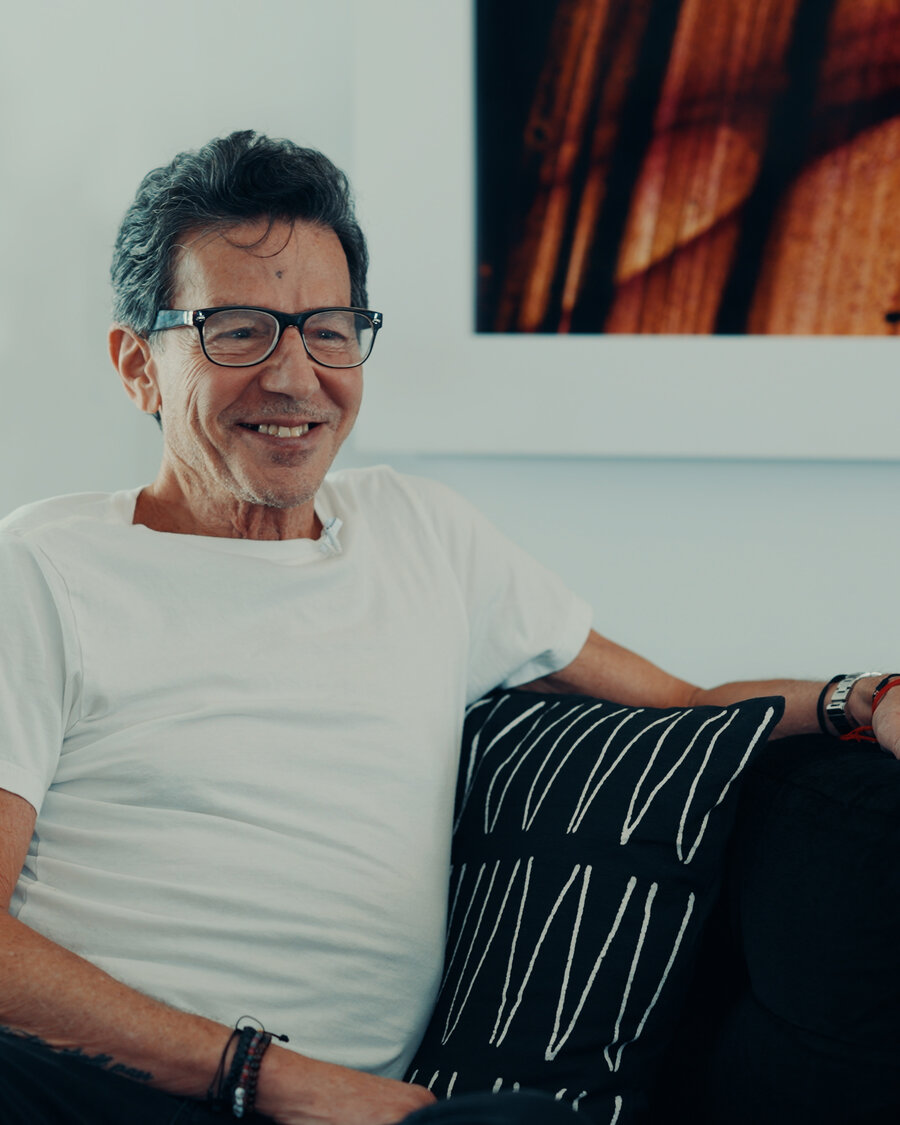
Oz Garcia has been a nutritionist in New York for decades, and Hilary Swank is one of the people he has worked with. Our friend Dorota Stańczyk, who used to be the creative director at Mindvalley, introduced us. Oz is the crazy uncle everyone wishes they had: he DJs, he laughs a lot, he knows everybody. We walked through Central Park with him and his little dog. Then I asked.
Marek
And tell me, are you taking rapamycin?
Oz Garcia
I’ve used rapamycin. Believe it or not, I actually have my dog on a schedule, and I work with an individual who’s very familiar with that.
Marek
Your dog looks amazing. Like he’s 11, you said, and he looks like he’s three maybe. So maybe it’s working.
Oz Garcia, New York.
Oz Garcia
I would hope so. I wanna know more about rapamycin. There’s a lot of information about it.
Oz Garcia
Rapamycin is still on my let’s watch. I’m concerned about side effects.
Marek
From our talks with top scientists, a lot of them use it even though it’s still in the clinical trials that have just started this year. So I’m also keeping my fingers crossed for the results because potential benefits seem amazing.
One dog is a story, not a study. That is exactly why the big dog trial matters.
Our view, after a year of asking
Rapamycin is one of the most exciting molecules in longevity science. It is not a shortcut, it is not for everyone, and nobody should take it without a doctor. Follow the research. Great things are going to come out of it.
On the Longevity Map
Rapamycin belongs to Radical Life Extension, the level of the Map where science tries to slow aging itself. But the strongest foundation is still the first level, Longevity Basics: sleep, food, movement and the people you love. Every scientist in this story told us the same.
This page shares experiences from our quest and what scientists told us. Rapamycin (sirolimus) is a prescription medicine that weakens the immune system and has real side effects; taking it for longevity is off-label and not proven in people. Every body is different: what works for one person may not work the same way for another.
Never start, stop or change any medicine, peptide, supplement or treatment without your own doctor, who knows your health and can check your blood work. In an emergency, call your local emergency number.
Sources
Harrison DE et al. Rapamycin fed late in life extends lifespan in genetically heterogeneous mice. Nature, 2009. doi.org/10.1038/nature08221
PEARL trial (Participatory Evaluation of Aging with Rapamycin for Longevity), published in Aging, 2025. Summary: lifespan.io
Dog Aging Project, TRIAD: Test of Rapamycin in Aging Dogs. dogagingproject.org
The conversations on this page are from our interviews with Brian Kennedy (Singapore, October 2023), Jan Gruber (Singapore, October 2023), Amy Killen (Salt Lake City, May 2024), Matt Kaeberlein (Seattle, June 2024) and Oz Garcia (New York, June 2024), word for word, with only filler words like “um” taken out.