In short
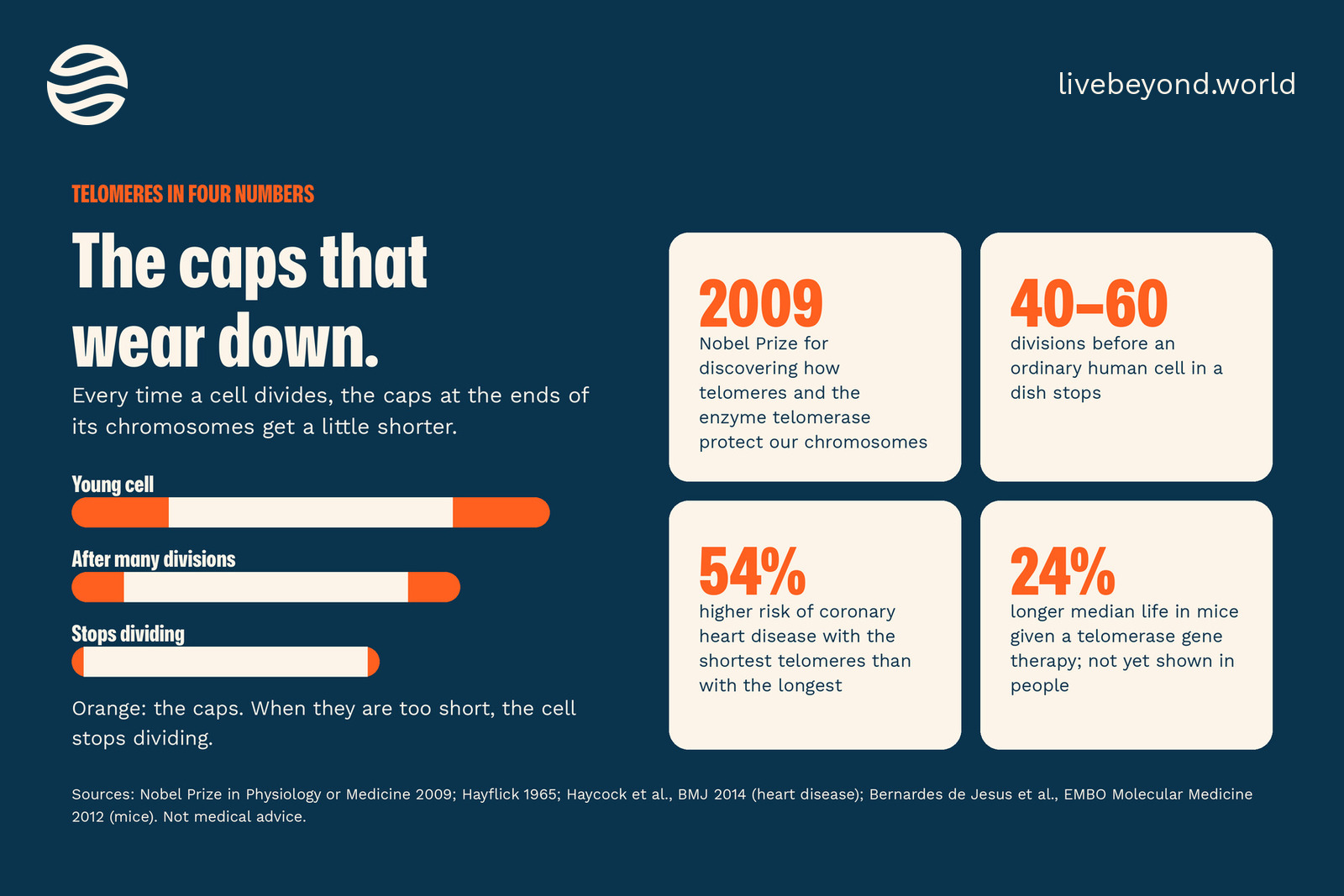
Telomeres are the protective caps at the ends of our chromosomes, and the discovery of how they protect our chromosomes won a Nobel Prize. They shorten as cells divide, and people with shorter telomeres have, on average, more heart disease. In mice, a gene therapy that switches on telomerase, the enzyme that rebuilds telomeres, made older animals live longer without more cancer.
In people, the picture is more complex: genetically longer telomeres also come with a higher risk of some cancers, and the telomere tests sold to the public are too imprecise to guide your life.
The good news: the habits that protect the whole body, moving, sleeping, managing stress and eating real food, are linked to healthier telomeres too, and they are already in your hands. [1][2][3][4]
This is not medical advice.
This page shares experiences from our quest and what scientists told us. It does not recommend any medicine, peptide, supplement or treatment, and it knows nothing about you.
Never start, stop or change any medicine, peptide, supplement or treatment without your own doctor, who knows your health and can check your blood work. That matters even more if you are pregnant or planning a pregnancy, live with a health condition, or take other medicines.
Longevity, as we mean it: more healthy, joyful years. What we mean →