Partial reprogramming: turning back the clock of our cells
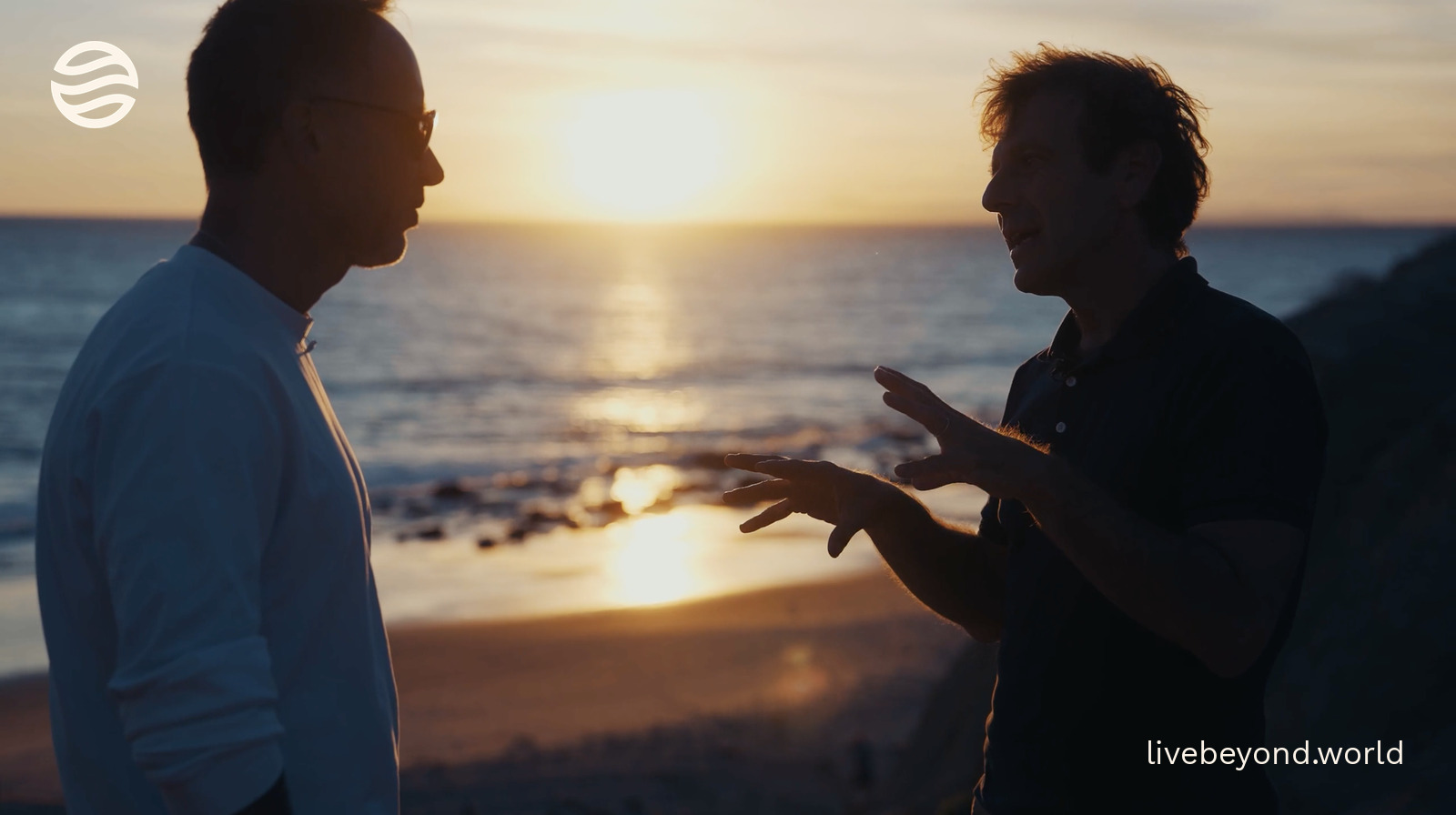
Marek Piotrowski and Vittorio Sebastiano on the beach in Irvine, California, December 2025 — a Live Beyond conversation about turning back the clock of our cells.
On our quest, my son Alek and I met more than a hundred longevity experts in 39 countries and states. Partial reprogramming — making old cells young again — was one of the ideas that excited us most. This page explains what it is, what it has done in the lab, the first human trial, and what the scientists who work on it told us.
Promising — and already in its first human trial. Partial reprogramming tells old cells to become younger without forgetting what they are. In mice it has restored sight, rejuvenated tissues and helped very old animals live longer; in human cells in the lab, it turned back many signs of aging. In 2026 the first person received a reprogramming therapy, for the eye, in a clinical trial. The challenge now is doing it safely — and the scientists we met are working on exactly that. [1][2][3][4]
Longevity, as we mean it: more healthy, joyful years. What we mean →
2006the year Shinya Yamanaka found four genes that turn an adult cell back into a stem cell. It won him the Nobel Prize.[5]
109%more remaining life for very old mice given a reprogramming gene therapy, compared with untreated mice.[6]
2026the year the first person received a partial reprogramming therapy in a clinical trial — for diseases of the optic nerve.[4]
Before you change anything
This page shares what research and the experts we met say. It is not medical advice, and it does not recommend any medicine, supplement or treatment. It knows nothing about you. Before you start, stop or change anything — especially if you are pregnant, live with a health condition or take any medication — please talk to your doctor. In an emergency, call your local emergency number.
What partial reprogramming is
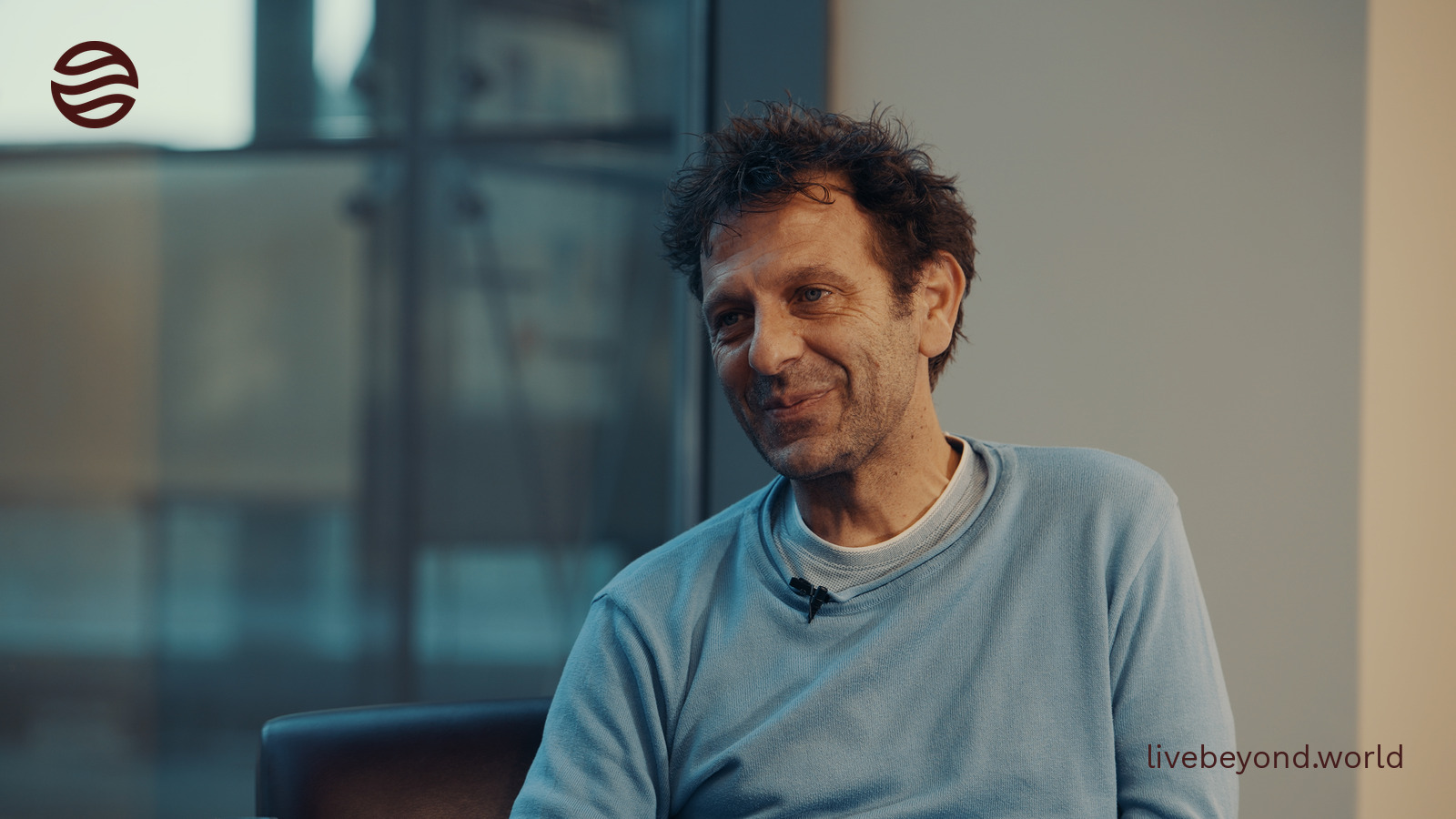
Vittorio Sebastiano in Boston, November 2024 — a Live Beyond interview with Marek Piotrowski on partial reprogramming.
Every cell in your body carries the same DNA. What makes a skin cell a skin cell is a layer of chemical marks on top of the DNA, the epigenome, which tells the cell which genes to use. With age, those marks get messy, and cells work less well.
In 2006 Shinya Yamanaka found that four genes can wipe those marks back to the start, turning an adult cell into a stem cell, as young as an embryo’s. The trick of partial reprogramming is to stop halfway: make the cell younger, but keep it the cell it was.
“Our hypothesis was, well, in this process you lose identity, but you also rejuvenate. Can we rejuvenate without losing identity? That's exactly the key of what we're doing. And to answer your question, yes, absolutely. It's like rebooting the system in a way, and the key is to reboot it in a way that you rejuvenate without loss of cell identity.”
“Cellular reprogramming is changing the state of the cell to be more functional. In another way, you can say to be more youthful, but really, it's change of state.”
George Church told us which genes his lab has been combining:
“We've done combinations of Oct4, Sox2, Klf4, alpha-klotho, TGF-beta receptor, and FGF21. So these are... The first 3 are known to reverse aging of cells from 80 years old back to embryos.”
In plain words: Turn the cell’s clock back, but let it keep doing its job. That’s the whole idea.
What has been shown
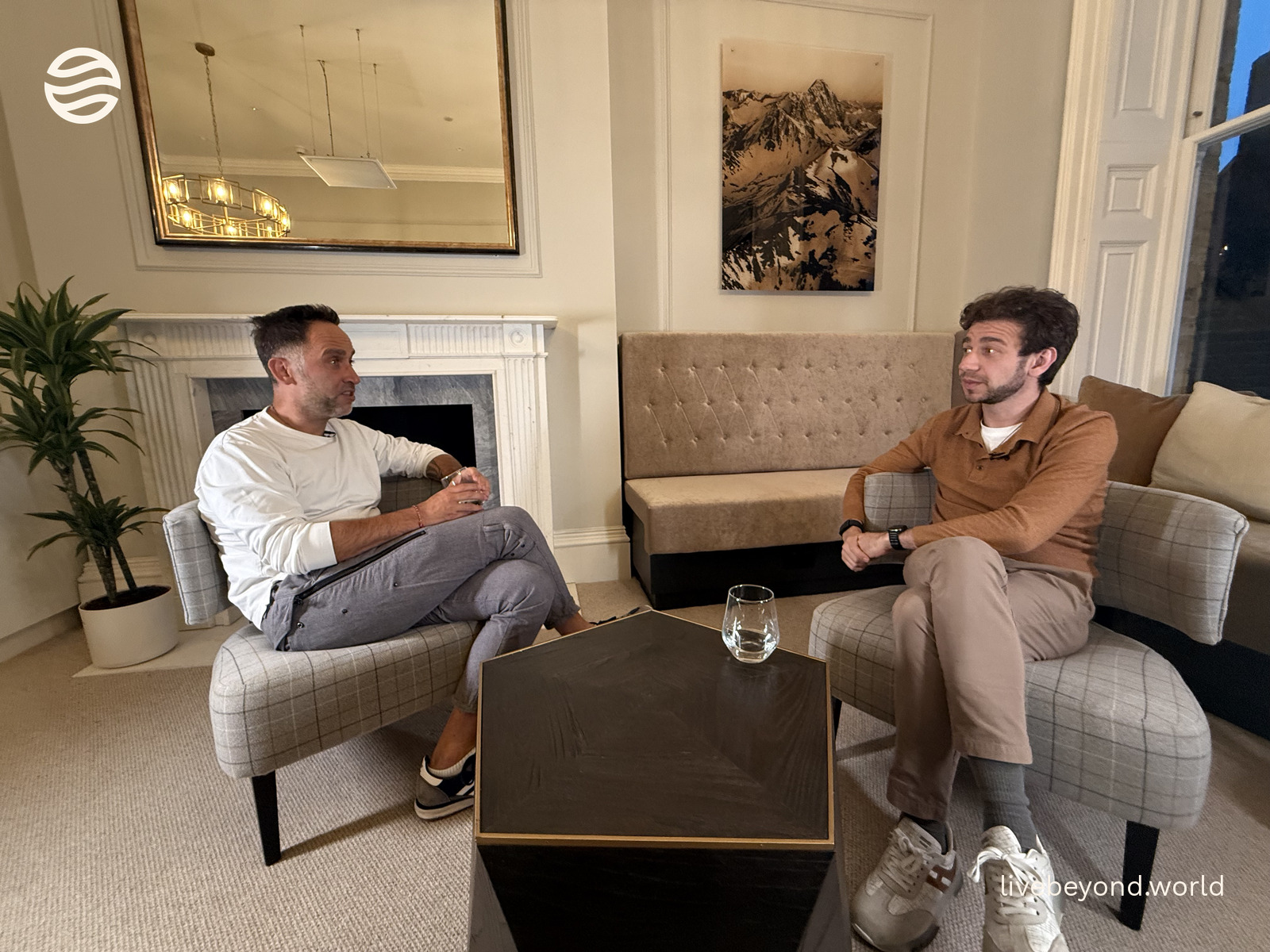
Marek Piotrowski and Peter Diamandis in his Moonshots studio, Los Angeles, December 2025 — a Live Beyond interview on the first reprogramming trial.
In mice, it reverses signs of aging
Short, repeated bursts of the Yamanaka genes rejuvenated tissues in mice and helped mice with a premature-aging disease live longer. Very old mice given a reprogramming gene therapy lived about twice as long from that point as untreated ones.
In old mice and in mice with damage like glaucoma, three of the Yamanaka genes (OSK) helped the nerve of the eye recover — and the mice could see better.
In Vittorio Sebastiano’s lab, cells taken from older people became younger by many measures after a short burst of reprogramming, and kept their identity.
In 2026 Life Biosciences gave the first person its reprogramming therapy, ER-100, in a clinical trial for glaucoma and another disease of the optic nerve (NAION).
“David Sinclair is gonna be deploying his partial epigenetic reprogramming in humans before this film is released. It'll be the first few months of 2026. Which is a big deal, right? I'm an investor in his company, Life Biosciences, for full disclosure. They did their work first in mice and then in larger animals, and then in primates, non-human primates, macaque monkeys, I think, and now going into humans.”
And Vittorio Sebastiano told us where his own work stands:
“I can tell you for sure the work that I'm most familiar with, which is mine, we are very advanced in the immune system. We have very strong data showing that you can rejuvenate the T cells, which are the cells that are going everywhere and fighting cancer and pathogens and so on. […] We have strong data in skin. We have strong data in the eye, in the front of the eye. And then other people are working very efficiently, for example, in liver rejuvenation, the back of the eye, the retina and the retinal ganglion, which is basically the nerve that allows us to see.”
In plain words: The eye, the skin, the immune system: these are where reprogramming is likely to reach people first.
Turning back the clock
Marek Piotrowski and Vittorio Sebastiano at sunset in Irvine, California, December 2025 — the Live Beyond conversation about staying above the cliff.
On a beach in Irvine at sunset, I asked Vittorio the question I really wanted answered:
“I don’t know, maybe not tomorrow, but in 5 or 10 or 15 years, I will go to the doctor, to a longevity clinic, and I’ll say, “Hey, I’d like to turn back the clock of my cells by 15 years. Do it for me.””
“It could be one year, it could be 10 years, it could be 15. Who knows? But actually, think bigger than that. Imagine a future where instead of reversing something that has already been heavily damaged, you prevent something from being heavily damaged because you always keep it […] just above the cliff so that you don't fall from the cliff.”
“Right now it's something that maybe sounds science fiction, but in my opinion, we're gonna get there. There could be a future where you can choose, okay, now I'm gonna say, 'I wanna have 10 years back.' […] Still a ton of work to do, obviously. I don't wanna sell promises. […] I wanna sell facts. But the work that I'm doing, the work that many other colleagues are doing, I think are gonna get us there. Through partial reprogramming, potentially. I have great hopes for it.”
Then I asked him if, in 5 or 10 years, opticians will switch from selling us glasses to giving us injections around the eyes. His answer:
“Absolutely. Totally.”
Would you do it?
Marek Piotrowski and Boris Djordjevic in London, February 2025 — a Live Beyond interview on partial epigenetic reprogramming.
Boris Djordjevic, whose company works on partial reprogramming, told us in London what it would take:
“Practically, it would take me just to go to the lab, inject myself, and I could address the aging of an organ or a series or organ, and perhaps a whole body. Whether this would be safe is a question until it is being tested. Whether I feel confident to do it, if I had a condition like […] even an early stage cancer, I would feel confident enough.”
And how soon it could reach patients:
“Different indication take different time to translate from the lab to the patient, and it can be anywhere between, say, two years for a difficult condition like a brain cancer to perhaps four or five years for an eye indication or skin.”
What still needs solving
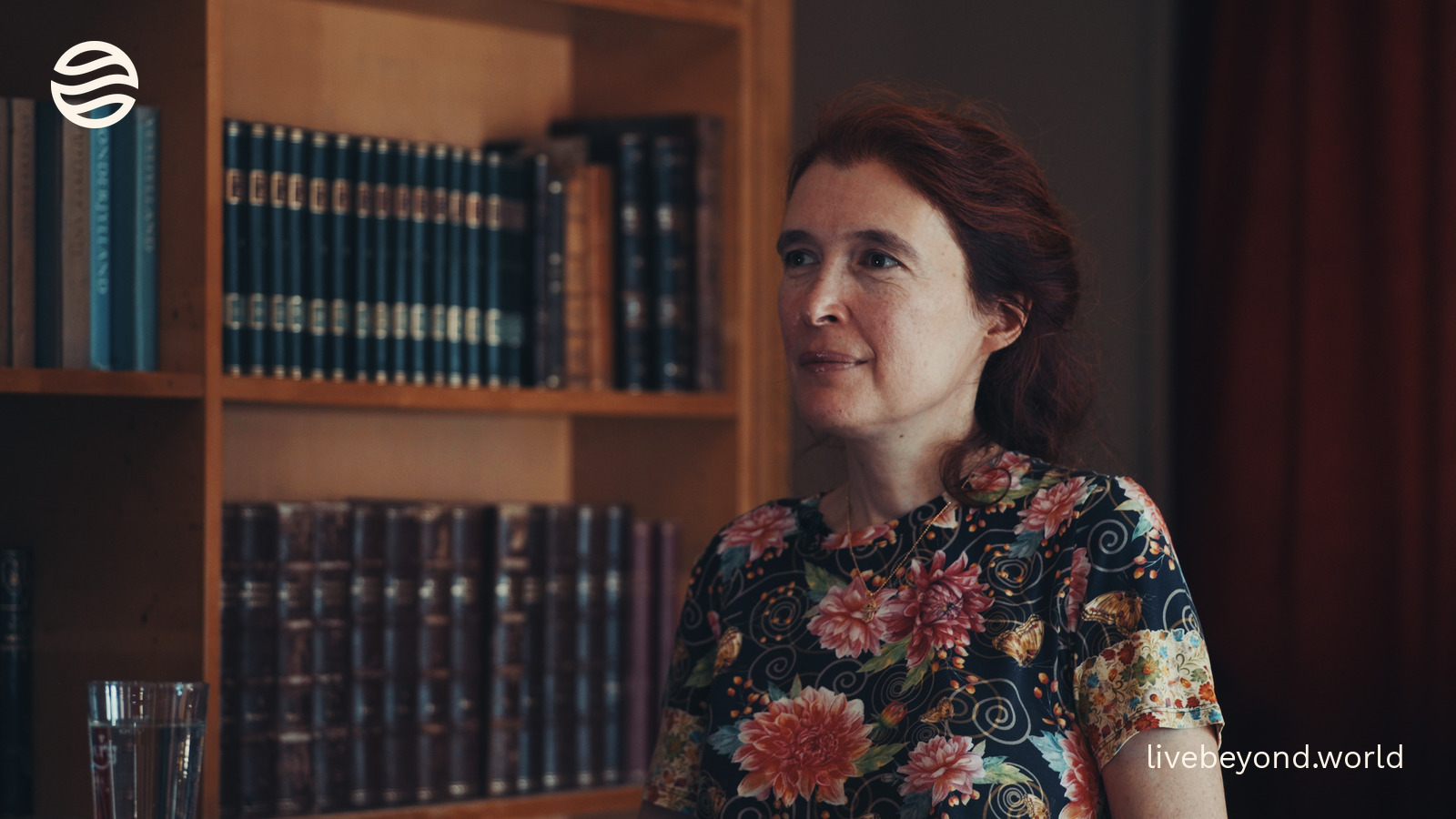
Vera Gorbunova at ARDD, Copenhagen, August 2024 — a Live Beyond interview with Marek Piotrowski on making cells young without changing what they are.
Everyone we asked was excited. Everyone also named the same challenge: going too far. Push a cell all the way back and it forgets what it is — and that is how tumors start.
“There are experiments in mice that show that you can use the Yamanaka factors to reprogram in a very precise, timely, scheduled way, cells to become younger. This implies a transient phase of disorganization of the tissue with the risk of cancerization.”
“Partial reprogramming, it's a promising approach, but it's also risky because the risk of cancer, for sure. And also when we reprogram cells, the cells lose function, and we want cells that have maintained function, right? So […] there is a fine balance to find conditions where the cells preserve function but get rejuvenated and the effect is strong enough.”
“There are certain dangers because, right, you don't want to become an embryo. You don't want to reprogram something into something that it's not supposed to be there. You don't want to end up with a tumor because tumors also are somewhat reprogrammed. So our choice is to use epigenetic factors like SIRT6, which are not pioneer factors. […] It doesn't rewire the cell back to the embryonic cell. It just takes the cell the way it is, and rewires it or changes it into the same cell but young.”
“Two big problems that I see. One is if you reprogram in someone that's old, you and I accumulate mutation as we age. […] When you reprogram, you don't change the mutations. You don't change the genetics, you only change the epigenetics. So that's going to be a significant problem in the long term.”
That’s why Vittorio is so careful about how it’s done:
“Not systemic in the sense of rejuvenating every single cell in the body through partial reprogramming. I think that that would be a very bad idea. There's people that are doing that, and it gives me the goosebumps because I think it's a very bad idea because it has some safety implications. That is always our top priority.”
In plain words: The science works. The art is getting the dose and the place exactly right — young again, but still itself.
Words worth knowing
Three words behind turning back the clock
From our glossary. Tap a card to turn it over: the science on the back, and the people we met who explained it to us.
Go carefully and the picture comes back. Go too far and the picture comes off with the dirt.
What helps
This is the frontier: it is in animals and in early company pipelines, and the risk it has to clear is cancer, because a cell that forgets what it is, is a tumour. Read more →
Nothing looks wrong until something needs mending.
What helps
Nothing yet reliably rebuilds a reserve in a human. Stem cell transplants are standard care in a few blood cancers and are not an anti-ageing treatment — clinics selling infusions for ageing are selling ahead of the evidence, and some of what they sell is dangerous. Read more →
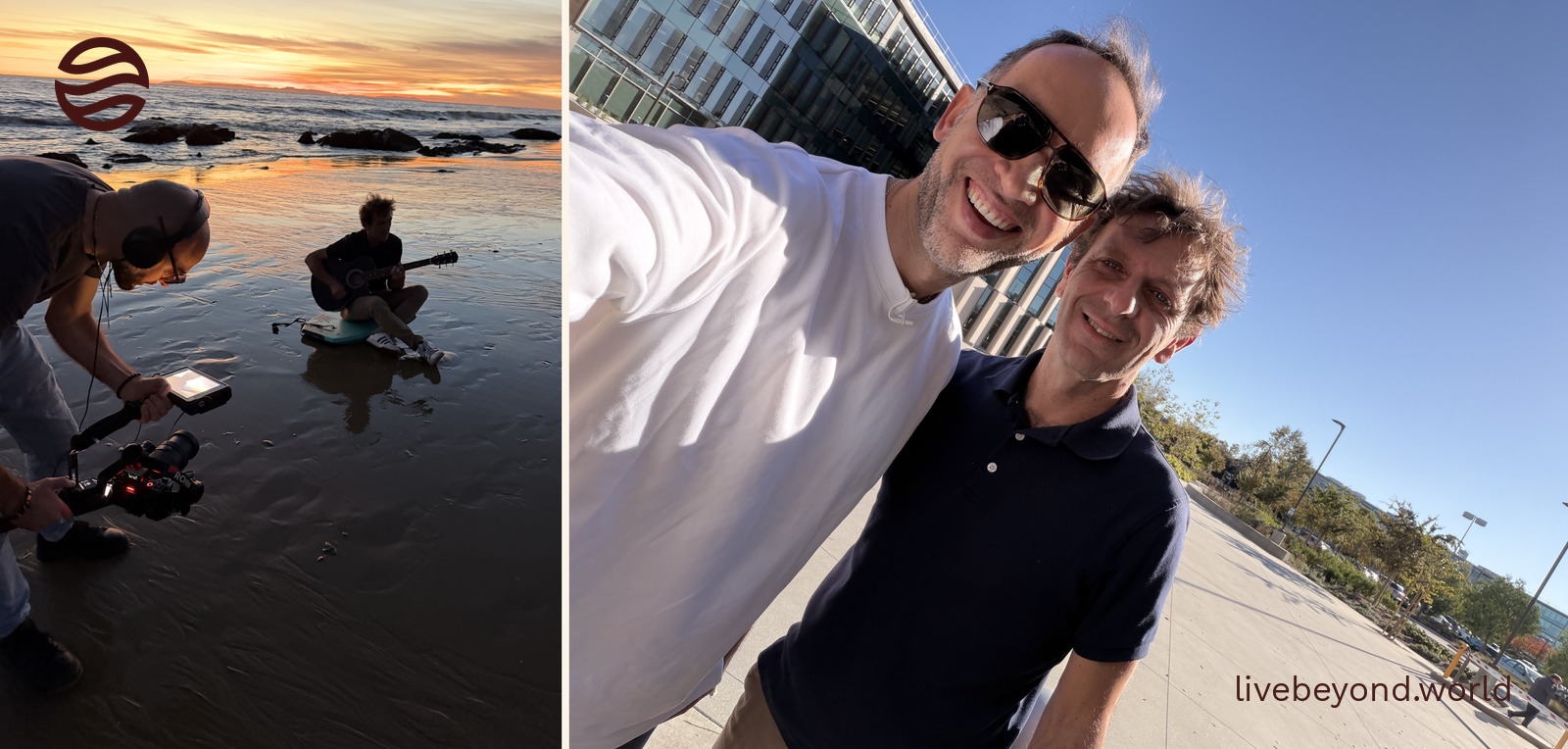
Vittorio Sebastiano playing guitar on the beach while Kamil Rydzewski films, and Marek Piotrowski with Vittorio at UC Irvine — Irvine, California, December 2025, Live Beyond.
For me, this is one of the most exciting things we saw on the whole quest: the idea that aging might not be a one-way street. The scientists working on it are some of the warmest people we met, and they are moving carefully because they want it to work for all of us. Meanwhile, the things that keep your cells young today are free: moving every day, good sleep, real food, and time with the people you love.
Who should be careful
Only inside a trial
Partial reprogramming is not approved anywhere as a treatment for aging. The first therapies are being tested in clinical trials for specific diseases. If you’re interested, look for a registered trial and talk to your doctor first.
Every number on this page, by the number in square brackets. Quotations come from Live Beyond’s own recorded interviews, cleaned only of “um” and “uh”. Not medical advice. Talk to your doctor before you change anything.
Ocampo A, Reddy P, Martinez-Redondo P, et al. In vivo amelioration of age-associated hallmarks by partial reprogramming. Cell. 2016;167(7):1719-1733. doi:10.1016/j.cell.2016.11.052
Lu Y, Brommer B, Tian X, et al. Reprogramming to recover youthful epigenetic information and restore vision. Nature. 2020;588(7836):124-129. doi:10.1038/s41586-020-2975-4
Sarkar TJ, Quarta M, Mukherjee S, et al., Sebastiano V. Transient non-integrative expression of nuclear reprogramming factors promotes multifaceted amelioration of aging in human cells. Nat Commun. 2020;11(1):1545. doi:10.1038/s41467-020-15174-3
Longevity.Technology. Life Bio reaches first clinical milestone for OSK therapy (first participant dosed with ER-100, Phase 1, glaucoma and NAION). 9 June 2026.
Takahashi K, Yamanaka S. Induction of pluripotent stem cells from mouse embryonic and adult fibroblast cultures by defined factors. Cell. 2006;126(4):663-676. doi:10.1016/j.cell.2006.07.024
Macip CC, Hasan R, Hoznek V, et al. Gene therapy-mediated partial reprogramming extends lifespan and reverses age-related changes in aged mice. Cell Reprogram. 2024;26(1):24-32. doi:10.1089/cell.2023.0072